The stillness of sufficiency

What is a life for, production or presence?

There’s no doubt U.S. American culture is shaped by, and founded on, productivity. From the shores of African and Black enslavement, where a body’s output was the measuring stick of a person’s value, to the assembly lines of the Industrial revolution that further quantified human value by human output, nothing defines the United States better than a “can-do” attitude and a productivity clause that seems to be written into us from birth.

This clause seems to be part of a contract many of us have unwittingly signed, one that stipulates our value, our worth, our personhood, to be defined by what we produce, that is, our corporate and consumerist output.

We are expected to produce (not create) and consume until our dying breaths. We are taught that to be citizens of society, we must be valuable, and that value is calculated by how much money we make for others.

This isn’t to say that work is unnecessary or undignified; far from. The question is, who the work benefits, how much we agree to it, and what we get out of it. Many of us are content with our 40-hour weeks and our paychecks in return for that time. And that is fine.

But what I’ve been thinking about lately is how creativity and productivity are intertwined. As a published author, I expect myself to produce book after book, on deadlines I arbitrarily create for myself, in an effort to produce. Sometimes, this is fine, and my creative juices need an outlet, which I am able to give them. Other times, I’m unsure of how much I expect my creativity to be manufactured by a sense of productivity.

Often, I catch myself between projects, with a week or so of “downtime,” and I tell myself, I should be doing research, I should be planning my next manuscript, I should be, should be, should be…

And yet, with my background in neuroscience, I know full well the brain does not operate best while constantly stimulated. The brain works best in between resting periods, and during such times, where it can consolidate information and experiences, define connections between them, and imagine new things. Incubation is necessary for human intellect, creativity, and even identity. You can’t know who you are if you never sit still long enough to ask–and answer.

In 2025, I wrote five full-length manuscripts, and about 80% of a sixth novel, and was so proud I was able to be “so productive.” This year, I am now working on editing about 4 of those manuscripts, and mourning that I cannot write five more this year, even as I am relieved I don’t plan to. Even with that output, and the stockpile of manuscripts, I still find myself reducing my creative work into commodified components: # manuscripts, # ratings, # reviews, #…

There’s a gap between creativity and productivity, between creating for the joy of it, and creating a commodity. Even this blog, which has been dormant for a while, I’ve now revived, and just the other day, I wondered idly whether I should be monetizing it, whether I should be more consistent in what I publish, whether this could be something I commodify as a secondary income stream.

I quickly rejected the idea, not the least because, even if I could monetize it, it wouldn’t be worth much in the dollars it brings in. But there’s another reason: this space is one for me to think and share those thoughts, rather than turning it into a “hustle,” and I intend to keep it that way (for now, maybe for forever). It’s so easy to fall into the trap of doing more, being more, producing more, at the expense of simply being.

This is not to disregard the times when finances demand such labor, and this is not to disregard the lives where such privilege and luck are not afforded. I recognize my concerns come from a plentitude of both. But where I am in life, I have to consider beyond basic needs that are already met, and more.

To be a creative, to be an artist, is to learn to rest and be still, something I am desperately struggling to learn beyond an intellectual understanding.

It’s not comfortable sitting still or doing less; it feels like a failure of self and time, like I am “wasting my life.” And yet, I find the times I do so, that is, rest, my days feel longer, in a good way, and I feel like I’ve done more for myself and my life. Those are the days I am able to marry creative pursuits with more mundane tasks, like errands and social obligations, without feeling tired. In fact, I feel more energized, because I am able to get through to-dos without losing myself in them.

I wonder, then, if a life lived this way lasts longer, not in time, but in the perception of it.

Tonight, as I sit in my living room, watching the blue light fade from the sky and become night, I am allowing myself stillness and silence. That is a privilege, and a rarity it seems these days, I know, and I am a lucky person to have such things. But this path to stillness is not straight and narrow. I’m recognizing that stillness can be found not just in the state of “not-doing,” but in the state of “doing enough.”

What I mean can be shown in an example. This year, as I edit my 2025 manuscripts, I am not pushing myself hard. Even today, I planned on editing two to three chapters of a manuscript, ended up editing four, and then grew greedy and tried to push myself to edit even more. I stopped myself in time, recognizing I had hit a fatigue point, and yes, I could have pushed myself to do more, but I would have enjoyed it less, been less creative, and more frustrated. Instead, I chose to leave the coffeeshop and go home, where I sat and read with a cup of golden milk.

Stillness, I wonder then, does not have to show up in sitting in silence or idly; it can come in doing enough to remain on, or to reach the path you want, but not pushing yourself unnecessarily. It demands listening to your mind and body, and not ignoring them just because “you can.”

I “could have” edited more today; I “could have” been more productive, but I was productive enough, and that is good enough for me. This is the stillness of sufficiency.

By: Rania Hanna

Curating against anti-intellectualism

I’ve been thinking more about curation.

The last few years, I have hoarded more and more books, only to find myself stepping into my home library and not knowing what I want to read. On Google, I have pulled up a random number generator, selecting first a range from 1 to the number of bookshelves I have, and then within that shelf, selecting a range from 1 to 30 or so, to narrow down to a single title. Rarely, which is to say, never, have I pulled that book off its shelf and actually read it.

Instead, I would find myself back at the bookstore, searching for some book to read that suited my mood. I’d come home, either read the book, or end up setting it atop a pile and choosing something else to read.

This cycle has continued on to the point of a certain fatigue, and, if I’m being honest, frustration at not knowing what to read or how to choose.

My home library has traditionally numbered in the hundreds, sometimes rising to 600+ books, which I’ve always taken pride in. There’s a certain comfort in surrounding myself with the written word, being inspired by others’ thoughts, and always aspiring to read every book I own.

These physical books are besides the audiobooks and digital copies I have bought over the years.

The past few weeks though, in a fit of early spring cleaning, I have purged about 200 physical books, over the span of several weeks, donating many to my local library.

And the more I do so, the more books I want to let go of. It’s been surprisingly easy to do, something I’ve rarely, if ever, experienced before. I still have books piled atop books, and on my bookcases, and crammed in piles surrounding the space, but the gaps are beginning to show.

Some of the books I have had for well over a dozen years, having never opened them once to read. Others I thought I would enjoy, only to find myself tossing it aside. Still others I enjoyed at one point in my life, but have grown away from them.

Now, my shelves are taken up by books I have yet to read, but have a higher likelihood of being selected in the coming months and years. I have saved stories I have enjoyed, ones I would recommend to someone. In other words, I have curated something of a proper library, one that represents who I am and who I am becoming.

Books that I once revered have been removed; stories I once thought I “should” enjoy have been replaced by ones I will. I am growing far less concerned about having “classics” on my shelves that I do not enjoy, though I have tried to.

Which brings me to something I have been thinking about more and more recently: literary colonialism.

When thinking about the books I grew up reading in the United States, in school or simply through exposure, most have been Eurocentric, written by white people, mostly male. They have been excellent reads, and have provoked thought and consideration. But rarely has my formal education expanded beyond these identities. Even in world literature classes, anything outside that identity was pulled from more ancient epics, like that of Gilgamesh, or snippets here and there from other works, but mostly, even our global narratives were pulled from England (Shakespeare), Germany (Beowulf), Italy (Dante’s Inferno, Divine Comedy), Greece (Homer’s works), and the like, i.e. Eurocentric, white, male. I don’t recall reading a single Black author in school in any meaningful way, not Toni Morrison’s works, Octavia Butler’s, the Reverend Jesse Jackson’s, even MLK Jr’s. Not a single Black American author, not a single brown author, and limited female ones.

Why is that?

I am certainly not the first to argue this literary limitation, and certainly not the first to do anything about it, nor am I the most educated voice on this. But as I grow more into myself and into who I want to be, I am learning to lean less on what I have been told is worthy of being read, and more on what I think is deserving of my energy.

This is important. Stories we read shape what we think people should be and how they should act. They tell us what to value, what to reject. They tell us how to be. And that is a powerful and dangerous power.

In curating my library, I am not seeing the loss of 200 books; I am seeing the gain of the space I am making for other voices to be heard. I am creating opportunity to listen to those I have not historically listened or paid attention to, or the ones I wasn’t exposed to in my education. In essence, I am curating not just a library, but my own curiosity. And that is one of the greatest things I can do in developing my mind.

There also seems to be a metaphor in here about stepping back, narrowing focus, and being more deliberate. While my shelves are being cleared off, I’m seeing more of the titles I already own, books that I want to read being more visible because they’re no longer hidden by other titles. A reversal of paralysis by analysis, I suppose.

With our society’s descent into a defanged intellectualism, that is, anti-intellectualism, by way of book bans, whitewashing of history, erasure of voices, and the like, this has become all the more pressing. It feels almost like survival in its urgency.

I plan to continue this curation, centering voices I have not historically given space to, and educating myself the best way I can. I am also retaining physical copies of works, something I touched upon in another blog post, access is not ownership. When reality can be manipulated, media updated or deleted, it is that much more important to house physical copies when and where possible, and to support those institutions that allow us access, like libraries.

By: Rania Hanna

Hoopoe – Stories from the Middle East

I love following publishers who give voice to those who usually aren’t by mainstream Western publishers. One is Hoopoe.

I’ve read a number of great, great books they’ve published that speak to my heart and soul, and want to share with you some of their new releases.

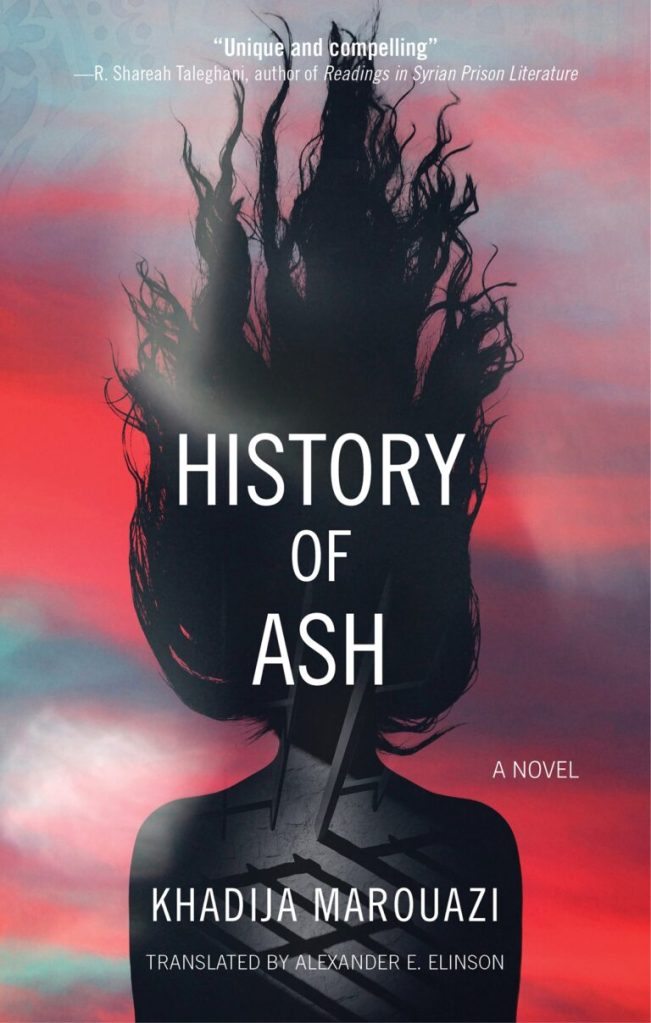
History of Ash is a fictional prison account narrated by Mouline and Leila, who have been imprisoned for their political activities during the so-called Lead Years of the 1970s and 1980s in Morocco, a period that was characterized by heavy state repression.

Moving between past and present, between experiences lived inside the prison cell and outside it, in the torture chamber and the judicial system, and the challenges they faced upon their release, Mouline and Leila describe their strategies for survival and resistance in lucid, often searing detail, and reassess their political engagements and the movements in which they are involved.

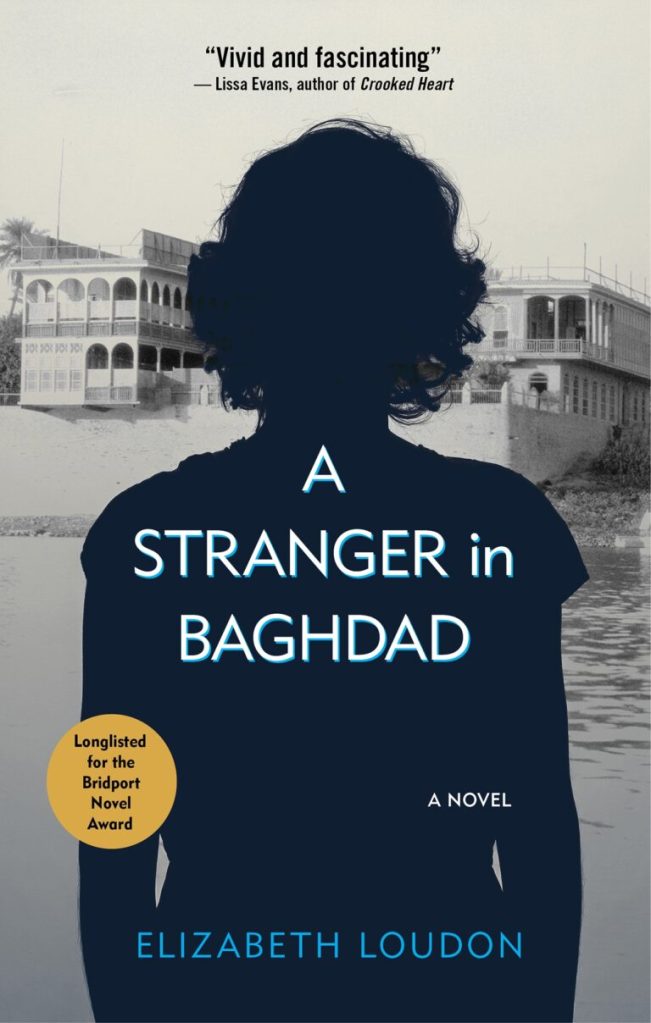
Summoning up the vanished world of mid-twentieth-century Baghdad, Elizabeth Loudon’s richly evocative story of one family calls into question British attitudes and policies in Iraq and offers up a penetrating reflection on cross-cultural marriage and the lives of women caught between different worlds.

A raw, lyrical portrait of life on the margins in contemporary Algiers, this haunting noir captures an underworld of police informers, shady imams, bootleg beer traders, and grave robbers, and reverberates with echoes of Algeria’s violent past.

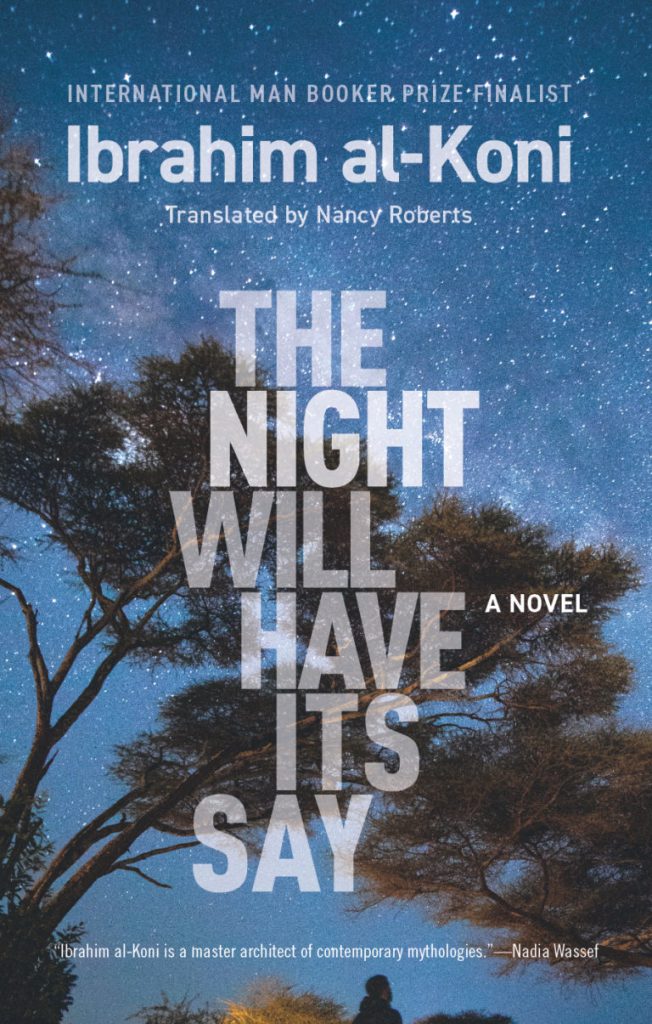
The year is 693 and a tense exchange, mediated by an interpreter, takes place between Berber warrior queen al-Kahina and an emissary from the Umayyad General Hassan ibn Nu’man. Her predecessor had been captured and killed by the Umayyad forces some years earlier, but she will go on to defeat them.

The Night Will Have Its Say is a retelling of the Muslim wars of conquest in North Africa during the seventh century CE, narrated from the perspective of the conquered peoples. Written in Ibrahim al-Koni’s unique and enchanting voice, his lyrical and deeply poetic prose speaks to themes that are intensely timely.

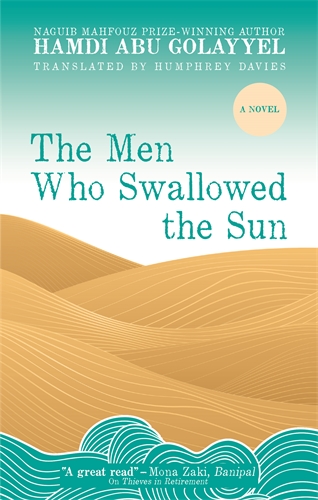
This gritty tale of two men’s ill-conceived quest for a better life via the deserts of the Middle East and the cities of Europe is pure storytelling

The backdrop of this darkly comic and unsentimental story of illegal immigration is a brutal Europe and Muammar Gaddafi’s rickety, rhetoric-propped Great State of the Masses, where “the Leader” fantasizes of welding Libyan and Egyptian Bedouin into a new self-serving political force, the Saad-Shin.

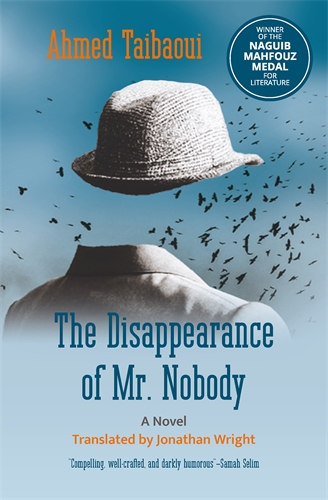
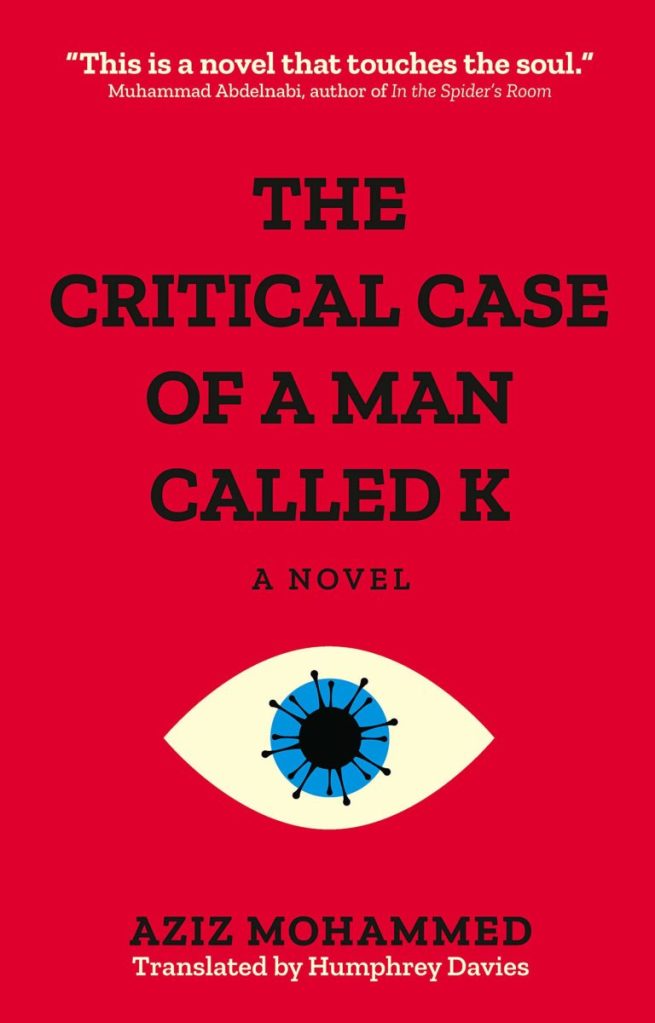
After reading Kafka, K decides to write his own diary, but he is constantly frustrated by his lack of experiences: he is worn down by the drudgery of his corporate job for a faceless corporation and by his incessant family obligations.

When he receives the news that he has leukemia, he finds himself torn between a sense of devastation and a revelation that he has finally found a way out of his writing predicament….

Shortlisted for the International Prize for Arabic Fiction

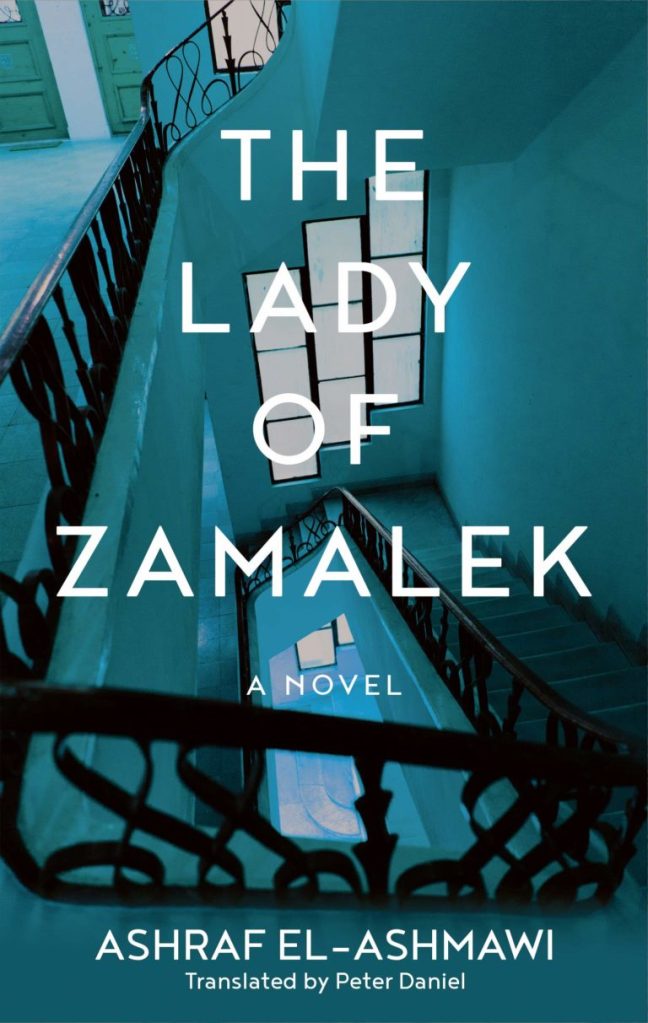
It was in the spring of 1927 that Cairo’s attention was captured by the shocking murder of prominent businessman Solomon Cicurel in his Nile-side villa in the upscale Zamalek district. It was a burglary that went wrong and four culprits were soon arrested. Their trial was concluded swiftly, their punishments were decisive, and society breathed a sigh of relief.

In Ashraf El-Ashmawi’s telling, however, there was a fifth accomplice, Abbas, who escaped back to his home in the countryside to lay low until the murder trial blew over. He had not left empty-handed and had kept some documents from Cicurel’s villa, ones that he realized would lead him to a hidden safe.

8 Middle Eastern-Inspired Fantasy Reads

The current book I’m writing draws from Middle Eastern folklore and mysticism, namely Jinns. As more books are published that draw from MidEastern themes, I’m devouring them as soon as I can. Not only for ideas for my books, but because of my Middle Eastern heritage: I love seeing my culture represented in literature that includes the mysticism, folklore, and fables! What a beautiful way to honor a rich and cultured history!

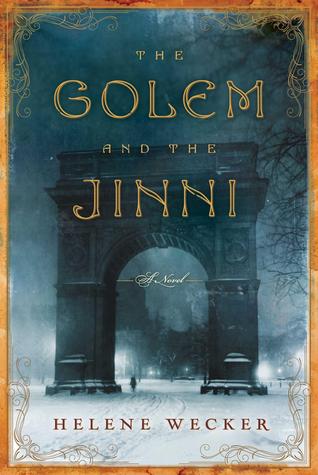
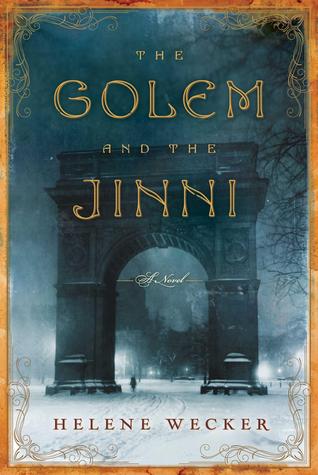
The Golem and the Jinni by Helene Wecker

Chava is a golem, a creature made of clay, brought to life by a disgraced rabbi who dabbles in dark Kabbalistic magic and dies at sea on the voyage from Poland. Chava is unmoored and adrift as the ship arrives in New York harbor in 1899.

Ahmad is a jinni, a being of fire born in the ancient Syrian desert, trapped in an old copper flask, and released in New York City, though still not entirely free.

Ahmad and Chava become unlikely friends and soul mates with a mystical connection. Marvelous and compulsively readable, Helene Wecker’s debut novel The Golem and the Jinni weaves strands of Yiddish and Middle Eastern literature, historical fiction and magical fable, into a wondrously inventive and unforgettable tale. 

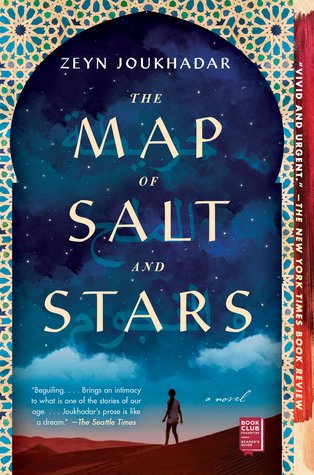
The Map of Salt and Stars by Zeyn Joukhadar

The story of two girls living eight hundred years apart—a modern-day Syrian refugee seeking safety and a medieval adventurer apprenticed to a legendary mapmaker.

It is the summer of 2011, and Nour has just lost her father to cancer. Her mother, a cartographer who creates unusual, hand-painted maps, decides to move Nour and her sisters from New York City back to Syria to be closer to their family. But the country Nour’s mother once knew is changing, and it isn’t long before protests and shelling threaten their quiet Homs neighborhood. When a shell destroys Nour’s house and almost takes her life, she and her family are forced to choose: stay and risk more violence or flee as refugees across seven countries of the Middle East and North Africa in search of safety. As their journey becomes more and more challenging, Nour’s idea of home becomes a dream she struggles to remember and a hope she cannot live without.

More than eight hundred years earlier, Rawiya, sixteen and a widow’s daughter, knows she must do something to help her impoverished mother. Restless and longing to see the world, she leaves home to seek her fortune. Disguising herself as a boy named Rami, she becomes an apprentice to al-Idrisi, who has been commissioned by King Roger II of Sicily to create a map of the world. In his employ, Rawiya embarks on an epic journey across the Middle East and the north of Africa where she encounters ferocious mythical beasts, epic battles, and real historical figures.

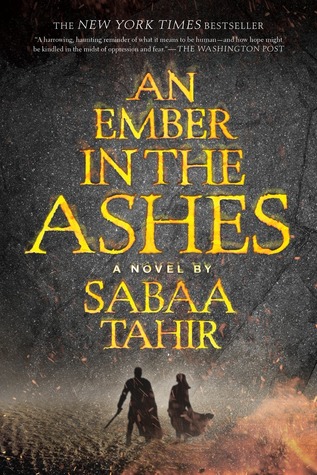
An Ember in the Ashes by Sabaa Tahir

Laia is a slave. Elias is a soldier. Neither is free.
 
Under the Martial Empire, defiance is met with death. Those who do not vow their blood and bodies to the Emperor risk the execution of their loved ones and the destruction of all they hold dear.
 
It is in this brutal world, inspired by ancient Rome, that Laia lives with her grandparents and older brother. The family ekes out an existence in the Empire’s impoverished backstreets. They do not challenge the Empire. They’ve seen what happens to those who do.
 
But when Laia’s brother is arrested for treason, Laia is forced to make a decision. In exchange for help from rebels who promise to rescue her brother, she will risk her life to spy for them from within the Empire’s greatest military academy.
 
There, Laia meets Elias, the school’s finest soldier—and secretly, its most unwilling. Elias wants only to be free of the tyranny he’s being trained to enforce. He and Laia will soon realize that their destinies are intertwined—and that their choices will change the fate of the Empire itself.

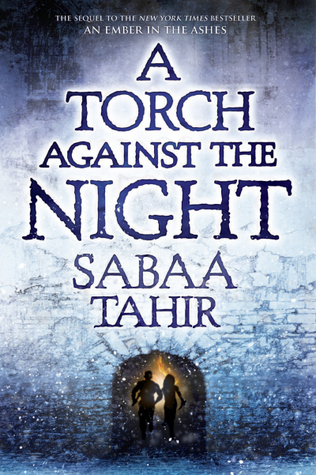
A Torch Against the Night by Sabaa Tahir

Elias and Laia are running for their lives. After the events of the Fourth Trial, Martial soldiers hunt the two fugitives as they flee the city of Serra and undertake a perilous journey through the heart of the Empire.

Laia is determined to break into Kauf—the Empire’s most secure and dangerous prison—to save her brother, who is the key to the Scholars’ survival. And Elias is determined to help Laia succeed, even if it means giving up his last chance at freedom.

But dark forces, human and otherworldly, work against Laia and Elias. The pair must fight every step of the way to outsmart their enemies: the bloodthirsty Emperor Marcus, the merciless Commandant, the sadistic Warden of Kauf, and, most heartbreaking of all, Helene—Elias’s former friend and the Empire’s newest Blood Shrike.

Bound to Marcus’s will, Helene faces a torturous mission of her own—one that might destroy her: find the traitor Elias Veturius and the Scholar slave who helped him escape…and kill them both.

A Reaper at the Gates by Sabaa Tahir

Beyond the Empire and within it, the threat of war looms ever larger.

The Blood Shrike, Helene Aquilla, is assailed on all sides. Emperor Marcus, haunted by his past, grows increasingly unstable, while the Commandant capitalizes on his madness to bolster her own power. As Helene searches for a way to hold back the approaching darkness, her sister’s life and the lives of all those in the Empire hang in the balance.

Far to the east, Laia of Serra knows the fate of the world lies not in the machinations of the Martial court, but in stopping the Nightbringer. But while hunting for a way to bring him down, Laia faces unexpected threats from those she hoped would aid her, and is drawn into a battle she never thought she’d have to fight.

And in the land between the living and the dead, Elias Veturius has given up his freedom to serve as Soul Catcher. But in doing so, he has vowed himself to an ancient power that will stop at nothing to ensure Elias’s devotion–even at the cost of his humanity.

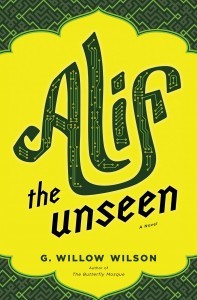
Alif the Unseen by G. Willow Wilson

In an unnamed Middle Eastern security state, a young Arab-Indian hacker shields his clients—dissidents, outlaws, Islamists, and other watched groups—from surveillance and tries to stay out of trouble. He goes by Alif—the first letter of the Arabic alphabet, and a convenient handle to hide behind. The aristocratic woman Alif loves has jilted him for a prince chosen by her parents, and his computer has just been breached by the state’s electronic security force, putting his clients and his own neck on the line. Then it turns out his lover’s new fiancé is the “Hand of God,” as they call the head of state security, and his henchmen come after Alif, driving him underground.

When Alif discovers The Thousand and One Days, the secret book of the jinn, which both he and the Hand suspect may unleash a new level of information technology, the stakes are raised and Alif must struggle for life or death, aided by forces seen and unseen.

A Thousand Nights by E.K. Johnston

Lo-Melkhiin killed three hundred girls before he came to her village, looking for a wife. When she sees the dust cloud on the horizon, she knows he has arrived. She knows he will want the loveliest girl: her sister. She vows she will not let her be next.

And so she is taken in her sister’s place, and she believes death will soon follow. Lo-Melkhiin’s court is a dangerous palace filled with pretty things: intricate statues with wretched eyes, exquisite threads to weave the most beautiful garments. She sees everything as if for the last time. But the first sun rises and sets, and she is not dead. Night after night, Lo-Melkhiin comes to her and listens to the stories she tells, and day after day she is awoken by the sunrise. Exploring the palace, she begins to unlock years of fear that have tormented and silenced a kingdom. Lo-Melkhiin was not always a cruel ruler. Something went wrong.

Far away, in their village, her sister is mourning. Through her pain, she calls upon the desert winds, conjuring a subtle unseen magic, and something besides death stirs the air.

Back at the palace, the words she speaks to Lo-Melkhiin every night are given a strange life of their own. Little things, at first: a dress from home, a vision of her sister. With each tale she spins, her power grows. Soon she dreams of bigger, more terrible magic: power enough to save a king, if she can put an end to the rule of a monster.

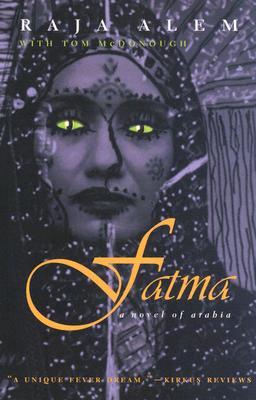
Fatma: A Novel of Arabia by Raja Alem

Fatma, an Arabian peasant girl, unwittingly embarks upon a strange journey of transformation the day her father marries her off to a snake handler with a sideline in potions brewed from venom. When Fatma is bitten by one of the snakes, she is changed from an innocent girl into an overpoweringly sensuous woman with a mysterious talent for controlling her husband’s snakes and an ability to travel with them into realms beyond ordinary human experience.” “Journeying into the Netherworld with her snakes, Fatma meets Prince Taray, a melancholoy warrior-hero. She and Taray bewitch each other and struggle toward union in rapturous rituals during which, among other things, Fatma alternately bursts into flames and melts into golden liquid.” Resonating with ritual and mystery, Fatma is a tale of one woman’s path to ecstasy – an enraptured vision of enchantment in this world and fulfillment in another. 

*Cover image from Graphic Art News: http://www.graphicart-news.com/amazing-arabic-graffiti-collection-in-a-book/#.Xa3qsOdKjxg