I think our society is shifting into conservation

I’m sick this weekend, battling a cold, and just a day before I felt the most sick, I was ravenous. I ate four meals, smaller ones, but more than I would normally consume, and I was starting to slow down in my energy levels. This is normal, as the body mounts an immune response (a metabolically expensive process), and focuses more on energy. Your appetite increases so your body can defend itself, and your body slows down so you conserve energy. Your body shifts from productivity to repair.

The following day, my body gave up, forcing me to take a day off of work. I had trouble sleeping the night before, and ended up dozing off into light naps.

Now, day three of my cold, and I have bursts of energy, but mostly feel like sitting or taking naps, and baking pita bread.

This has got me thinking: when a body is sick, it focuses on slowing down and nourishing itself. I wonder then, of a mind that is also sick with overstimulation and overconsumption. What happens to it?

I think that, it too, slows down and focuses on nourishing itself. I say this because I have noticed that the past few months, I’ve been returning to classics in my reading, craving depth and thought I hadn’t engaged with in a while. I’m seeking more to read to better understand the human condition, to learn, to “return to my roots” in a literary capacity. And, I’ve been focusing on slowing down.

Even in my writing, I am choosing not to push myself, my plots, or my timelines into something they don’t organically grow into. Last year, in 2025, I wrote almost six manuscripts (one I got about 80% of the way through before the new year came around). This year, I am working on editing them, focusing more on building on what I’ve already sown. And though I initially had plans to write at least two, maybe three, manuscripts this year, I have accepted that I may end up writing only one, and have begun to think that I may not write any at all.

This slowing down, both deliberate and organic, comes from shedding old skins last year. I moved on from some decisions I’d made earlier in life, even just years prior, and though I mourn them, I feel lighter without them, more like myself, and less like a shape I was trying to force myself into. That is, I feel more like I am wearing a skin I naturally fit into, rather than stretching out one that no longer fits me.

What I think is happening to my brain is a response to chronic overstimulation, a shift from productivity to repair, a sort of cognitive conservation. This makes sense, as when the brain sustains cognitive overload, i.e. “has too many tabs open,” working memory and decision-making reduce. It’s a sort of “sickness” that your brain decides it has to mount an immune response to, and so it shifts gears into restorative modes.

It’s why my brain has chosen classic literature or more “serious” works to read; it wants something that forces me to slow down because writing pace is slower, compels me to digest what I am reading, which forces me further to slow down. It’s a return to what is familiar and comfortable, and provides a stability as I often recognize what path a plot will take. It also reduces my task-switching: it’s difficult to “switch to another tab” when I’m digesting a thoughtful paragraph. This reading depth leads to sustained attention, which is further less stimulating since I’m focusing on one task, and one task alone.

And I’m seeing it elsewhere, too, not just in my reading. When I was younger, I could sit still, in silence, and enjoy it. The last few years, I have needed stimulation: an audiobook, a podcast, music, a YouTube video. Now, it’s almost as if I can’t stand the noise and stimulation, and instead want stillness and silence.

I’m not alone in this. I wrote in an earlier postat least for a segment of our society, we desire simplicity and a reclamation of our human intelligence. It feels more like a quiet revolution, an unwinding of what our modern technology has wrought, reverting to less integrated and more simplified routines.

What I mean to say with all this is as our minds and bodies desire healing from a society that is overwrought in pace, consumerism, and disconnection, I think our minds will begin responding in the same ways our bodies do when sick: by slowing down, digging deeper into our shared wisdom, and doing the things that nourish us. When a biological or psychological system is under strain, it moves to conserve, by simplifying and focusing on core functions.

And I think our society is shifting into conservation.

By: Rania Hanna

Access is not Ownership

Something I’ve been thinking quite a lot about lately is the impermanence of things. I don’t mean that in an existential way, but in a tangible, physical domain manner.

Some years ago, I was surprised to learn that with an Audible (owned by Amazon) subscription, we do not own the audiobooks. Audible can, and has, removed titles at will, though once purchased, you should be able to access that title forever in the platform. But this leads me to several other questions, including, is something actually yours when it exists in “the cloud” in non-tangible format (at least, non-tangible in that it cannot be manipulated as an object by you) and could, theoretically, be removed at any point by someone other than you? Is it ownership, or is it permission to access that these platforms offer us?

And does it matter?

I’m sure this brings up many counterpoints and philosophical questions, but I’m more curious about what effect this has on our psychology, to feel so disconnected from the very things we interact with, and the very things which we purport to “own.” If a mega-conglomerate can control what I have access to, do I have, truly, access to those things? If the gate can be opened and closed without my control, do I control that gate?

I worry of the sense of impermanence this creates in our psyches, the idea that attachment is a risk, that nothing is real or stable. To me, this goes beyond the more philosophical “nothing lasts forever,” and more into the territory of a constantly shifting floor. I wonder if this will transfer not just to our perceptions of how media exists, but to our relationships, our sense of belonging and community, and the more important things in life. I wonder then: does this lead to more individualism and a further erosion of our communities and societies?

This, of course, leads to the natural concern of censorship. With book bans galore, too many to list out here, any opportunity for powers to remove or restrict access to books is a concern. When you do not physically retain something, it becomes that much easier to “disappear” it from your possession, doesn’t it?

This doesn’t just end with books.

In May 2023, before the October 7th attack on Israel, and before Israel’s current genocide of Palestinians, Mohammed Assaf, a Palestinian singer, claimed his popular song, Ana Dammi Falastini (My Blood is Palestinian), released in 2015, was removed from both Spotify and Apple. Assaf said he’d received “an official email about it, on the pretext that the song incites the Zionist enemy, …”

I know this song well, having listened to it for years, and not once does it mention, even implicitly, Zionism, never mind violence. The song is simply one that shows pride in, and honors, Palestinian heritage.

Spotify denied having removed the song, but claimed that “availability may vary over time and by country.” They further added that though they themselves did not remove the song, the song’s distributor did.

None of this makes sense to me given Assaf’s claim on receiving the email that specifically called out a Zionist-centered reason for the song’s removal. And while the song was unavailable on Spotify and Apple, it remained streaming on Arabic-music platform, Anghami.

The song was eventually relisted on Spotify following backlash, and after “a new license agreement was signed.” This apparently is not that new or unusual, though, with songs disappearing due to expired agreements, and reappearing once new ones are signed. But this still harkens back to my earlier point in this article: who owns the very things we consume? And what power can, and do, they wield over us because of this?

What’s interesting to me, besides the removal at will of media is the changing of media.

After watching the movie Sinners, I found the movie soundtrack on Spotify and quickly added my favorite songs to my “Liked” list.

But some weeks ago, when relistening to one of the songs, Pale, Pale, Moon, I was surprised to find the song sounded different from my memory of it. I listened again, and again, replaying the beginning segment in particular. Had the song been updated or changed since I’d last listened to it? It didn’t seem like a remix.

I quickly wondered if I was losing my mind.

A quick review of Spotify, and I realized that there were two versions of the song, one by singer Jayme Lawson, which was the one I knew first, and another by singer Brittany Howard, which was the one I’d heard that sounded different to me. I enjoy both, but one is more familiar to me.

This instance had a simple, and innocuous, explanation, but it did get me thinking: media can be so easily and subtly updated without our noticing and control, can’t it? What does this mean, then, for our sense of shared reality? Our sense of truth? How do we retain veracity when our entire realities can be force-changed like an operating system pushing out updates? When reality can be updated, how do we keep trusting our senses and each other?

Ownership does have a certain feel to me, more of a consumerist or capitalistic mentality, and may not be what we are all after. But for me, it’s not so much the ownership, as the continued and promised access, without change, to media, especially books, music, and art. What happens to a society if what it is exposed to can be changed without permission and without explanation?

With the change of US TikTok from Chinese ByteDance to US control, entire accounts have seen plummeting views and even banning. Emmy-winning Palestinian journalist surviving in Gaza Bisan Owda, with her 1.4 million followers, has been permanently banned from Tiktok after the change to US hands. According to an Al Jazeera article, “Hours after Owda shared her video, an account that appeared to have the same username was still visible on TikTok in Australia – but not in the Middle East, when Al Jazeera checked in different geographies.” When platforms control so much of our access to information, to thought, to clarity, what kind of reality is being created for us?

It concerns me, this thought, because it connects to power structures, to propaganda, censorship, suppression, and, ultimately, to loss of freedom. Intellectual identity and access is inherent to freedom, to education, and the reliable access to it is an integral foundation of a healthy society. When that access can be interrupted or outfitted with a new texture, we no longer have education; we have redirection, misdirection, and ultimately, de-education.

I am hardly the first to point all of this out, and I don’t have answers to most of the questions I’ve posed above, but I do wonder about them. I wonder what type of society is being, and has been, created when reality, especially art, can be so easily updated, turned on or off at will, and subject to outside powers.

By: Rania Hanna

Let me know what you think, whether you’ve had the same thoughts, or different ones, and whether this all bothers you as much as it does me.

Searching for Real, not Reels

I recently saw a video of a baby penguin, and quickly shared it with others, claiming “how adorable” the animal was. But very soon I realized I’d made a mistake: the baby penguin was, in fact, not real. It was AI-gen.

Artificial intelligence—AI—seems here to stay, for better or for worse. With the rise of both evaluative and generative AI, the integrated use of technology in our works of ‘creation’ is already more or less accepted as a given as our society continues along these trends.

What I wonder, though, is not so much the use and abuse of AI, but the shedding of technology. More and more—at least within my own algorithmically-shaped feeds (which are themselves an issue, creating parallel realities for different users)—do I see content creators proclaiming to rid themselves of ‘smart’ technology and going back to analog, or at least to ‘dumb’ phones and such.

As more AI-gen videos flood the internet and reality becomes harder to discern, I believe that people are going to rely more on either older content, or on books and other printed material, for verifiable truth. What better way to feel confident that what you are engaging with is based on direct human creation rather than artificial duplication, than something published years before the first current-form AI videos dropped. We will turn our attention more to provenance, seeking a known and verified chain of authorship, labor, and historical context. We will be searching for what is real.

I’m seeing the idea of brain-rot circulating through the internet, even in my limited and simplified use of social media, and the narrative that to read much (books, it seems) is to be ‘ungovernable.’ Even younger people are embracing being bored. What this reads as to me is the recognition that technology has hit its everyday usage limits in our lives and, at least for a segment of our society, we desire simplicity and a reclamation of our human intelligence. It feels more like a quiet revolution, an unwinding of what our modern technology has wrought, reverting to less integrated and more simplified routines.

AI feels like it is taking over without our consent. From the Gemini overviews of documents in my Google Drive, Google gmail summaries of email chains, to even WordPress, where I am writing this post, AI is interruptive, disruptive, and inescapable. As AI is shoved further down our throats, it won’t be a wonder when we reach our choking point and turn our backs on it.

I also wonder whether all of this is in part related to the in-built distancing between user and technology. With the loss of haptic sensations, like buttons that depress when pressed, the clicking of dials fiddled with, the weight of mechanical feedback, I think our brains are begging to be able to interact with the world again. Our minds do not like disconnecting from the things our bodies, especially our hands, interact with, and we do not, in fact, enjoy outsourcing our thinking. Perhaps our brains are not only tired of constant and sensory-deprived stimulation, but are longing to (literally) feel the world push back again.

All this to say: as our ennui and distrust of technology increase, I do think we will shed it and return to more analog-based sources of information. Books, archival catalogs, and the ‘old internet’ will be where we search for our truths, rather than the ‘new’ internet, where origins are unknown, and even content itself cannot be trusted to be real.

By: Rania Hanna

It’s been a while: world on fire, creative work, and upcoming comic

Hi friends. It’s been a while.

Honestly, I haven’t had much energy lately to post much of anything, not the least of which a well-thought out blog post that’s worth sending out. Arguably, I don’t have the energy to write this one, but I’ll try to put down my thoughts regardless.

It’s been a horrible year. The world seems on fire, in some places, quite literally, including in Palestine/Israel, Syria, Turkey, California, Oregon, and other places. It seems the entire world is ablaze literally, and certainly, figuratively.

Palestine is under 22 months of siege, genocide, Israeli-engineered famine, and, as scholars are saying, a holocaust. Syria is under attack by Israel, including in Damascus and in southern Syria, where Druze populations are. Lebanon is precarious, with ongoing threats of attacks from Israel. Never mind our perilous situation in the United States, with Trump’s orders to send in the National Guard into DC, of which I saw groups of 3 or 5 roaming the National Mall and metro stations just two weekends ago.

It’s a scary time, and that’s not even going into the assaults on women, queer, Indigenous, Black, and other lives in America alone.

(BTW, there’s a bookish auction ongoing to raise funds for immigrant and trans rights, through August 27th).

With everything going on, I’ve continued to write, but I feel a bit…dead…inside, like I’m mostly a shell of a person right now. Creatively, I’m still doing work, but I can feel both body and mind slowing down, grieving, and, frankly, retracting, even as I try to reach out to people more. It’s a fine line between staying informed, trying to do work that can contribute to a healthy society, and protecting myself from the constant onslaught of horrible events. No wonder my recent Youtube watches have been on nomading through the US in a car, finding a couple acres to build a homestead on, and relaxing book recommendations coupled with homemade pastries and teas.

I have a few projects I’ve been working on, including a few novels, and one semi-memoir/social commentary on Arab-American discrimination and racism. They’re in different stages of creation, some I’m in the throes of edits for, others I’m still doing research for.

However, a short spread in a comic issue is coming out, a story on imperialism’s actions on collective memory and the rewriting of history. The story comes out in Planet Comics: Book Six, which you can back on Kickstarter. The work has hit full funding, but if you’d like a copy, feel free to back the project. It should come out in November-ish of this year.

Here’s a bit on my piece:

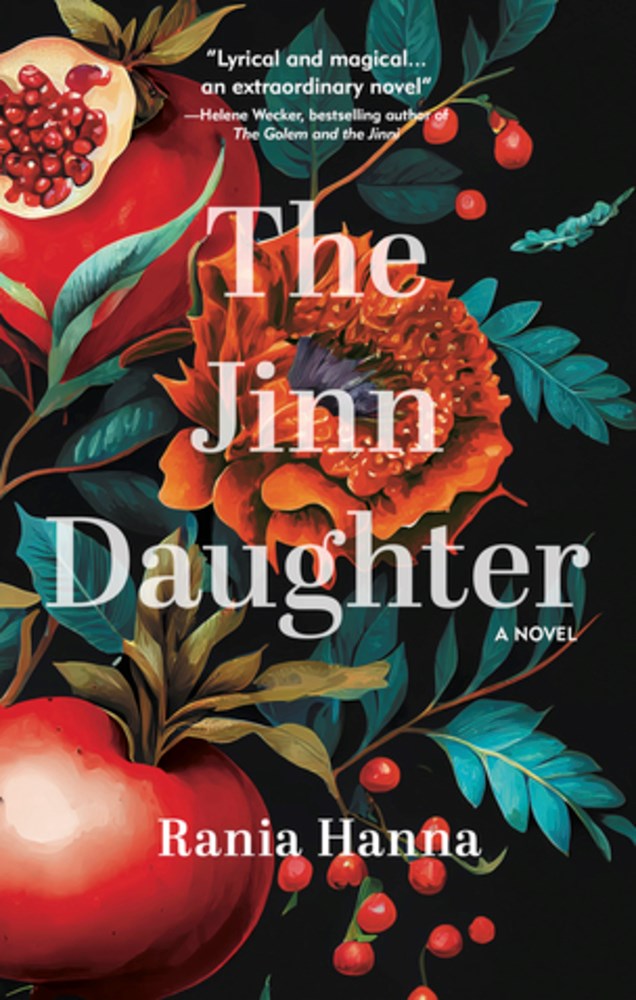
Rania Hanna (author of The Jinn Daughter), Erin Dodge and Ari Pluchinsky bring us the single-issue story, “The Archivist of Al-Azrakh”!

Sample page from “The Archivist of Al-Azrakh”

Signing off for now, and maybe for a while,
Rania

Movable Feast at Bookmarks – be there!

MARK YOUR CALENDARS

Guess where I’ll be this January? At the Moveable Feast at @bookmarksnc!
January 24-25th, 2025, in Winston-Salem, NC, both the Saturday afternoon and Sunday afternoon events will be a traditional Movable Feast style event, where each author will visit ten tables for ten minutes each (think speed dating with authors!)

You can view more information and find ticket links at bookmarksnc.org/MovableFeast.