Show me the glint of light

“Don’t tell me the moon is shining; show me the glint of light on broken glass.”—Anton Chekhov

Descriptions make or break writing. There’s nothing worse than reading a book, and being pulled out of the story by a bland description that seems more passive than active.

One word of advice that I’ve seen multiple times, and have experienced both as a reader and as a writer: the best writing is not about action or character development; it’s about how you are able to make music sing from the words that you write.

Don’t tell me that the violinist played a superb piece; show me how she made the audience cry and find goosebumps on their arms listening to her play.

*Note: This article was originally published on January 17, 2016. 

8 Middle Eastern-Inspired Fantasy Reads

The current book I’m writing draws from Middle Eastern folklore and mysticism, namely Jinns. As more books are published that draw from MidEastern themes, I’m devouring them as soon as I can. Not only for ideas for my books, but because of my Middle Eastern heritage: I love seeing my culture represented in literature that includes the mysticism, folklore, and fables! What a beautiful way to honor a rich and cultured history!

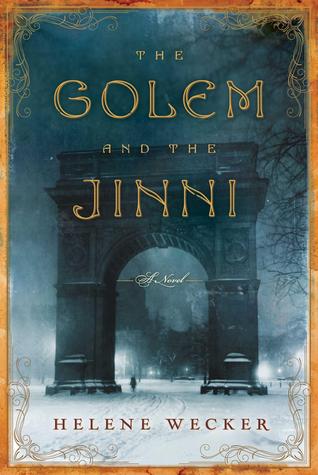
The Golem and the Jinni by Helene Wecker

Chava is a golem, a creature made of clay, brought to life by a disgraced rabbi who dabbles in dark Kabbalistic magic and dies at sea on the voyage from Poland. Chava is unmoored and adrift as the ship arrives in New York harbor in 1899.

Ahmad is a jinni, a being of fire born in the ancient Syrian desert, trapped in an old copper flask, and released in New York City, though still not entirely free.

Ahmad and Chava become unlikely friends and soul mates with a mystical connection. Marvelous and compulsively readable, Helene Wecker’s debut novel The Golem and the Jinni weaves strands of Yiddish and Middle Eastern literature, historical fiction and magical fable, into a wondrously inventive and unforgettable tale. 

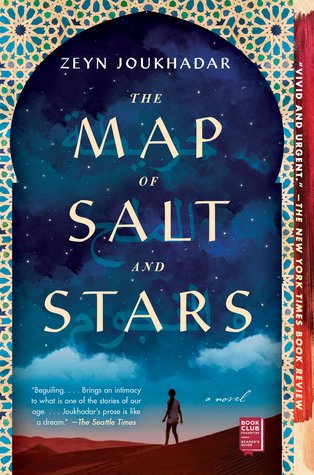
The Map of Salt and Stars by Zeyn Joukhadar

The story of two girls living eight hundred years apart—a modern-day Syrian refugee seeking safety and a medieval adventurer apprenticed to a legendary mapmaker.

It is the summer of 2011, and Nour has just lost her father to cancer. Her mother, a cartographer who creates unusual, hand-painted maps, decides to move Nour and her sisters from New York City back to Syria to be closer to their family. But the country Nour’s mother once knew is changing, and it isn’t long before protests and shelling threaten their quiet Homs neighborhood. When a shell destroys Nour’s house and almost takes her life, she and her family are forced to choose: stay and risk more violence or flee as refugees across seven countries of the Middle East and North Africa in search of safety. As their journey becomes more and more challenging, Nour’s idea of home becomes a dream she struggles to remember and a hope she cannot live without.

More than eight hundred years earlier, Rawiya, sixteen and a widow’s daughter, knows she must do something to help her impoverished mother. Restless and longing to see the world, she leaves home to seek her fortune. Disguising herself as a boy named Rami, she becomes an apprentice to al-Idrisi, who has been commissioned by King Roger II of Sicily to create a map of the world. In his employ, Rawiya embarks on an epic journey across the Middle East and the north of Africa where she encounters ferocious mythical beasts, epic battles, and real historical figures.

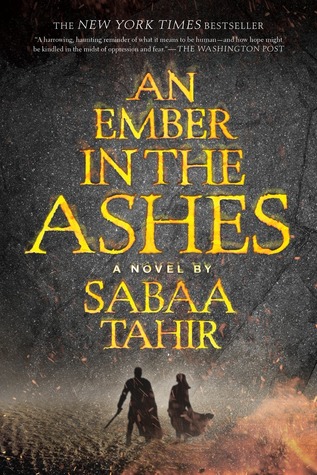
An Ember in the Ashes by Sabaa Tahir

Laia is a slave. Elias is a soldier. Neither is free.
 
Under the Martial Empire, defiance is met with death. Those who do not vow their blood and bodies to the Emperor risk the execution of their loved ones and the destruction of all they hold dear.
 
It is in this brutal world, inspired by ancient Rome, that Laia lives with her grandparents and older brother. The family ekes out an existence in the Empire’s impoverished backstreets. They do not challenge the Empire. They’ve seen what happens to those who do.
 
But when Laia’s brother is arrested for treason, Laia is forced to make a decision. In exchange for help from rebels who promise to rescue her brother, she will risk her life to spy for them from within the Empire’s greatest military academy.
 
There, Laia meets Elias, the school’s finest soldier—and secretly, its most unwilling. Elias wants only to be free of the tyranny he’s being trained to enforce. He and Laia will soon realize that their destinies are intertwined—and that their choices will change the fate of the Empire itself.

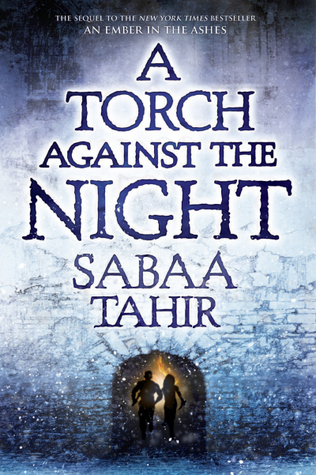
A Torch Against the Night by Sabaa Tahir

Elias and Laia are running for their lives. After the events of the Fourth Trial, Martial soldiers hunt the two fugitives as they flee the city of Serra and undertake a perilous journey through the heart of the Empire.

Laia is determined to break into Kauf—the Empire’s most secure and dangerous prison—to save her brother, who is the key to the Scholars’ survival. And Elias is determined to help Laia succeed, even if it means giving up his last chance at freedom.

But dark forces, human and otherworldly, work against Laia and Elias. The pair must fight every step of the way to outsmart their enemies: the bloodthirsty Emperor Marcus, the merciless Commandant, the sadistic Warden of Kauf, and, most heartbreaking of all, Helene—Elias’s former friend and the Empire’s newest Blood Shrike.

Bound to Marcus’s will, Helene faces a torturous mission of her own—one that might destroy her: find the traitor Elias Veturius and the Scholar slave who helped him escape…and kill them both.

A Reaper at the Gates by Sabaa Tahir

Beyond the Empire and within it, the threat of war looms ever larger.

The Blood Shrike, Helene Aquilla, is assailed on all sides. Emperor Marcus, haunted by his past, grows increasingly unstable, while the Commandant capitalizes on his madness to bolster her own power. As Helene searches for a way to hold back the approaching darkness, her sister’s life and the lives of all those in the Empire hang in the balance.

Far to the east, Laia of Serra knows the fate of the world lies not in the machinations of the Martial court, but in stopping the Nightbringer. But while hunting for a way to bring him down, Laia faces unexpected threats from those she hoped would aid her, and is drawn into a battle she never thought she’d have to fight.

And in the land between the living and the dead, Elias Veturius has given up his freedom to serve as Soul Catcher. But in doing so, he has vowed himself to an ancient power that will stop at nothing to ensure Elias’s devotion–even at the cost of his humanity.

Alif the Unseen by G. Willow Wilson

In an unnamed Middle Eastern security state, a young Arab-Indian hacker shields his clients—dissidents, outlaws, Islamists, and other watched groups—from surveillance and tries to stay out of trouble. He goes by Alif—the first letter of the Arabic alphabet, and a convenient handle to hide behind. The aristocratic woman Alif loves has jilted him for a prince chosen by her parents, and his computer has just been breached by the state’s electronic security force, putting his clients and his own neck on the line. Then it turns out his lover’s new fiancé is the “Hand of God,” as they call the head of state security, and his henchmen come after Alif, driving him underground.

When Alif discovers The Thousand and One Days, the secret book of the jinn, which both he and the Hand suspect may unleash a new level of information technology, the stakes are raised and Alif must struggle for life or death, aided by forces seen and unseen.

A Thousand Nights by E.K. Johnston

Lo-Melkhiin killed three hundred girls before he came to her village, looking for a wife. When she sees the dust cloud on the horizon, she knows he has arrived. She knows he will want the loveliest girl: her sister. She vows she will not let her be next.

And so she is taken in her sister’s place, and she believes death will soon follow. Lo-Melkhiin’s court is a dangerous palace filled with pretty things: intricate statues with wretched eyes, exquisite threads to weave the most beautiful garments. She sees everything as if for the last time. But the first sun rises and sets, and she is not dead. Night after night, Lo-Melkhiin comes to her and listens to the stories she tells, and day after day she is awoken by the sunrise. Exploring the palace, she begins to unlock years of fear that have tormented and silenced a kingdom. Lo-Melkhiin was not always a cruel ruler. Something went wrong.

Far away, in their village, her sister is mourning. Through her pain, she calls upon the desert winds, conjuring a subtle unseen magic, and something besides death stirs the air.

Back at the palace, the words she speaks to Lo-Melkhiin every night are given a strange life of their own. Little things, at first: a dress from home, a vision of her sister. With each tale she spins, her power grows. Soon she dreams of bigger, more terrible magic: power enough to save a king, if she can put an end to the rule of a monster.

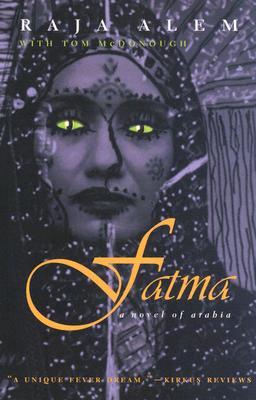
Fatma: A Novel of Arabia by Raja Alem

Fatma, an Arabian peasant girl, unwittingly embarks upon a strange journey of transformation the day her father marries her off to a snake handler with a sideline in potions brewed from venom. When Fatma is bitten by one of the snakes, she is changed from an innocent girl into an overpoweringly sensuous woman with a mysterious talent for controlling her husband’s snakes and an ability to travel with them into realms beyond ordinary human experience.” “Journeying into the Netherworld with her snakes, Fatma meets Prince Taray, a melancholoy warrior-hero. She and Taray bewitch each other and struggle toward union in rapturous rituals during which, among other things, Fatma alternately bursts into flames and melts into golden liquid.” Resonating with ritual and mystery, Fatma is a tale of one woman’s path to ecstasy – an enraptured vision of enchantment in this world and fulfillment in another. 

*Cover image from Graphic Art News: http://www.graphicart-news.com/amazing-arabic-graffiti-collection-in-a-book/#.Xa3qsOdKjxg

Hakawati Jinn – Chapter One

Leave your feedback in the comments!

The dead have been dropping all night. 

I awake before the sun is bright enough to cut across the horizon to gather the pomegranate seeds – each one a soul who has died in the last day – scattered across the front of my house into a basket, my hands red and sticky with juice.

There are many seeds this morning, and the weight of the basket tilts me as I hobble back inside the cottage. 

My daughter is still sleeping in her cot as I sit down, setting the basket on the table. My joints click, a side effect of the curse. I age faster than I should. Already I have white streaks in my hair, and some of my eyebrow hairs are white. Just thirty, but I look a decade older, at least. 

The seeds are bright red and plump, and I press them between two pieces of wood and let the juice seep into a bowl. Each seed contains the story of the person the soul belonged to. My job as mutahida, as storyteller, is to tell each soul’s story, to write each soul’s tale. It’s the only way for a soul to leave the waiting place in between life and death, and enter true death, or Mote. Once a soul’s story is told, they can take it to Mote’s gatekeeper and pay for their safe passage where they will have eternal bliss and peace. 

When the seeds have been pressed into juice, I take a sip and wrinkle my nose. “Bitter today,” I say to myself, pouring honey into the cup. I stir then take another drink. The stories come in flashes, too quick for my mind to understand, and I’m too tired to try, but my magic is fast enough to catch them. 

I see snatches of a river flowing fast and sweep, the brown of a head topped with seaweed floating on. I catch the green of a tree and a swing hanging from a thick branch. I think I hear the growl of a bear. Or the clash of blades. But everything comes too fast, and there are so many stories to tell – stories of days and lives lived. I rarely ever see the last moments of death, thankfully. 

I write, my fingers weaving stories in the air, words curling into smoke. I’m a hakawati jinn, and the stories I weave return to death and to the souls they belong to. 

I drink more of the juice, weaving smoky tales in the air with my other hand. The stories disappear almost as soon as they form, getting swallowed back into death. 

Layala stirs behind me, slipping out of her bed and padding behind me. She says nothing as she sets a pot of tea to boil and begins making our breakfast. 

I drink the last of the juice and, more out of habit, glance at the lone pomegranate seed I keep in a small glass jar on a shelf. 

Layala’s father. Those who have died by their own hand have no place in Mote. They are banished to jehinam, to suffer eternal cold and perpetual executions. 

It was the only love I could show him after his death – to keep him in the waiting place of death, rather than write his tale and send him to suffer. 

He visits us sometimes, as happy as any dead could be. 

As if thinking about him conjured him, he steps into the cottage, his body more smoke and ash than flesh and blood. 

“Illyas,” I say, rising to my feet. 

He kisses me, soft and, if not warm, then not the cold expected with the dead. And though his face fades through mine, I pretend I feel his solid flesh. 

“Sabah al kheer, baba,” our daughter says, throwing her arms around him. Good morning, father. Her arms collide with his body, the only few minutes of a day he is made of enough flesh to touch, though her skin is streaked with ash when she lets go. I reach out to touch him and he takes my hand. 

He can only keep his form a few minutes in a day, in the moments when the sun’s light turns from red and orange to its day colors. 

“And how are my girls today?” he says, as he does every visit. 

“Good,” Layala says. “I’m going to see jido again today.” Her grandfather. 

My dead lover’s face stiffens, but he forces a smile onto his face. “You should spend more time at home, with your mother,” he says, and I throw him a grateful look. 

But before Layala could respond, Illyas disappears as the sun’s light breaks through our windows and the morning is fully awake. 

We both sigh, always wishing for just one more minute with him. 

“I wish we could go into death,” Layala says. “You’re a jinn, you’re made of death itself. Are you sure there’s no way–”

“No, Layl. I’ve told you before. Jinns manage death, they don’t enter it or keep its company, not if they can help it.”

I hate lying to my daughter’s face, but her questions have plagued me for years. Ever since she was a child, she wanted to know: what was death like, was it something you could take trips to?

It’s better she knows as little as possible, even if she is half-jinn. She’ll likely never have my magic, and it’s best she doesn’t. 

“I’m going to jido’s,” she says with a sigh. “I’ll be gone all day.”

“Your father is right, you know. You should stay home more, learn a craft so you can support yourself when I die.”

“You’ll be around for many more years, maman. You just don’t like jido much,” she teases, kissing me on my head as she darts off to get dressed. 

I glance back at that lone pomegranate seed on the shelf. He’s nothing like his father, and thank the heavens for that. 

My daughter leaves the house in a flurry of color and voice. “Bye Maman!” she yells, barely throwing me a parting look. I give her a headstart, grabbing an empty bottle and one filled with honey, and a canteen of water. 

Then I take the stony pathway at the back of the house, and head straight for the cemetery. It’s filled with chipped tombstones sporting moss shoulders and spiderwebs. No flowers or notes mark any grave anymore – the cemetery has long been forgotten. 

Which is why it’s perfect for my escapes into death. I lean back against a tree and spy a fox watching me. 

“Come to see me walk into death, little one?” I say. 

The fox cocks its head at me, his snout curled up in a characteristic smile. Then it dashes off, its bushy tail following. 

I fill the empty jar with dirt from a grave, mix in the honey and water, and drink the mix. My mouth fills with granules of stone and sand and I try not to chew any, only swallow. The honey does little to mask the taste, but it’ll do. 

When the dirt water settles in my stomach, I press my hands to the ground and let the cold of the earth seep into my skin. It’s familiar, this feeling of being one foot in the warmth of life and the other in the cold of death. 

My dead lover greets me. He’s a shadow first, then the smoke curls in around him and I can just make out his features. He’s smiling, as usual, his hand outstretched me. I take it and like lightning striking me, my body jolts and my soul is in death. 

“Hakawati,” he says, calling me by my title rather than my name. “Hiyati.” My life. 

“Illyas,” I say, letting him guide me to a bench. Death surprisingly has small comforts for those who can’t or won’t pass on to Mote or jehinam. “How are you?”

He laughs, the sound gravelly but warm, like honey mixed with sand. I want to hold him like he used to hold me, when he was alive. But bodies move and fit differently in death, less flesh and more ash. “As good as can be. How are my girls?”

“Well enough. Your daughter threw animal shit at some boys who were bothering her yesterday. I don’t know if I should encourage her fiery personality or douse it,” I say, laughing. 

Illyas laughs, but there’s a tightness in his face. “She should be careful,” he says. “She’s still your daughter, and they don’t take kindly to that.” He brushes a hand across my face, and though I don’t feel skin, there’s still a trail of warmth. I lean my cheek into his touch, and he lets me rest my weight against him. 

“There’s so much I want to tell her,” I say, “But I don’t know if I should. And I’ve told her so many lies over the years. How do I undo that?”

Illyas says nothing, but when he tries to pull me in closer to his chest, we fade into each other, smoke curling into smoke. We pull back, our bodies regaining substance. 

“Hakawati, tell her a story. You’ve spun her tales since she was in a cradle, she will feel your meaning, even if she doesn’t understand it. Weave her a story, see what she says.”

“She’ll roll her eyes and ask to go to her grandfather’s house. She’s had little patience for me lately.”

Illyas laughs, shaking his head. “She reminds me of me when I was her age. I don’t know if that’s a good thing.”

“I loved you at that age,” I say, reaching out for his hand. I let mine hover over his, so we feel each other’s warmth. 

Loved?” he teases. “Not anymore?”

I crack a smile, “You know you’re my one and true love.”

He chuckles again, then sobers. “You shouldn’t be alone anymore. Layl is getting older, she will one day leave home to start her own. What will you do then?”

“Visit you more often,” I say. 

Illyas shakes his head. “You should find someone.”

“I remember you being rather jealous of a certain Ihab in the village,” I tease, “When he gave me flowers during the midsummer festival.”

Illyas barks out a laugh. “I was young and unsure of your affection. And I seem to recall you encouraging him, just to make me jealous.”

“I might have,” I say with a smile. “I don’t remember.”

“Lies. You remember everything as if your brain is a stone and someone’s carved words into them.” He smiles at me, the lines around his eyes crinkling, as if he were still made of true flesh. I want to hold him, to smell him..

Instead, I get to my feet. “I should return. The sun will be setting soon.” Time works differently in death than in life, at once faster and slower. 

“I’ll walk you home,” Illyas says, and we both smile, because there’s no leaving death for Illyas tonight.

I hover my lips at his cheek in the mimicry of a kiss. Anything more, and we’d fade into each other. 

“Goodbye, Hakawati,” Illyas says. “I’ll miss you until next time.”

Revision is re-envisioning

There’s nothing akin to the agony of editing your book. This suffering goes beyond the whole “kill your darlings” because, at least for me, I’ll gladly kill my darlings if it means saving my book.

No, the agony for me is the one thousand and one revisions my book has to go through. I already did one revision, which was a sweep of the book, pulling out scenes and sentences, and adding new ones if I saw fit. It was more of a holistic approach, which I completed in a week.

However, the next two weeks are going to be me focusing on dun dun dun: setting. The setting that I apparently failed to convey when I wrote my first draft. The setting that I’m going to have to describe beautifully if I want my book to work. The setting that I’m not sure how to describe.

However, to keep sane I think the best approach I can take to my editing is to do a number of revisions, each time focusing on one aspect:

Revision 1: Holistic: Go through the book, reacquaint yourself with the details and the scenes, and try pulling out what doesn’t work. Gut your work. Kill your darlings, or if that’s too gory a thought for you, lay your darlings to rest in a beautiful silk-lined casket and set them out to sea. Focus on sentence structure, grammar, punctuation, so that when you move on to other revisions, you aren’t distracted by those sorts of things.

Gut your work

Revision 2: Setting: Weave the senses into your book. Don’t overdo it, but make your reader feel, with all their senses, your scenes. Focus more on adding in sound, sight, temperature, touch, color, tactile experiences, wetness, dryness, humidity, solidness, softness, dampness, harshness, anything that brings your world to life. Describe something as being chestnut-colored instead of brown. Describe the sound as tinkling instead of light and airy. Describe the feel of the cliff under her hands as she climbed it, instead of saying only that she grunted. Make the setting active, interacting with the characters, or having the characters interact with it. Don’t just have the setting be a backdrop that is barely noticeable. Bring out the life of your setting. View your setting as its own character, and I think you will do well.

View your setting as its own character

Revision 3: Focus on the emotions of your character. Now that you have the setting down, make sure your character responds to it. Your character’s setting should challenge them, interact with them, push them, reward them, punish them, twist them around and make them dizzy. Make your character a part of the setting, and make the setting a part of your character. Have your characters and their setting hold hands. Focus on events: how do your characters behave? Do they only react? They should do more than just react to events; they should create events, change events. Emotions fuel your character. Emotions and actions are your character. Your character is nothing without emotion, unless your character is all about not having emotions.

Have your characters and their setting hold hands.

Your character is nothing without emotion, unless your character is all about not having emotions.

Revision 4: Focus on plotholes. Are there any? Does everything make sense chronologically, assuming time works in your book as it does in our world. Is your plot fluid? Your plot should not only make sense, it should be interesting, have twists, and bewitch a reader.

Your plot should not only make sense, it should be interesting, have twists, and bewitch a reader.

Revision 5: World-recreation. Make sure your world fits in with your setting, and that everything is interactive. You could probably do this during the setting revision, but it should be its own focus at some point. Is your world a sprawling expanse, or s single room in a lonely house? Either way, make sure that your world is interesting for both your characters and your readers. Interesting doesn’t have to mean unique or out-of-this-world. It could be boring, really, in the sense that you character is bored by their world. Regardless, make your world alive for your readers and interactive with them. Your world should be a reflection of your characters’ behaviors. That is, your world should not be separate from your characters, but a part of their feelings and actions.

Your world should be a reflection of your characters’ behaviors.

Revision 6: Be a seamstress. Bring all the pieces together. Do another holistic revision. Do all the pieces fit together? Have you woven your strands with golden thread? If not, it’s back to step 2.

Revision 7: Let it sit. I think letting go of your story, even if only for a few weeks, is a revision in and of itself. By letting it sit, and moving on to something else to clear your mind, you’re letting your brain distance itself from the details so that when you come back to your story, you can look at it with fresh eyes and from a big-picture perspective.

Let it sit.

Revision 8: Read through your book, and holistically attend to all those previous steps mentioned. It’s holistic in a way you haven’t done before, even in step 6. This time, you’ve spent time away from your MS and can focus on the bigger picture and the general themes of your story, your characters, setting, and everything else you should have already attend to, but can now do with fresh eyes and mind. Give your book one more holistic revision, and focus on the big picture. Remember that revision is re-envisioning.

Remember that revision is re-envisioning.

*Note: This article was originally published on January 19, 2016.

**Header image courtesy of Google images.

Hakawati Jinn – Chapter Four

NEW BOOK ALERT!

I’m working on a new book and want YOUR feedback! Each week, I’ll post a new chapter, and want you to provide your thoughts, opinions, feeling, and feedback on the chapter.

Be brutally honest.

I pace my one-room house, waiting for my daughter to return. But she doesn’t.

“Saqr,” I say, awakening the hawk once more. It returned to clay as soon as it told me what it saw, and I brought it back with a touch. “Go find Layala.”

The hawk leaves, and I continue my pacing. Do I walk to the next village? Leave the hut and search for my child? Or do I let her be, and trust she will make good decisions. 

Didn’t you make horrible, stupid decisions when you were just a bit older than her? 

Saqr returns and I lay a hand on him. The images come in snatches, as if he darted around, looking for a better vantage point. 

So, Layala spent the night at the jinn’s house. She’s asleep, her cloak draped over her clothed body, the fire burning bright. The jinn sits in his chair, watching her, stoking the flames every so often to get it from burning too low. 

Saqr picks up a stick and flings it at the window, then hides from view. He perches on a tree branch, looking into the house. Layala stirs, then notices the morning light shining through thre window. 

I can’t hear what she says, but I see her lips move through the window. Her eyes are wide and she’s shaking off the jinn’s grasp on her arm. 

I think I see her mouth ‘I have to go.’

I’m sitting at my table, drinking pomegranate, when she comes in through the door. 

“I was worried all night,” I tell her, my voice calm, even though I noticed a little shakiness to it. I pull up a chair and pat it, inviting her to sit. 

She remains on her feet. “I fell asleep at jido’s,” she lies, not meeting my gaze. 

“I see. Did you eat yet?”

She shakes her head, now picking at the edge of our small wooden table. “I’m going to rest,” she says.

“I thought you slept at your grandfather’s?” I put a hand to her head, feeling for fever. “Are you unwell?” I say. 

“No, just tired,” she says, and her cheeks flush red. I let her go; best to not press her and have her shut herself off from me. No, let her come to me with her heart’s secrets. 

Layala undresses and slips into bed, her back towards me. I bend over her, tucking the covers under her chin and around her slender body, just as I did when she was much younger. 

“I love you, maman,” she says. “I’ll never do anything to hurt you.”

I’m surprised by this, but only kiss her soft cheek, still round with baby fat yet to shed. “I know, hiyati.” 

I stoke the fire to make sure she’s warm, then slip out into the night. The air is cold, and I wrap my simple cloak tight around me. I long for the feel of the earth under me, for Illyas’ smile, for his reassuring words. 

I make a snap decision and steal back into the house, grabbing jars and water, before padding towards the cemetery. 

Illyas finds me, as usual. 

“Hiyati,” he says, “What’s wrong?” HIs brows are furrowed as he tries to draw me close, but our bodies aren’t flesh enough for that. Instead, he has me sit down on the pale ground, made of tiles cracked and cool, flowers and weeds growing through the cracks. 

“She’s in love with a jinn boy,” I say. 

“Who? Layala?”

I nod. “I saw them, through Saqr. She spent the night with the boy.”

Illyas tenses. 

“She kept her clothes,” I say quickly, but it does little to ease the tension rippling through his body. “But still. She lied to me.”

“Who’s the boy?” Illyas said, his voice gruffer than I’ve heard it in a while. 

“I don’t know. But I’ll find out.”

Illyas gives a sharp nod, his brows furrowing deeper over his nose bridge. “I’ll wring his neck if he does anything to hurt her.”

I snort. “You and me both, hiyati. The last thing I’d want is for her to fall pregnant at barely fifteen.”

Both our faces flush; our second-greatest mistake, and greatest joy, has been Layala. Born to young parents who knew nothing of the world, never mind raising a child, Layala tore out of me, bright red screaming, on a night just shy of my sixteenth birthday. Illyas was just three years older, and fainted at all the blood. I remember cleaning my daughter’s face of my insides, while fanning my lover with a slip of paper to wake him. 

Illyas reaches over to hover his lips over mine, and for a moment, I feel nothing but his warmth. Then it is snatched away, and lightning strikes through my body. 

Something is pulling my soul back into my body. 

I gulp in air and flick my eyes open, to find my daughter standing before me. Her face is twisted in anger, and she’s standing with her hands on her hips. 

“Maman,” she says, and it sounds like she’s accusing me of something. “What are you doing?”

I sniff, get to my feet, dusting dirt off me. “I needed some fresh air,” I say. “I guess I fell asleep.”

She narrows her eyes at me, as if not quite believing what I say. “I woke up and you weren’t there,” she accuses. 

“Well,” I say, reaching my hand out so she can help me up. I grunt, heaving my weight forward as my knees crack. “Long day, I suppose. Help your maman to bed, then,” I add, leaning some of my weight on her strong, young body. 

Back in the house, I set a kettle to boil, not tired enough to sleep. Layala sits beside me, legs curled under her. She picks at her nails, a habit she has only when something is on her mind. 

“What is it, kushtbani?” I use her father’s nickname for her: thimble. She was so tiny when she was born, she could fit into the palm of his hand if curled up. 

“Nothing, maman,” she says with a sigh. “I just- I want to tell you something, but not now.”

She looks at me with her wide, dark eyes, eyelashes fringing them like tassels on a curtain. “Tell me when you’re ready, kushtbani. I can wait.”

She smiles, and my heart aches at her beauty. She doesn’t see it yet, but under those baby cheeks are a grown woman’s bones. 

She pushes back her chair and pads over to her cot, and though she is just feet away from me, I’ve never felt farther from my child. There are too many lies between us, and I must do something about it. 

Morning comes angry, with rain pelting the window, and the wind howling through the trees. 

I dash outside, grabbing at as many seeds as I can. Layala helps, grabbing handfuls of pomegranate and dirt and grass, while shoving them into the basket. We run back inside, laughing at the downpour as we peel off our sodden clothing. 

“I’ll get the fire going, maman,” she says. 

I sit down and sift through the seeds, setting aside the clumps of grass Layala grabbed. I juice the seeds, taking a sip to taste the mood. A sense of sadness washes over me, and I hold back the need to cry. 

“Is everything fine, maman?”

I nod, reaching for a lemon. 

“Ah,” Layl says, “It’s sad seeds.”

“Very,” I say, squeezing the lemon into the juice and stirring. The sourness of the lemon masks the sadness of the souls, enough that I can drink without crying. 

The stories shove around me in my mind, snatches of sound, morsels of flavor. I get the whiff of warm cinnamon, the taste of cardamom in rice. The feel of a baby’s skin, the weight of a warm fur around a neck on a cold winter day. 

The stories clamor for my attention, each one trying to be the next that gets written. Souls can be impatient, eager to move on. Eager to have their tale written to pay Mote with. 

I try my best, feeling the ache in my bones growing and the din in my head rising. A headache is coming on.

I sense Layala near me, then feel the press of a cloth to my nose. I must be bleeding again, the strain of storytelling too much. 

“Maman,” she says, her voice sounding far away. “Take a break. The dead can wait.”

“No rest for the dead,” I say, not aware of what I’m saying. “No rest for the weary.”

A story floats toward me. I feel its incessant nagging, a whining sound that grows in my ears like the church bell on a sunday morning. 

A young man spent his days drinking and casting his lot at the gambling tables. Every morning he would stumble home, and his poor father would help him to bed. The son would have vomit encrusted in his clothes, and his hair would be covered in sweat and dirt. 

Fed up with his son, the father tells him one day, ibnay, my son, how about you spend just this one night without getting sakran. Spend one night without drink. 

The son laughs, then says to his father, baba, for you, I will do as you say. Just this one night. 

The father says, come, take me to the place you like the most for drink. We will watch and I will show you what I see. 

The two go to the son’s favorite tavern and walk inside. Men sit in chairs, slumped over from drink, or arguing with each other in slurred words. 

The son glances around and spots his friends, but he keeps to the shadows, watching them instead. 

See? says the father. This is what I see when you are sakran: a foolish man who can’t even string two sensible words together and who stumbles around like a babe just learning to walk. 

The son and father stay another hour, when the drunken men begin fighting over quibbles, or vomiting over each other. The son is disgusted and turns his face away from the tavern. 

Baba, he says, you are right. I will mend my ways immediately.

But his father is not so easily placated. Ibnay, he says, do one more thing for me. Go, go find the King of Gamblers, and see how he lives. 

The son grins, and seeks out this King. He searches through villages and towns, asking for where the King of Gamblers resides. 

The first old man who knows tells him to seek a shaman in the village over. He will know where the king is. 

The son goes to the shaman who tells him to seek an old goat-herd who dwells in the valley. The son finds the goat-herd who tells him to find the medicine woman who lives in the forest.

The son finds the medicine woman who tells him, ah, ibnay, I know the one you seek. He is my brother, and he lives just up that mountain. She points at the mountain in the distance. “Climb the mountain, and there you will find the King of Gamblers.”

The son spends days reaching the mountain. And more days climbing it. He stops at the first person he sees. 

It is an old man, with skin like leather, and teeth stained with tobacco. 

I want to meet the King of Gamblers, the son says. 

The man looks at him and invites him into the simple tent he lives in. The son enters, finding a threadbare carpet laid on the ground, and a rolled up mat in the corner. There is no food but a bit of bread with green mold, and nothing to drink but a pot of tea. 

The old man offers his food and drink but the son refuses and offers his own food instead. 

The man tears greedily into the dried meats and figs the son has with him, then leans back to watch the son. 

Ibnay, he says, why do you seek the King of Gamblers?

My father, he told me to search for him. 

Ah, the old man says. Well, you have found him.

The son flicks his eyes around him. The palace is expected is but a tattered tent. The riches, the women, the feasts he sought were all like air. 

Now I know why my father told me to find you, the son, says. For the King of Gamblers is no king at all. 

I write the story and as the last word is set, the soul snatches its tale and I am left with just the sour taste of the lemons. 

I turn to my daughter and just as I do, there is an angry knock at the door. 

“Get behind me,” I tell her, as I slip out of my chair and grab a wooden spoon from the table. 

The knocks are angrier, and so are the voices behind the door. 

“Open, hakawati!”

“Layl, go through the back,” I say. 

“No, Maman.”

This is no time for defiance, but I don’t have a chance to say anything because the door is kicked in and three men enter. 

“Hakawati,” the first man says. “We’ve come for you and that illborne child of yours.”

Hakawati Jinn – Chapter Three

NEW BOOK ALERT!

I’m working on a new book and want YOUR feedback! Each week, I’ll post a new chapter, and want you to provide your thoughts, opinions, feeling, and feedback on the chapter.

Be brutally honest.

Layala slips into the house that night far later than she’s allowed to be out. 

“Maman?” she whispers. I pretend to be asleep but watch her from my cot. She has a smile on her face, one that stops my heart for a breath. It’s the smile of a young girl in love. 

I want to reach out to her, to tell her that love will come, more mature love, and to wait. But I know it’ll be no use; I had that love at her age, who am I to begrudge her it. 

Instead, I let her be, and stay up the rest of the night, counting my prayer beads and asking a wish-prayer on each one. 

Keep her safe.

Keep her happy. 

Let her find good love.

Let her know peace. 

Let her know her heart and mind. 

Let her be. 

It’s a prayer I’ve said for Layala since before she was born. 

Before the sun has even had a chance to yawn, Layala is up and about, setting tea, kneading dough, and laying out the zaatar and oil we will eat for breakfast. 

“Layl, you’re up early,” I say. 

“Sabah al kheer, maman.” Good morning. 

“Your father won’t be here for another two hours, at least,” I add.

Layala ignores me, humming and smiling to herself. I want to know who the boy is. But though the words hover on my lips, I don’t ask her. Let her tell me in her own time. 

“Off to jido’s?” I say, when we’re done eating and she slips on her velvety blue robe. It’s one reserved for special occasions, though we rarely have those. 

She nods, but her cheeks flush red with the lie. I wonder if I should send a hawk out to follow her. I decide I will. 

As soon as Layala dashes out the door, barely a goodbye on her lips, I take a clay ochre-hued hawk from the shelf and run my hands over it. 

Its eyes flash open and I set it down on the table, watching it grow to full size. 

“Watch over my girl, Saqr,” I tell it, weaving the words in the air with my fingers and letting them sink into the hawk’s fresh feathers. 

Its eyes glint and in the next breath, it’s out the door and streaking into the sky. 

I grab my basket and go outside the gather the pomegranate seeds from the night before. The basket feels heavy this morning, though there are fewer seeds than normal. Just a few handfuls of dead souls, but as I carry the basket on my hip, my bones feel weighed down.

Sighing, I slip into the house and shut the door behind me. Again I press the seeds into a juice and again I drink that juice. Every morning of every day, for fourteen years.

The stories are sharp, cutting through me like daggers. I pour in extra honey, stirring it in until I can no longer taste pomegranate, only bee’s nectar. 

I catch the tail of one story, and it surprises me. I know this woman, an old one from the village next door. She used to cook for my family, when we were wealthy and jinns were respected. 

But like every other soul, her story is told through images, through symbols that make little sense, even put together. The images of her life fade into the story of a pearl tree. 

The pearl tree stood alone in the center of a poor man’s garden. 

It dropped iridescent pearls every morning, but if the man got too close, branches whipped out to slap him. Pearls at his feet, and not one to sell in the markets. 

Still, the man tried every so often to snatch just one pearl. But each effort left him with a welt across the face and a gash on his arm. 

One day, the man grew so angry he decided to cut down the tree. He took an axe to its roots, dashed them into pieces, and gathered the pearls. One basket, two, then three were filled with the pearls. 

The tree lay in ruin, however, its once proud trunk a stump in the garden. Its branches lay scattered about, hacked into pieces. 

The man smiled to himself, thinking of all the riches he would buy. New teeth to replace the ones he sold for a bit of coin to buy his food. New shoes to protect his rough bare feet from being cut on stones along the road. A new house, with a roof that didn’t leak. And, most of all, a wife. A beautiful one, to be dressed in jewels and dresses fit for a rani.

But when the man checked on his baskets later in the day, he found nothing but ash. He pulled at his thin hair, ripping it out in clumps. 

And in the midst of his bawling, a knock sounded at his door. 

He snatched the door open, finding the kingdom’s prince standing at his door. 

“I have heard tales of a magic tree that drops pearls instead of leaves. Do you know of this tree?”

“Why do you ask?” said the man.

“I wish to plant it in my own gardens. I will pay handsomely for it.”

The old man glanced behind the prince, at the severed pieces of the pearl tree. 

“You did this?” the prince said, following the man’s gaze. 

The man nodded, tears welling up in his eyes.

“Stupid, stupid man,” the prince said. “Do you know what you’ve done? That tree, those pearls, they are the dead. The souls of our dead. Without that tree, the dead cannot pass to the next life. They will become ghouls, wandering the earth, wreaking havoc on it.”

And just as the man hacked at the tree, the prince’s soldiers cut down the man. They gathered the pieces of the tree, hoping upon hope that there was some magic in the world that could heal it. 

The story ends there, and I am none the wiser to its meaning. Still, I sense the woman clutching her story to her breast, worth more to her than gold to the living. Her dead spirit understands the tale more than my living one could. I sense her gratitude, like sun on a cold winter day, and then I feel the thread between us cut. 

“Allah ma’eek”, I whisper. God with you. She’s paid her way into Mote with our tale; she will have everlasting peace now. 

I turn back to my juice and drink the rest, weaving each story as lovingly as I can. The morning spread apart into the afternoon before I am through. Night falls, and still Layala hasn’t returned home. 

Saqr? I think, Where is she? I pad over to the door, sticking my head outside. I glance expectantly at the stony pathway to our house, hoping to find Layala on it. But it’s empty save for a rabbit who hops away into the woods beyond. 

The hawk shoots in through the door, landing deftly on the table. 

“Tell me,” I say, laying my hand lightly on its back. 

I see flashes of Layl as Saqr followed her. She walks through town, her velvet hook up to hide her face. Smart girl. 

She walks into a ribbon shop, leaving empty-handed. Then she wanders more around town, looking at the wares, her face always hidden from others’ views. 

Until she stops at the edge of the market, and instead of turning back home, she continues on. She walks to the village over, her steps growing lighter, more skips than steps now. She’s happy. 

And then she stops at a door, glancing around as if not wanting anyone to see her. She knocks, once, twice, before the door swings open. I see a hand, pale with long fingers grip my daughter’s arm and pull her in. 

Saqr’s view shifts, now glancing through the window of the house. Layala is inside, sitting by a fire, her cloak off. Her face is in full view of a boy. Just as I expected. 

But this is no ordinary boy. He is one made of smoke, hair tipped with flames. His face is pale, his eyes dark, and his teeth shine with silver. He is no ordinary boy for he a jinn. 

And jinns are trouble. 

My beta reader likes my first draft!

I am so happy! A wonderful beta reader I’ve hired before has always had a lot of (very useful) critiques about my manuscripts in the past. But since I started a new book, I decided to send her the first 25 chapters of my manuscript.

And she had wonderful news about it! This came in perfect timing because I’ve been feeling down about my book all week, and last night, ripped out the last 12 chapters I wrote.

But her words are motivating me to take back up the keyboard and type on!

Here you go! I am beyond impressed by this piece! You’ve improved so much, it’s like a different writer! (Your last work was good, don’t get me wrong, but this is on a whole other level.) If I were an agent and saw these first pages, you better believe I’d want more. It’s so clean, too. I am just raving about this. Up until the final two chapters, I had almost no complaints. Keep up the good work!

Make no mistake, she gave me TONS to work on, so I have my work cut out for me. But her words are so uplifting, especially as I usually hire a beta after I’ve completed a manuscript. This time, I decided to hire midway so I don’t waste time doing the wrong thing for 50+ chapters and 300+ pages. I’m so glad I did.

Hakawati Jinn – Chapter Two

NEW BOOK ALERT!

I’m working on a new book and want YOUR feedback! Each week, I’ll post a new chapter, and want you to provide your thoughts, opinions, feeling, and feedback on the chapter.

Be brutally honest.

I awake before the sun is bright enough to cut across the horizon. 

The dead have been dropping all night. I gather the pomegranate seeds – each one a soul who has died in the last day – scattered across the front of my house into a basket, my hands red and sticky with juice. 

Layala is still sleeping as I sit down, setting the basket on the table. My joints click, a side effect of the curse. I age faster than I should. Already I have white streaks in my hair, and some of my eyebrow hairs are white. Just thirty, but I look a decade older, at least. 

I press the seeds and let the juice seep into a bowl. Each seed contains the story of the person the soul belonged to. My job as mutahida is to tell each soul’s story, to write each soul’s tale. It’s the only way for a soul to leave the waiting place in between life and death, and enter true death, or Mote. 

I take a sip of the pomegranate juice and wrinkle my nose. “Bitter today,” I say to myself, pouring honey into the bowl. I stir then take another drink. The stories come in flashes, too quick for my mind to understand, and I’m too tired to try, but my magic is fast enough to catch them. 

I write, my fingers weaving stories in the air, words curling into smoke. I’m a hakawati jinn, and the stories I weave return to death and to the souls they belong to. Once a soul’s story is told, they can take it to Mote’s gatekeeper and pay for their safe passage into Mote. From there, they will have eternal bliss and peace. 

I drink more of the juice, weaving smoky tales in the air with my other hand. The stories disappear almost as soon as they form, getting swallowed back into death. 

Layala stirs behind me, slipping out of her bed and padding behind me. She says nothing as she sets a pot of tea to boil and begins making our breakfast. 

I thank the heavens for her every day, the one good thing in my life. 

I drink the last of the juice and, more out of habit, I glance at the lone pomegranate seed I keep in a small glass jar on a shelf. 

Layala’s father. Those who have died by their own hand have no place in Mote. They are banished to jehinam, to suffer eternal cold and perpetual executions. 

It was the only love I could show him after his death – to keep him in the waiting place, rather than write his tale and send him to suffer. 

He visits us sometimes, as happy as any dead could be. 

As if thinking about him conjured him, he steps into the cottage, his body more smoke and ash than flesh and blood. 

“Illyas,” I say, rising to my feet. 

He kisses me, soft and, if not warm, then not the cold expected with the dead. And though his face fades through mine, I pretend I feel his solid flesh. 

“Sabah al kheer, baba,” our daughter says, throwing her arms around him. Good morning, father. Her arms collide with his body, the only few minutes of a day he is made of enough flesh to touch, though her skin is streaked with ash when she lets go. I reach out to touch him and he takes my hand. 

He can only keep his form a few minutes in a day, in the moments when the sun’s light turns from red and orange to its day colors. 

“And how are my girls today?” he says, as he does every visit. 

“Good,” Layala says. “I’m going to see jido again today.”

My dead lover’s face stiffens, but he forces a smile onto his face. “You should spend more time at home, with your mother,” he says, and I throw him a grateful look. 

But before Layala could respond, Illyas disappears as the sun’s light breaks through our windows and the morning is fully awake. 

We both sigh, always wishing for just one more minute with him. 

“I wish we could go into death,” Layala says. “You’re a jinn, you’re made of death itself. Are you sure there’s no way–”

“No, Layl. I’ve told you before. Jinns manage death, they don’t enter it or keep its company, not if they can help it.”

I hate lying to my daughter’s face, but her questions have plagued me for years. Ever since she was a child, she wanted to know: what was death like, was it something you could take trips to?

It’s better she knows as little as possible, even if she is half-jinn. She’ll likely never have my magic, and it’s best she doesn’t. 

“I’m going to jido’s,” she says with a sigh. “I’ll be gone all day.”

“Your father is right, you know. You should stay home more, learn a craft so you can support yourself when I die.”

“You’ll be around for many more years, maman. You just don’t like jido much,” she teases, kissing me on my head as she darts off to get dressed. 

I glance back at that lone pomegranate seed on the shelf. He’s nothing like his father, and thank the heavens for that. 

My daughter leaves the house in a flurry of color and voice. “Bye Maman!” she yells, barely throwing me a parting look. I give her a headstart, grabbing an empty bottle and one filled with honey, and a canteen of water. 

Then I take the stony pathway at the back of the house, and head straight for the cemetery. It’s filled with chipped tombstones sporting moss shoulders and spiderwebs. No flowers or notes mark any grave anymore – the cemetery has long been forgotten. 

Which is why it’s perfect for my escapes into death. I lean back against a tree and spy a fox watching me. 

“Come to see me walk into death, little one?” I say. 

The fox cocks its head at me, his snout curled up in a characteristic smile. Then it dashes off, its bushy tail following. 

I fill the empty jar with dirt from a grave, mix in the honey and water, and drink the mix. My mouth fills with granules of stone and sand and I try not to chew any, only swallow. The honey does little to mask the taste, but it’ll do. 

When the dirt water settles in my stomach, I press my hands to the ground and let the cold of the earth seep into my skin. It’s familiar, this feeling of being one foot in the warmth of life and the other in the cold of death. 

My dead lover greets me. He’s a shadow first, then the smoke curls in around him and I can just make out his features. He’s smiling, as usual, his hand outstretched me. I take it and like lightning striking me, my body jolts and my soul is in death. 

“Hakawati,” he says, calling me by my title rather than my name. “Hiyati.” My life. 

“Illyas,” I say, letting him guide me to a bench. Death surprisingly has small comforts for those who can’t or won’t pass on to Mote or jehinam. “How are you?”

He laughs, the sound gravelly but warm, like honey mixed with sand. I want to hold him like he used to hold me, when he was alive. But bodies move and fit differently in death, less flesh and more ash. “As good as can be. How are my girls?”

“Well enough. Your daughter threw animal shit at some boys who were bothering her yesterday. I don’t know if I should encourage her fiery personality or douse it,” I say, laughing. 

Illyas laughs, but there’s a tightness in his face. “She should be careful,” he says. “She’s still your daughter, and they don’t take kindly to that.” He brushes a hand across my face, and though I don’t feel skin, there’s still a trail of warmth. I lean my cheek into his touch, and he lets me rest my weight against him. 

“There’s so much I want to tell her,” I say, “But I don’t know if I should. And I’ve told her so many lies over the years. How do I undo that?”

Illyas says nothing, but when he tries to pull me in closer to his chest, we fade into each other, smoke curling into smoke. We pull back, our bodies regaining substance. 

“Hakawati, tell her a story. You’ve spun her tales since she was in a cradle, she will feel your meaning, even if she doesn’t understand it. Weave her a story, see what she says.”

“She’ll roll her eyes and ask to go to her grandfather’s house. She’s had little patience for me lately.”

Illyas laughs, shaking his head. “She reminds me of me when I was her age. I don’t know if that’s a good thing.”

“I loved you at that age,” I say, reaching out for his hand. I let mine hover over his, so we feel each other’s warmth. 

Loved?” he teases. “Not anymore?”

I crack a smile, “You know you’re my one and true love.”

He chuckles again, then sobers. “You shouldn’t be alone anymore. Layl is getting older, she will one day leave home to start her own. What will you do then?”

“Visit you more often,” I say. 

Illyas shakes his head. “You should find someone.”

“I remember you being rather jealous of a certain Ihab in the village,” I tease, “When he gave me flowers during the midsummer festival.”

Illyas barks out a laugh. “I was young and unsure of your affection. And I seem to recall you encouraging him, just to make me jealous.”

“I might have,” I say with a smile. “I don’t remember.”

“Lies. You remember everything as if your brain is a stone and someone’s carved words into them.”

“Speaking of stone,” I say. “Layala found a tombstone, with someone’s name on it. Hasim Hasan. Do you know it?”

Illyas’ shoulders tense. “Tell her keep away from that grave. Even in death, I wouldn’t trust him.”

“Why? Who is he?”

“He was an assassin, a jinn hunter, in my great-grandfather’s time. My father is his godson, you know. When baba imprisoned the jinns, he did so with Hasan’s grandson’s help.”

I nod, getting to my feet. “I should return. The sun will be setting soon.”

“I’ll walk you home,” Illyas says, and we both smile, because we know the dead fear the dark, and there’s no leaving death for Illyas tonight.

I hover my lips at his cheek in the mimicry of a kiss. Anything more, and we’d fade into each other. 

“Goodbye, Hakawati,” Illyas says. “I’ll miss you until next time.”

The Hakawati Project: The Syrian Crisis — HyeTert

YEREVAN—The Los-Angeles/Berlin based non-profit Hakawati (storyteller, Arabic) has announced that it will be cooperating with the Sundance Institute and Film Independent to organize and launch a two-month comprehensive filmmaking lab for those impacted by the war in Syria called The Hakawati Project (THP). To be hosted in Armenia, THP will provide a platform to nurture […]

The Hakawati Project: The Syrian Crisis — HyeTert

Hakawati Jinn – Chapter One

NEW BOOK ALERT!

I’m working on a new book and want YOUR feedback! Each week, I’ll post a new chapter, and want you to provide your thoughts, opinions, feeling, and feedback on the chapter.

Be brutally honest.


“Maman!” my daughter yells. She comes running up the stony pathway to our hut on those long colt legs. “Maman, look what jido gave me!”

I force the tension out of my jaw and smile at her instead, wiping my hands, still sticky with pomegranate juice, on the front of my dress. 

She waves a bundle of papers and a shiny pen – a gift from her grandfather. “He said he is going to send me books,” she says, twirling in front of our home. 

I smile at her excitement, and reach out for the pen.

“It’s lovely,” I say, holding its golden body in my fingers. “What will you write with it?”

“Oh, I don’t know,” she says, pursing her lips in thought. “Stories. Like you do, except I’ll put them on paper.”

 “Your stories and mine are different, bintay,” I tell her. My daughter. 

She rolls her eyes in all the exasperation of a girl on the cusp of womanhood. Still, she’s just fourteen, and I pull her in for a hug. She smells the same as she did when she was a baby – of powder and sweet skin. I breathe in her scent, keeping her in my arms for as long as she’ll let me. But soon enough, she’s unwrapping herself out of my arms and running into the house. 

I follow and watch my child sit down at our table, scribbling on those blank sheets. She glances up when she senses my staring and rolls her eyes again. 

“What else did you do today?” I say. “Were you in the cemetery again?” I add, staring pointedly at her dirt-covered knees. 

“I don’t get why you hate me being around dead bodies so much when you’re always spending time with souls.”

“It’s my job,” I say, though I want to say punishment instead.

“Well, I did find an old tombstone,” she starts. “A really old one. Older than jido, even.”

“Oh? Whose name was on it?” I say as I pull out a few potatoes and bread and some dried thyme and sesame seeds from our stores. 

“The letters were too faded. But,” she said, holding up a sheet of her grandfather’s paper. “I rubbed this name. It looks like one of the original elders.”

I take the paper from her, glancing at the name. “Hasim Hasan,” I read. “I don’t know it. Your grandfather might.”

“He’ll just say ‘a young lady shouldn’t be rolling around in dirt like a hog in heat,’” she says, furrowing her eyebrows and making her young voice as gruff as she can. She even wags her fingers, just as I imagine her grandfather would. 

I giggle with her, and she pushes aside her papers to draw herbs towards her. Small knife in hand, she begins chopping at them. I take the second knife and dice potatoes. 

“What else did you do today?” I say.

The smile fades from her face and she shrugs.

“Layala,” I say, “What is it?”

She looks up at me with those eyes so dark and wide like her father’s, my breath stutters. “I went into town.”

“Oh, Layl,” I say, pulling her into my side for a quick hug. “You know what the townspeople are like. Just stay away.”

“I wanted to see the books. Jido said Kitabi Kitab got a new shipment of books from the far west,” she said, delight brightening her face. “And they were so beautiful, maman. You should have seen the covers. Velvet and silk and so many pretty colors. I’ve never seen anything like them before.”

“But?” I say.

“But a few of the boys chased me off. They called me witch and deathbringer.”

I sigh, the knife in my hand in midair. “I hope you didn’t throw stones at them.”

“Of course not,” she grins. “I threw horse shit.”

“Layl!”

She laughs, and I can’t help but laugh with her. “You know you shouldn’t have.”

“I know, but they deserved it.”

“Yes, but their parents might now come to our house, and what good would that do for us?”

She sobers, her face screwing up in anger. “They have no right–!”

“Many people have no right to say or do the things they do, but the difference is, some get away with it, and some don’t. We’re in the second group, Layl.”

She picks at the herbs, ripping off leaves and tossing the stems aside. “It’s not fair. And it’s not fair you’re stuck all the way out here, just because the townspeople needed a mutahida to deal with their dead.”

I don’t say anything, only cut the potatoes into blocks and dump them into a bowl of oil. Layala takes the bowl and rubs in the herbs, releasing fragrance into our small cottage. Soon, we have a fire growing against the cold of the oncoming night, and food cooking over it. 

“I wish–” she starts to say when we’ve eaten and she’s getting ready for bed. But my daughter doesn’t finish her sentence, only shakes her head and slips into her cot, her back towards me. 

“I have wishes, too,” I whisper. “But they never come true.”