Your setting is a living character

Make your setting a character. 

I’ve recently learned this and think it’s advice that I can follow, and plan on following, as I go through revisions of my latest book. In my current MS, my setting feels dead, a stagnant detail that a reader can’t really envision. So as I edit my MS (again) I’m going to be focusing on bringing setting to life. Making my setting a character seems like sound advice.

Being of a science/skeptical background, I of course had to do research on how to bring setting to life and if viewing your setting as its own character is enough.

Turns out, it is and it isn’t.

One of the goals of writing the setting is to find the unique setting elements that matter to your characters, and possibly, to your readers. A setting is alive when its elements, its objects are interwoven with emotions. Think of people: it’s not just their actions, their personalities or behaviors that make them them, it’s also their emotions, their responses to events or circumstances within their environments. The same goes with settings: it’s not just the objects that make the setting, it’s the emotions attached to the objects, or the emotions characters feel towards the objects.

That is, the setting is alive when its details are experienced not only by descriptions, but also by the way the characters experience those details.

Setting should also challenge your characters. Not only physically by, say, having to climb a mountain. But also socially and emotionally, perhaps spiritually if it fits into your book. Your characters should have a dynamic relationship with their setting. Just as you interact with, and react to, your environment, the same goes for your characters.

One thing I’ve thought of when editing, and as I learn more about how to write, is that making your setting a character isn’t enough. At least, not in the way I was initially thinking about it. I think sometimes in my own writing, even if I approach the setting as a character, it’s easy for me to approach it as a dead character. I have to remind myself that setting needs to be alive, be passionate if it fits with the story. It’s not enough to describe the objects and details and emotions regarding a setting; you have to also make the setting have its own mind, be its own main character. 

…You have to also make the setting have its own mind, be its own main character 

Your setting should be both an agonist and an antagonist for your characters. That is, your setting should both simulate and frustrate your characters. Your environment both stimulates and frustrates you, so why shouldn’t the same happen for your characters. They’re people, too, you know.

Your setting should both stimulate and frustrate your characters.

*Note: This article was originally published on January 19, 2016 and March 26, 2020.

Bestseller Formula: heart, mind, and guts

Becoming a bestseller would be many an author’s greatest fantasy. But, is there a formula?

Some would argue that focusing on becoming a bestseller is like shooting yourself in the foot–you’re not going to become something you’re chasing after by focusing exclusively on that object you’re chasing. That is, focusing on writing a bestseller means you’ll be too concerned when writing on how to make that book a bestseller that you’d ultimately fail because you’re focusing on the wrong things.

Others argue that there are distinct features of bestsellers, characteristics that make it “easy” to understand what makes the book and readers tick, and lands that book on a bestseller list.

In doing some research on what makes books bestsellers, and reading up on expert opinions, I found an NPR article that seemed to distill bestseller features into a 12-item list. Here are some features of that list:

  1. The book focuses on some major issue of its time, e.g. race in Gone with the Wind, or politics in The Hunt for Red October. 
  2. Broken or fractured families and relationships
  3. Protagonists who are outsiders to whatever society they live in or what to become part of.
  4. The American Dream, whether praised or condemned, is a motif of the books.
  5. Secret societies, e.g. The Da Vinci Code, and even Twilight, with its secret vampire societies.
  6. Wishful thinking, a la Fifty Shades of Grey.
  7. Power to connect with readers through mind, heart, and gut. That is, you have to appeal to the intellect, the emotions, and the senses of readers. This, I’d say is the key.

Doing some more research, I found an article listing out what John Baldwin discovered of bestsellers. He was struggling, but was determined to write a bestseller, and took to studying books that had already made the list. What he found was that bestsellers tended to have these characteristics in common:

  1. The hero is an expert. It could be magic, weapons, love, whatever the book centers on.
  2. The villain is also an expert.
  3. The villainous parts of the book have to be seen from the villain’s POV.
  4. The hero has to be backed up by experts of other fields. This makes me think of the show, Arrow, where the main character, Oliver, has a team made of up Felicity Smoak, John Diggle, and others that come on as the show proceeds.
  5. Those on the team must fall in love with each other, at least one couple.
  6. At least two of those on the team must die.
  7. The villain has to turn his attention to the team, away from his original intentions.
  8. Both the hero and the villain have to be alive to battle each other in the sequel.
  9. Any deaths have to progress from individuals to groups. You can’t say that xxx amount of people died in the plane crash; you must start out with “Jack and Jill died as the plane exploded,” and then move on to the group as necessary.
  10. When the plot begins to stale or hit a block, kill somebody off.

However, this list can be applied to both bestsellers and selling failures. At the end of the day, it is creativity, uniqueness, and a melding of genres into a mix that make the best books. I think the more human the book, the better. Human can mean different things to different people, but the more relatable, the more emotional, the more depth, and the more expression a book contains, the better it will be enjoyed for generations to come.

*Note: This article was originally published on January 12, 2016.

Dystopian, but make it Arab

Arab authors have long found a place in dystopian literature, though not with mainstream success with Western audiences, for the most part.

However, some Arab authors have had success in writing dystopian novels set in Middle Eastern cultures and countries, and have been delivering on that front. As Kuwait-born novelist Saleem Haddad said, “There’s a shift away from realism, which has dominated Arabic literature.”

Here’s a list of dystopian novels written by Arab authors.

Set against the backdrop of a failed political uprising, The Queue is a chilling debut that evokes Orwellian dystopia, Kafkaesque surrealism, and a very real vision of life after the Arab Spring.

In a surreal, but familiar, vision of modern day Egypt, a centralized authority known as ‘the Gate’ has risen to power in the aftermath of the ‘Disgraceful Events,’ a failed popular uprising. Citizens are required to obtain permission from the Gate in order to take care of even the most basic of their daily affairs, yet the Gate never opens, and the queue in front of it grows longer…

Palestine + 100 poses a question to twelve Palestinian writers: what might your country look like in the year 2048 – a century after the tragedies and trauma of what has come to be called the Nakba? How might this event – which, in 1948, saw the expulsion of over 700,000 Palestinian Arabs from their homes – reach across a century of occupation, oppression, and political isolation, to shape the country and its people? Will a lasting peace finally have been reached, or will future technology only amplify the suffering and mistreatment of Palestinians?

Iraq + 100 poses a question to contemporary Iraqi writers: what might your home city look like in the year 2103 – exactly 100 years after the disastrous American and British-led invasion of Iraq? How might that war reach across a century of repair and rebirth, and affect the state of the country – its politics, its religion, its language, its culture – and how might Iraq have finally escaped its chaos, and found its own peace, a hundred years down the line? As well as being an exercise in escaping the politics of the present, this anthology is also an opportunity for a hotbed of contemporary Arabic writers to offer its own spin on science fiction and fantasy.

In this pithy, powerful parable, the masterly Naguib Mahfouz explores life’s secrets and the mysterious maze of the human heart–a mystical and lyrical Pilgrim’s Progress set in a mythical, timeless Middle East.

2025: fourteen years after the failed revolution, Egypt is invaded once more. As traumatized Egyptians eke out a feral existence in Cairo’s dusty downtown, former cop Ahmed Otared joins a group of fellow officers seeking Egypt’s liberation through the barrel of a gun.

As Cairo becomes a foul cauldron of drugs, sex, and senseless violence, Otared finally understands his country’s fate.

In this unflinching and grisly novel, Mohammad Rabie envisages a grim future for Egypt, where death is the only certainty.

Aber scrapes a living in a Beirut hospital morgue by night, stealing from both the bodies he tends and his bosses. But he has a dark history that continues to haunt him. During the civil war, he fled his village for Beirut and, lost in the big city, joined a political party to survive. When he is kidnapped from the hospital, he knows he has not escaped his past and the many crimes he witnessed. But what or who is still chasing him?

Khaled Mamoun works at the Palace of Confessions, a mysterious state-run security agency located in middle-class Cairo, transcribing the testimonies of criminals. At one interrogation, he encounters Mustafa Ismail: a university professor turned master thief, who breaks into the homes of the great and the good and then blackmails them into silence.
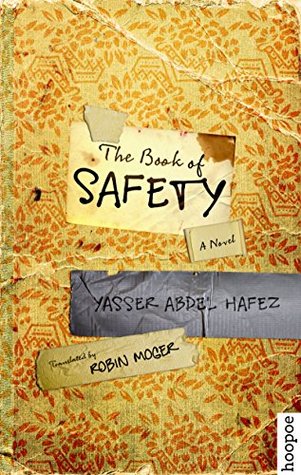
Mustafa has dedicated his existence to the perfection of his trade and authored a book titled The Book of Safety, the ultimate guide to successful thievery, containing everything from philosophical principles to the best way to open a door.
Yasser Abdel Hafiz’s beautiful and deceptively effortless novel tracks Khaled’s descent into obsession with this mysterious book and its author, in a narrative that holds us spellbound.

The First 50 Pages

I read Jeff Gerke’s “The First 50 Pages,” and of course, half the book is highlighted. Since I found the book to be useful, and I learned a lot reading it, I decided to outline some of the main points of the book.

“We have to engage your reader, first and foremost. You have to introduce your hero…establish the context of the story…reveal the genre and milieu and your story world…set up the tone of the book…presenting the stakes, introducing the antagonist, establishing the hero’s desires, starting the main character’s inner journey, and getting a ticking time bomb to start ticking down.”

That’s a lot to do in the first 50 pages…

“A weak first line is a killer. You get only one first line, so make sure it’s carefully thought-out.”

“…don’t start your novel with a dream.”

“Your opening line must hook your reader. You must start with action. But that doesn’t mean you have to have a battle scene or anything that needs to blow up. It simply means it must be interesting to the reader.”

“Good dialogue is…layered. In theater, it’s called subtext.”

“In good dialogue, dialogue with subtext, the characters aren’t responding to what the other person says, but to what they think the other person means.”

“Give your dialogue subtext, and it will be easier for agents and editors–and readers–to love your novel.”

“Fiction is conflict: someone who wants something but is prevented from getting it…The acquisitions editor is looking for signs of conflict in your first fifty pages.”

“…three main craft errors that most often cause agents and acquisitions editors to reject fiction proposals…The big three bombs are telling instead of showing, point-of-view errors, and weak characters.”

“…information dumping is called telling. Its main forms are backstory, pure exposition, summary/recap, and the explanation of character motives.”

“When you load your story with telling, you deprive your reader–and even your characters–of the joy of having it all happen experientially. Take the information out of the voice-overs (your telling) and put it into the scenes.”

“…there are only two things you must do with your first fifty pages, only two large-scale tasks…:

You must engage your reader. That is Job One. And you must set up your story so the rest of it will work correctly.”


*Note: This article was originally published on January 2, 2017. 

The Lion and the Red Jewel

I’ve been writing short, folkloric-feeling or fairy-tale-ish stories for a book I’m working on. The stories are Arab-inspired, people-centered, and hopefully, tell their own tale, even within the context of the larger story.

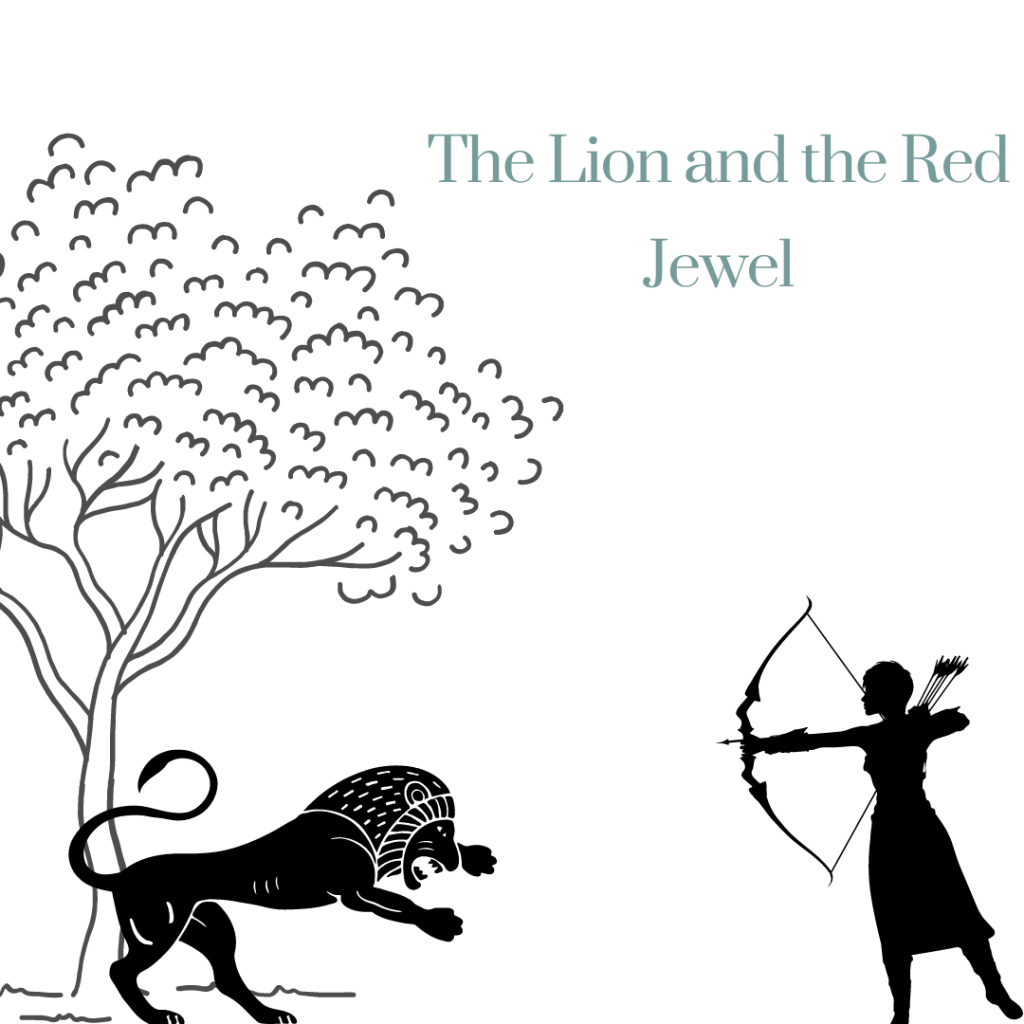
This one is called The Lion and the Red Jewel and features a lion who isn’t what he seems to be.

There was a lion who lived in the desert who ate a jewel. It was as large as its head, as red as a burning sun, and hard as the mountain stone. 

This lion ate the jewel, breaking it into pieces with its strong jaws, cracking through with its powerful teeth. And when the jewel lay in pieces in the sand, the lion swallowed each piece whole, feeling its weight settle in his stomach.

A hunter watched the lion, and knew the wealth it carried in its belly. This hunter was a greedy hunter, and he was fearless.

He stalked the lion for days, waiting for the right moment to bring it down and gut it open. The day came when the lion settled in for a nap in the shade of a palm tree, near a desert oasis. The oasis wasn’t much, just a shallow dip in the sand that filled with the odd rain that showered the desert.

The lion wasn’t stupid, though, and knew the hunter was following him. He kept one eye open just enough that he could see the hunter stalking towards him. The hunter came from behind, but the lion was so positioned that he could watch the hunter’s reflection in the pond.

Just when the hunter raised his arrow to shoot the lion in the back, the lion roared and bellowed and swiped the hunter with its sharp claws. 

The hunter’s belly was shredded into ribbons, and blood poured out of him. The hunter curled up tight in the sand like a child in its mother’s womb. As the blood dried on his body in the sharp desert heart, it hardened over his skin, and the man became a jewel as large as the lion’s head and as bright as a burning sun. The lion swiped at the jewel and gnawed on it, breaking it into pieces. The lion then swallowed each piece, and when he was done, he went to the pond and lapped at the water. With his belly full, he settled in for a proper nap under the palm tree he so loved. 

Tell me in the comments what you think!

Copyright (C) 2020 by Rania Hanna

BOOKISH NEWS: I GOT OFFERED REPRESENTATION – again!

A couple weeks ago, I shared the good news about being offered lit agent representation for my jinn necromancer novel.

A second agent reached out to me to offer representation!

This may seem like a dream, and for about one second, it was. But it’s rather stressful choosing between two amazing agents, who are both so driven and intelligent. It comes down to small (big) things and what I end up wanting in an agent. And even then, I have no guarantee I’ve made the right decision. It feels like, in gaining one kilo of gold, I’m losing another kilo of gold.

Ultimately, it comes down to who will push your career farther, in less time. Or so I’ve determined.

What if you had a magic pearl tree?

I’ve been writing short, folkloric-feeling or fairy-tale-ish stories for a book I’m working on. The stories are Arab-inspired, people-centered, and hopefully, tell their own tale, even within the context of the larger story.

Here’s one story I wrote. Only problem is, I know I wrote it, but it reminds me of a story I heard or read growing up. But I CAN’T FIND THE STORY. I’m hoping it’s deja vu only, and I’m not stealing someone else’s work. It may be an old Persian fairy tale.

TELL ME IN THE COMMENTS IF YOU RECOGNIZE THIS STORY.
If you don’t recognize it, tell me what you think of it.

THE OLD MAN AND THE PEARL TREE

The pearl tree stood alone in the center of a poor man’s garden. 

It dropped iridescent pearls every morning, but if the man got too close, branches whipped out to slap him. Pearls at his feet, and not one to sell in the markets. 

Still, the man tried every so often to snatch just one pearl. But each effort left him with a welt across the face and a gash on his arm. 

One day, the man grew so angry he decided to cut down the tree. He took an axe to its roots, dashed them into pieces, and gathered the pearls. One basket, two, then three were filled with the pearls. 

The tree lay in ruin, however, its once proud trunk a stump in the garden. Its branches lay scattered about, hacked into pieces. 

The man smiled to himself, thinking of all the riches he would buy. New teeth to replace the ones he sold for a bit of coin to buy his food. New shoes to protect his rough bare feet from being cut on stones along the road. A new house, with a roof that didn’t leak. And, most of all, a wife. A beautiful one, to be dressed in jewels and dresses fit for a rani.

But when the man checked on his baskets later in the day, he found nothing but ash. He pulled at his thin hair, ripping it out in clumps. 

And in the midst of his bawling, a knock sounded at his door. 

He snatched the door open, finding the kingdom’s prince standing at his door. 

“I have heard tales of a magic tree that drops pearls instead of leaves. Do you know of this tree?”

“Why do you ask”, said the man.

“I wish to plant it in my own gardens. I will pay handsomely for it.”

The old man glanced behind the prince, at the severed pieces of the pearl tree. 

“You did this?” the prince said, following the man’s gaze. 

The man nodded, tears welling up in his eyes.

“Stupid, stupid man,” the prince said. “Do you know what you’ve done? That tree, those pearls, they are the dead. The souls of our dead. Without that tree, the dead cannot pass to the next life. They will become ghouls, wandering the earth, wreaking havoc on it.”

And just as the man hacked at the tree, the prince’s soldiers cut down the man. They gathered the pieces of the tree, hoping upon hope that there was some magic in the world that could heal it. 

Copyright (C) 2020 by Rania Hanna

A jinn stole your wife. What would you do?

I’ve been writing short, folkloric-feeling or fairy-tale-ish stories for a book I’m working on. The stories are Arab-inspired, people-centered, and hopefully, tell their own tale, even within the context of the larger story.

This one is called Breekh and features a wife stolen by a jinn from right under her husband’s nose.

Tell me in the comments what you think!

BREEKH

There was a man and a woman, married for years who were wise to believe in the evil eye. They knew spirits that were made of smoke, not flesh, roamed the earth, looking for ways to cause mischief. 

The man’s name was Pot, and the woman’s name was Kettle. They both wore small blue beads on their clothes to protect them from the evil eye, which was the magic of the spirits, but could be cast by unwitting humans with ill, or at least, unkind, intention.

One day, the man grew tired of his wife’s talking, and wished her to stay silent. The woman was hurt her husband did not want to listen to her, and felt lonely as she drew water from their deep well. 

A jinn by the name of Breekh was passing by the well, invisible to the human eye. 

After a while of silence, the woman continued her story, trying to get her husband’s attention. But the husband, who wanted nothing but silence, cursed out at his wife, “Ya nan al Breekh!” he said, “Damn you, Breekh!” And in that moment, the man cast the evil eye on his wife without knowing it. Breekh, the jinn, heard this, and thus he was summoned.


The man did not know why he called out Breekh instead of his wife’s name, but he ignored the thought and sat brooding on why he married this woman in the first place. 

“It was her beauty,” he thought, “Her beautiful mouth blinded me to the tongue inside it. If I had known I would know no silence, I’d have never married her. What I wouldn’t do for silence.” 

What the man and woman didn’t know, though, was that in the jinn language, Breekh meant Kettle. 

The jinn stole the wife away from the man, forcing her into a world made of fire and smoke and ash. A world where the earth erupted in plumes of flames, and spewed molten rock on the cities below the fiery mountain. 

The jinn locked the woman in the belly of the mountain, leaving her to sweat and her body to shrivel in the heat. 

The man cursed himself for his foolishness, and he called upon the old sheikhs, who drew on their powers against the evil eye. And though the woman noticed the blue bead she wore glowing, the spell would not break. Breekh held her captive for years, until Kettle became the molten earth itself. She became the fiery mountain, and that is why the great mountain in the distance is called the Kettle of Fire. 

The man lived his days in solitude, but it was not a peaceful one. He was lonely, and missed the sound of his wife’s voice. He cursed himself until his dying breath for giving up the one person who loved him enough to want to talk to him. 

Copyright (C) 2020 by Rania Hanna

Bookish news: I got offered representation!

The novel I’ve been working on the last 3 years, about a necromantic jinn and her daughter, has been offered representation!

I started querying in June/July, and sent my queries to 80+ agents, with 5-6 requests for partials and fulls. But yesterday, glorious yesterday, an agent Zoomed me to offer representation!

Nothing’s official yet, but this is the best news I’ve had all year!

She did offer revisions, but she said my manuscript is clean enough that it won’t need that much work before she can sub it to publishers.

One step closer to becoming a published author!