Decentering violence

I’ve been taking Arabic classes recently to improve my spoken and reading skills. I grew up speaking the Syrian Homs dialect, but since leaving home thirteen years ago, I haven’t been able to speak to anyone as much in Arabic. So the classes are a way I am reclaiming one of my mother tongues and my culture.

During a class recently, my Syrian teacher and I were discussing films. She loves Agatha Christie. And we were talking about the genres we enjoy when we both learned that we used to love horror, and now…we don’t. It’s not that we don’t like a good scare; it’s more the violence and gore that we can’t take in anymore. It’s something I’ve thought about occasionally the last few years, when I have realized that the movies I used to gravitate to: the Saw franchise, slashers, and the like are the ones I can’t stand to see or hear now. Midsommar, which is arguably a good movie, was difficult for me to watch, and I stepped out of the theatre right before the ‘mallet scene.’

Even “softer” movies with a touch of gore do not appeal to me. I still love a good scare, though, and a horror I watched that I think is so engaging is Oddity. It’s less focused on slashing, and more focused on the psychological horror, and though there is violence, is it not as central as in other films.

As I was considering this since my class and conversation, I happened to come across a Threads post that asked a similar question: do you no longer consumer horror? One of the comments got my attention: @alilamos wrote:

“Those movies are all about collective participation and consent. Our brain & body process fake horror the same way as real horror. You rationally know it’s fake, but your brain processes it the same emotionally. So you sitting in a theater being entertained by torture and violence is actually very similar to being one of them enjoying it in real life. It makes us all see violence as entertainment like they want us to.”

It got me thinking that maybe the poster is on to something. The media we consume becomes part of us. Often, I find myself thinking something only to realize that maybe, I simply imbibed it from the internet without even knowing it. How often have you thought of something only to recognize, days later, that you got your “idea” from something else? How often do you choose something and “don’t know why it came to mind,” only to realize afterwards, oh, right, this number I “randomly chose” is ‘actually my grandfather’s birthday and I was thinking of his death anniversary four days ago.’

Our brains are good at patterns and good at consolidating information. They’re also really good at picking up information from our environments, and kneading it into the neural connections that already exist. Of course, memory consolidation requires conscious discernment, but our environments do shape our minds in ways we don’t always notice.

This is not to say that art should be created to coddle or comfort. Of course not. And this is not to say we should not reach for the art that makes us uncomfortable, that pushes our understanding of the world. It’s more that we should reach for consideration, for story, rather than spectacle.

It is to say, however, that we should be aware, and we should actively choose what we consume. Making a spectacle of violence, becoming desensitized to it, does have an effect on us, whether we realize it. We’ve seen it in the ‘video game x violence research’ literature, and though the research is mixed, meta-analyses have found that consuming violence in video games does have a positive correlation with real-world aggression and lowered empathy. Prosocial games have the opposite effect.

I wrote recently about moving into cognitive conservation, about being more aware of what I consume and focusing more on depth and thought. I think the same goes for the media we consume, using it to sculpt our minds and bodies into what we want society to be, rather than letting spectacle and desensitization shape us. We should be left uncomfortable by our art, if and when we so choose, but not be left desensitized towards our collective humanity by it.

Art can wound, expose, accuse, and compel us. But there is a difference between being compelled deliberately, and compelled by default. I want to see more consequence, more substance, in the art and media I consume, and less gratuitous carnage. Some stories, by nature, have carnage, and that is the story that is being told; it may be historical, it may be symbolic, but it is necessary to the telling of that particular story. But to simply have just to have it is another thing altogether. Our minds are molded by what it is fed, and because of that, it is a rare and wondrous thing. To provide it with nourishment is a different form of cognitive conservation than I wrote about last week; it is a conservation of empathy, of society, of self.

Reclaiming Arabic has reminded me that the mind is porous and is easily shaped. What we stay engaged in becomes our fluency, the language we speak best and most naturally. If a tongue can be lost through neglect or severance, and recovered through reversal of that, so, too, can society move towards something better and healthier, starting with the stories being told, and how they are being told, and for whom.

The question isn’t whether art is meant to unsettle us; I think it should. The question, instead, is whether we are choosing what unsettles us, and why, and how. I want to be disturbed into thoughtfulness and awareness, rather than dulled into apathy. I want my Self to be shaped deliberately rather than by status quo, or by those who already hold the reins of narrative and art.

By: Rania Hanna

I think our society is shifting into conservation

I’m sick this weekend, battling a cold, and just a day before I felt the most sick, I was ravenous. I ate four meals, smaller ones, but more than I would normally consume, and I was starting to slow down in my energy levels. This is normal, as the body mounts an immune response (a metabolically expensive process), and focuses more on energy. Your appetite increases so your body can defend itself, and your body slows down so you conserve energy. Your body shifts from productivity to repair.

The following day, my body gave up, forcing me to take a day off of work. I had trouble sleeping the night before, and ended up dozing off into light naps.

Now, day three of my cold, and I have bursts of energy, but mostly feel like sitting or taking naps, and baking pita bread.

This has got me thinking: when a body is sick, it focuses on slowing down and nourishing itself. I wonder then, of a mind that is also sick with overstimulation and overconsumption. What happens to it?

I think that, it too, slows down and focuses on nourishing itself. I say this because I have noticed that the past few months, I’ve been returning to classics in my reading, craving depth and thought I hadn’t engaged with in a while. I’m seeking more to read to better understand the human condition, to learn, to “return to my roots” in a literary capacity. And, I’ve been focusing on slowing down.

Even in my writing, I am choosing not to push myself, my plots, or my timelines into something they don’t organically grow into. Last year, in 2025, I wrote almost six manuscripts (one I got about 80% of the way through before the new year came around). This year, I am working on editing them, focusing more on building on what I’ve already sown. And though I initially had plans to write at least two, maybe three, manuscripts this year, I have accepted that I may end up writing only one, and have begun to think that I may not write any at all.

This slowing down, both deliberate and organic, comes from shedding old skins last year. I moved on from some decisions I’d made earlier in life, even just years prior, and though I mourn them, I feel lighter without them, more like myself, and less like a shape I was trying to force myself into. That is, I feel more like I am wearing a skin I naturally fit into, rather than stretching out one that no longer fits me.

What I think is happening to my brain is a response to chronic overstimulation, a shift from productivity to repair, a sort of cognitive conservation. This makes sense, as when the brain sustains cognitive overload, i.e. “has too many tabs open,” working memory and decision-making reduce. It’s a sort of “sickness” that your brain decides it has to mount an immune response to, and so it shifts gears into restorative modes.

It’s why my brain has chosen classic literature or more “serious” works to read; it wants something that forces me to slow down because writing pace is slower, compels me to digest what I am reading, which forces me further to slow down. It’s a return to what is familiar and comfortable, and provides a stability as I often recognize what path a plot will take. It also reduces my task-switching: it’s difficult to “switch to another tab” when I’m digesting a thoughtful paragraph. This reading depth leads to sustained attention, which is further less stimulating since I’m focusing on one task, and one task alone.

And I’m seeing it elsewhere, too, not just in my reading. When I was younger, I could sit still, in silence, and enjoy it. The last few years, I have needed stimulation: an audiobook, a podcast, music, a YouTube video. Now, it’s almost as if I can’t stand the noise and stimulation, and instead want stillness and silence.

I’m not alone in this. I wrote in an earlier postat least for a segment of our society, we desire simplicity and a reclamation of our human intelligence. It feels more like a quiet revolution, an unwinding of what our modern technology has wrought, reverting to less integrated and more simplified routines.

What I mean to say with all this is as our minds and bodies desire healing from a society that is overwrought in pace, consumerism, and disconnection, I think our minds will begin responding in the same ways our bodies do when sick: by slowing down, digging deeper into our shared wisdom, and doing the things that nourish us. When a biological or psychological system is under strain, it moves to conserve, by simplifying and focusing on core functions.

And I think our society is shifting into conservation.

By: Rania Hanna

It’s been a while: world on fire, creative work, and upcoming comic

Hi friends. It’s been a while.

Honestly, I haven’t had much energy lately to post much of anything, not the least of which a well-thought out blog post that’s worth sending out. Arguably, I don’t have the energy to write this one, but I’ll try to put down my thoughts regardless.

It’s been a horrible year. The world seems on fire, in some places, quite literally, including in Palestine/Israel, Syria, Turkey, California, Oregon, and other places. It seems the entire world is ablaze literally, and certainly, figuratively.

Palestine is under 22 months of siege, genocide, Israeli-engineered famine, and, as scholars are saying, a holocaust. Syria is under attack by Israel, including in Damascus and in southern Syria, where Druze populations are. Lebanon is precarious, with ongoing threats of attacks from Israel. Never mind our perilous situation in the United States, with Trump’s orders to send in the National Guard into DC, of which I saw groups of 3 or 5 roaming the National Mall and metro stations just two weekends ago.

It’s a scary time, and that’s not even going into the assaults on women, queer, Indigenous, Black, and other lives in America alone.

(BTW, there’s a bookish auction ongoing to raise funds for immigrant and trans rights, through August 27th).

With everything going on, I’ve continued to write, but I feel a bit…dead…inside, like I’m mostly a shell of a person right now. Creatively, I’m still doing work, but I can feel both body and mind slowing down, grieving, and, frankly, retracting, even as I try to reach out to people more. It’s a fine line between staying informed, trying to do work that can contribute to a healthy society, and protecting myself from the constant onslaught of horrible events. No wonder my recent Youtube watches have been on nomading through the US in a car, finding a couple acres to build a homestead on, and relaxing book recommendations coupled with homemade pastries and teas.

I have a few projects I’ve been working on, including a few novels, and one semi-memoir/social commentary on Arab-American discrimination and racism. They’re in different stages of creation, some I’m in the throes of edits for, others I’m still doing research for.

However, a short spread in a comic issue is coming out, a story on imperialism’s actions on collective memory and the rewriting of history. The story comes out in Planet Comics: Book Six, which you can back on Kickstarter. The work has hit full funding, but if you’d like a copy, feel free to back the project. It should come out in November-ish of this year.

Here’s a bit on my piece:

Rania Hanna (author of The Jinn Daughter), Erin Dodge and Ari Pluchinsky bring us the single-issue story, “The Archivist of Al-Azrakh”!

Sample page from “The Archivist of Al-Azrakh”

Signing off for now, and maybe for a while,
Rania

7 Books that influenced my current writing voice

I’ve already mentioned how I am loving atmospheric books. And some posts mention specific books that influenced my current writing voice.

In thinking about what makes a book stick around in my mind and convince me to convince others to read it, it’s typically the author voice. The author voice and using the setting as a character.

Some books do that with such near-perfection, it’s hard to let go of the story and the characters. And those are the books that impact my own author voice, for the better.

Here’s a list of 7 books that have influenced my writing in terms of voice and tone, and have taught me how use the setting as a major character, the plot as a dreamy wonderland, and the characters as beautiful creatures that are so flawed, they’re perfect.

The Bear and the Nightingale by Katherine Arden

The wintry setting in Russia’s woodlands, and the glittering cities in the Kremlin bring this book to life in ways I wouldn’t have expected. And with the wild and eerily magical Vasya, who is such a perfectly flawed character it’s hard to feel anything but riveted by her, The Bear and the Nightingale not only brought a touch of atmosphere to my own writing, but also opened up a new love affair with Russian folklore.

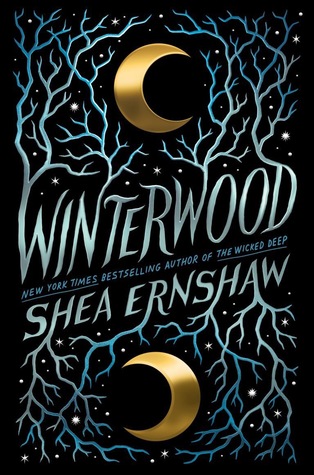
Winterwood by Shea Ernshaw

The woodsy setting and the moonlight magic had such an earthy and ancient, yet fresh feel to it that I couldn’t help but be drawn in. And though I thought the story was a typical people-fear-young-witch story, the setting and the magic itself brought a fresh air to the plot. Nora Walker’s magic wasn’t anything extraordinary, but her lineage, the recipes and pages of the Walker witch family magic book, and the feel made this story memorable. It also reminds me that setting is a character, and could be the most important one. Keep that in mind when you’re writing your own book! Read my full review here.

The Bone Houses by Emily Lloyd-Jones

Again, the earthy, woodsy setting was its own character, and it brought a mystical and tactile feel to the whole narrative. And that bone goat – a good reminder that even a sidekick can bring a new twist to your story. The magic was beautiful – dark and necromantic, but with a human and reverent feel to it.

Read my full review here.

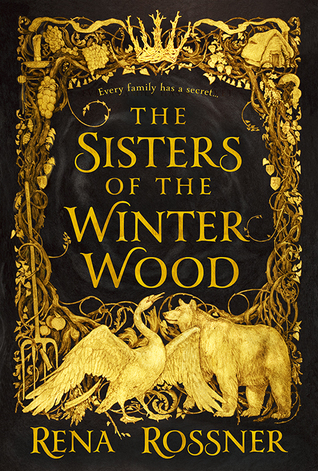
The Sisters of the Winter Wood by Rena Rossner

Again, those woods. earthy and ancient, the setting, once again, was its own character. And the sisterly bond made the story that much more human and heartfelt. The magic was old and raw, and though I don’t remember full details months after reading the book, I remember the feel.

A great book to learn how to bring in the folklore and mysticism of an existing culture, and making it your own.

Whichwood by Tahereh Mafi

Here’s how you take something dark, necromancy, and make it beautiful and magical. The setting here is not so much its own character as the townspeople are. The magic is the main focus, and, most importantly, character feelings are the plot-driver. The necromancy is such a beautiful take on the typical dark feel that magical system has, and it brought such color and light to the world that the unexpectedness of it all made me crave more. A good reminder that how characters feel is just as important, if not more, than what they do. This is a strong character-driven book and a great example of plush writing. Read my full review here.

Sabriel by Garth Nix

This is how you build a world so big and powerful, you can get lost in it for ages. Sabriel has such a strong magical system that it influenced all my books since reading it. Almost every fantasy book I have written for the past ten years has featured dark magic, necromancy, and a reserved yet caring female protagonist. I can’t imagine writing a story that doesn’t have those elements in it, simply because Sabriel influenced me that much as a reader and writer. The main trilogy is worth it, and are the subsequent books in the Old Kingdom series.

The Bone Witch by Rin Chupeco

The necromancy is strong in this book, with an added twist: raising the bones of ancient creatures and then commanding them with thought. I tried writing a book using this concept and failed to do it right -it’s harder than it seems. And Rin Chupeco does it with such skill. The book takes historical features like geishas, adds a dark magical system, and creates a whole new world and cast of characters. A great example of using what you know and then adding a twist to it. The feel of the magic is everywhere, and you just know how the magic can be used for good or ill, and how much havoc can be wreaked without the skill to manage it. Read my full review here.

*Originally published March 5, 2020.

Your setting is a living character

Make your setting a character. 

I’ve recently learned this and think it’s advice that I can follow, and plan on following, as I go through revisions of my latest book. In my current MS, my setting feels dead, a stagnant detail that a reader can’t really envision. So as I edit my MS (again) I’m going to be focusing on bringing setting to life. Making my setting a character seems like sound advice.

Being of a science/skeptical background, I of course had to do research on how to bring setting to life and if viewing your setting as its own character is enough.

Turns out, it is and it isn’t.

One of the goals of writing the setting is to find the unique setting elements that matter to your characters, and possibly, to your readers. A setting is alive when its elements, its objects are interwoven with emotions. Think of people: it’s not just their actions, their personalities or behaviors that make them them, it’s also their emotions, their responses to events or circumstances within their environments. The same goes with settings: it’s not just the objects that make the setting, it’s the emotions attached to the objects, or the emotions characters feel towards the objects.

That is, the setting is alive when its details are experienced not only by descriptions, but also by the way the characters experience those details.

Setting should also challenge your characters. Not only physically by, say, having to climb a mountain. But also socially and emotionally, perhaps spiritually if it fits into your book. Your characters should have a dynamic relationship with their setting. Just as you interact with, and react to, your environment, the same goes for your characters.

One thing I’ve thought of when editing, and as I learn more about how to write, is that making your setting a character isn’t enough. At least, not in the way I was initially thinking about it. I think sometimes in my own writing, even if I approach the setting as a character, it’s easy for me to approach it as a dead character. I have to remind myself that setting needs to be alive, be passionate if it fits with the story. It’s not enough to describe the objects and details and emotions regarding a setting; you have to also make the setting have its own mind, be its own main character. 

…You have to also make the setting have its own mind, be its own main character 

Your setting should be both an agonist and an antagonist for your characters. That is, your setting should both simulate and frustrate your characters. Your environment both stimulates and frustrates you, so why shouldn’t the same happen for your characters. They’re people, too, you know.

Your setting should both stimulate and frustrate your characters.

*Note: This article was originally published on January 19, 2016 and March 26, 2020.

Bestseller Formula: heart, mind, and guts

Becoming a bestseller would be many an author’s greatest fantasy. But, is there a formula?

Some would argue that focusing on becoming a bestseller is like shooting yourself in the foot–you’re not going to become something you’re chasing after by focusing exclusively on that object you’re chasing. That is, focusing on writing a bestseller means you’ll be too concerned when writing on how to make that book a bestseller that you’d ultimately fail because you’re focusing on the wrong things.

Others argue that there are distinct features of bestsellers, characteristics that make it “easy” to understand what makes the book and readers tick, and lands that book on a bestseller list.

In doing some research on what makes books bestsellers, and reading up on expert opinions, I found an NPR article that seemed to distill bestseller features into a 12-item list. Here are some features of that list:

  1. The book focuses on some major issue of its time, e.g. race in Gone with the Wind, or politics in The Hunt for Red October. 
  2. Broken or fractured families and relationships
  3. Protagonists who are outsiders to whatever society they live in or what to become part of.
  4. The American Dream, whether praised or condemned, is a motif of the books.
  5. Secret societies, e.g. The Da Vinci Code, and even Twilight, with its secret vampire societies.
  6. Wishful thinking, a la Fifty Shades of Grey.
  7. Power to connect with readers through mind, heart, and gut. That is, you have to appeal to the intellect, the emotions, and the senses of readers. This, I’d say is the key.

Doing some more research, I found an article listing out what John Baldwin discovered of bestsellers. He was struggling, but was determined to write a bestseller, and took to studying books that had already made the list. What he found was that bestsellers tended to have these characteristics in common:

  1. The hero is an expert. It could be magic, weapons, love, whatever the book centers on.
  2. The villain is also an expert.
  3. The villainous parts of the book have to be seen from the villain’s POV.
  4. The hero has to be backed up by experts of other fields. This makes me think of the show, Arrow, where the main character, Oliver, has a team made of up Felicity Smoak, John Diggle, and others that come on as the show proceeds.
  5. Those on the team must fall in love with each other, at least one couple.
  6. At least two of those on the team must die.
  7. The villain has to turn his attention to the team, away from his original intentions.
  8. Both the hero and the villain have to be alive to battle each other in the sequel.
  9. Any deaths have to progress from individuals to groups. You can’t say that xxx amount of people died in the plane crash; you must start out with “Jack and Jill died as the plane exploded,” and then move on to the group as necessary.
  10. When the plot begins to stale or hit a block, kill somebody off.

However, this list can be applied to both bestsellers and selling failures. At the end of the day, it is creativity, uniqueness, and a melding of genres into a mix that make the best books. I think the more human the book, the better. Human can mean different things to different people, but the more relatable, the more emotional, the more depth, and the more expression a book contains, the better it will be enjoyed for generations to come.

*Note: This article was originally published on January 12, 2016.

The First 50 Pages

I read Jeff Gerke’s “The First 50 Pages,” and of course, half the book is highlighted. Since I found the book to be useful, and I learned a lot reading it, I decided to outline some of the main points of the book.

“We have to engage your reader, first and foremost. You have to introduce your hero…establish the context of the story…reveal the genre and milieu and your story world…set up the tone of the book…presenting the stakes, introducing the antagonist, establishing the hero’s desires, starting the main character’s inner journey, and getting a ticking time bomb to start ticking down.”

That’s a lot to do in the first 50 pages…

“A weak first line is a killer. You get only one first line, so make sure it’s carefully thought-out.”

“…don’t start your novel with a dream.”

“Your opening line must hook your reader. You must start with action. But that doesn’t mean you have to have a battle scene or anything that needs to blow up. It simply means it must be interesting to the reader.”

“Good dialogue is…layered. In theater, it’s called subtext.”

“In good dialogue, dialogue with subtext, the characters aren’t responding to what the other person says, but to what they think the other person means.”

“Give your dialogue subtext, and it will be easier for agents and editors–and readers–to love your novel.”

“Fiction is conflict: someone who wants something but is prevented from getting it…The acquisitions editor is looking for signs of conflict in your first fifty pages.”

“…three main craft errors that most often cause agents and acquisitions editors to reject fiction proposals…The big three bombs are telling instead of showing, point-of-view errors, and weak characters.”

“…information dumping is called telling. Its main forms are backstory, pure exposition, summary/recap, and the explanation of character motives.”

“When you load your story with telling, you deprive your reader–and even your characters–of the joy of having it all happen experientially. Take the information out of the voice-overs (your telling) and put it into the scenes.”

“…there are only two things you must do with your first fifty pages, only two large-scale tasks…:

You must engage your reader. That is Job One. And you must set up your story so the rest of it will work correctly.”


*Note: This article was originally published on January 2, 2017. 

BOOKISH NEWS: I GOT OFFERED REPRESENTATION – again!

A couple weeks ago, I shared the good news about being offered lit agent representation for my jinn necromancer novel.

A second agent reached out to me to offer representation!

This may seem like a dream, and for about one second, it was. But it’s rather stressful choosing between two amazing agents, who are both so driven and intelligent. It comes down to small (big) things and what I end up wanting in an agent. And even then, I have no guarantee I’ve made the right decision. It feels like, in gaining one kilo of gold, I’m losing another kilo of gold.

Ultimately, it comes down to who will push your career farther, in less time. Or so I’ve determined.

Bookish news: I got offered representation!

The novel I’ve been working on the last 3 years, about a necromantic jinn and her daughter, has been offered representation!

I started querying in June/July, and sent my queries to 80+ agents, with 5-6 requests for partials and fulls. But yesterday, glorious yesterday, an agent Zoomed me to offer representation!

Nothing’s official yet, but this is the best news I’ve had all year!

She did offer revisions, but she said my manuscript is clean enough that it won’t need that much work before she can sub it to publishers.

One step closer to becoming a published author!