FIVE months away from publication date!

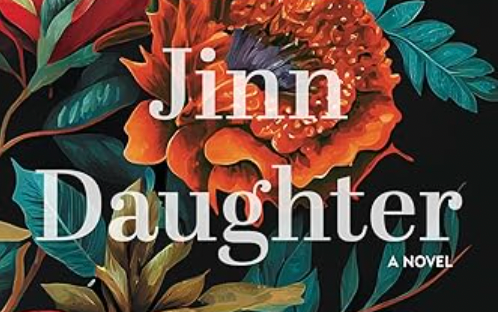
As of today, we are FIVE months away from pub date for THE JINN DAUGHTER, my debut novel.

A stunning debut novel and an impressive feat of storytelling that pulls together mythology, magic, and ancient legend in the gripping story of a mother’s struggle to save her only daughter

Nadine is a jinn tasked with one job: telling the stories of the dead. She rises every morning to gather pomegranate seeds—the souls of the dead—that have fallen during the night. With her daughter Layala at her side, she eats the seeds and tells their stories. Only then can the departed pass through the final gate of death.

But when the seeds stop falling, Nadine knows something is terribly wrong. All her worst fears are confirmed when she is visited by Kamuna, Death herself and ruler of the underworld, who reveals her desire for someone to replace her: it is Layala she wants.

Nadine will do whatever it takes to keep her daughter safe, but Kamuna has little patience and a ruthless drive to get what she has come for. Layala’s fate, meanwhile, hangs in the balance.

Rooted in Middle Eastern mythology, Rania Hanna deftly weaves subtle, yet breathtaking, magic through this vivid and compelling story that has at its heart the universal human desire to, somehow, outmaneuver death.

Some author reviews:

“Lyrical and magical, The Jinn Daughter captivates with its fierce imagination and its visceral prose. Hanna spins a folkloric tale of family bonds and the power that the dead hold over the living. An extraordinary novel that will linger long after the final page!”―Helene Wecker, author of The Golem and the Jinni

“A beautiful, haunting homage to Middle Eastern folklore,The Jinn Daughter is a stirring tale of love, grief, and the depths we’re willing to go to save our loved ones. Hanna’s beautifully drawn, complex characters weave together a story that will find its way into your very bones and leave you wanting more.”―Ehigbor Okosun, author of Forged by Blood

“Hanna seamlessly weaves compelling and complex characters into a lush tapestry of Middle Eastern folklore, creating a tragic, haunting world that is as dark as it is beautiful.” ―Samantha Sotto Yambao, author of Before Ever After

If this sound compelling, be sure to PREORDER your copy!
Be sure to add THE JINN DAUGHTER to your Goodreads and Storygraph!

I’m on Bookbub!

With pub date of THE JINN DAUGHTER 7 months away, I’m soaking up all the marketing strategies I can. One way to stay connected with readers is through Bookbub. I’ve used the site to get updates on book releases, book giveaways, and recommendations, and I finally have my own author profile on there!

Some of my favorite fantasy reads are listed there and I’d love if you connected with me, especially if we share fav reads!

Setting up my goodreads author page

My debut novel, The Jinn Daughter, releases April 2, 2024.

A stunning debut novel that pulls together mythology, magic, and ancient legend in the gripping story of a mother’s struggle to save her only daughter. 

As I’m learning all I can about book marketing, I’m finding myself relying on one of the traditional heavy-hitters of word-of-mouth book marketing: Goodreads.

I’d love if you would follow my Goodreads Author page and keep updated on my book’s release and other news, including any giveaways if they happen.

FOLLOW ME ON GOODREADS HERE

Word-of-mouth is an author’s most powerful marketing strategy

it’s 8 months until my debut novel, THE JINN DAUGHTER, comes out.
april 2, 2024.
right in time for arab-american month.

i have two-thirds of a year to focus on learning marketing, feeling more confident in putting myself out there, and spreading the word about my work.

one way i’ve been realizing is an effective tool is word-of-mouth, a powerful marketing strategy that does wonders and can spread news of a work faster than lightning.

as such, i’m sharing links to my social media and encouraging you all, my appreciated followers, to like, share, and follow my accounts.

instagram: @rania_the_writer
goodreads: @Rania Hanna

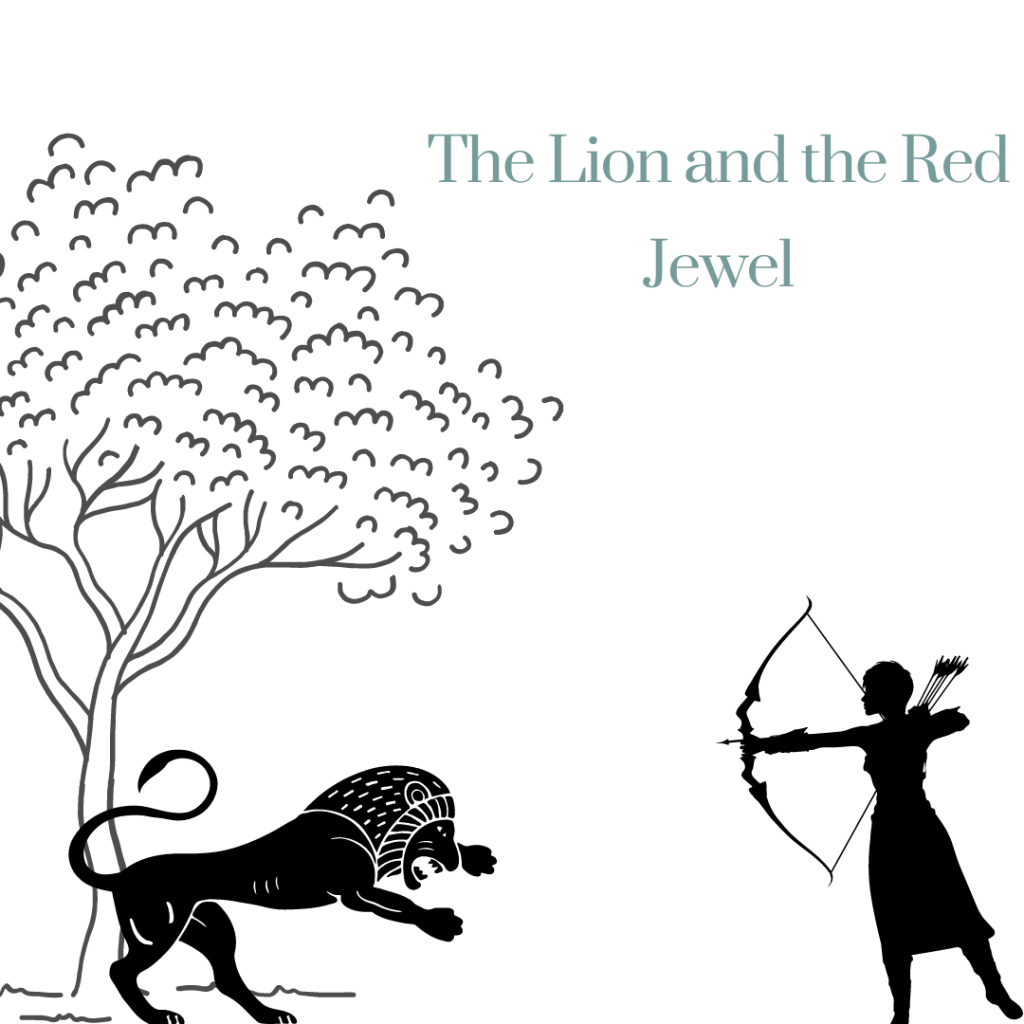
The Lion and the Red Jewel

I’ve been writing short, folkloric-feeling or fairy-tale-ish stories for a book I’m working on. The stories are Arab-inspired, people-centered, and hopefully, tell their own tale, even within the context of the larger story.

This one is called The Lion and the Red Jewel and features a lion who isn’t what he seems to be.

There was a lion who lived in the desert who ate a jewel. It was as large as its head, as red as a burning sun, and hard as the mountain stone. 

This lion ate the jewel, breaking it into pieces with its strong jaws, cracking through with its powerful teeth. And when the jewel lay in pieces in the sand, the lion swallowed each piece whole, feeling its weight settle in his stomach.

A hunter watched the lion, and knew the wealth it carried in its belly. This hunter was a greedy hunter, and he was fearless.

He stalked the lion for days, waiting for the right moment to bring it down and gut it open. The day came when the lion settled in for a nap in the shade of a palm tree, near a desert oasis. The oasis wasn’t much, just a shallow dip in the sand that filled with the odd rain that showered the desert.

The lion wasn’t stupid, though, and knew the hunter was following him. He kept one eye open just enough that he could see the hunter stalking towards him. The hunter came from behind, but the lion was so positioned that he could watch the hunter’s reflection in the pond.

Just when the hunter raised his arrow to shoot the lion in the back, the lion roared and bellowed and swiped the hunter with its sharp claws. 

The hunter’s belly was shredded into ribbons, and blood poured out of him. The hunter curled up tight in the sand like a child in its mother’s womb. As the blood dried on his body in the sharp desert heart, it hardened over his skin, and the man became a jewel as large as the lion’s head and as bright as a burning sun. The lion swiped at the jewel and gnawed on it, breaking it into pieces. The lion then swallowed each piece, and when he was done, he went to the pond and lapped at the water. With his belly full, he settled in for a proper nap under the palm tree he so loved. 

Tell me in the comments what you think!

Copyright (C) 2020 by Rania Hanna

What if you had a magic pearl tree?

I’ve been writing short, folkloric-feeling or fairy-tale-ish stories for a book I’m working on. The stories are Arab-inspired, people-centered, and hopefully, tell their own tale, even within the context of the larger story.

Here’s one story I wrote. Only problem is, I know I wrote it, but it reminds me of a story I heard or read growing up. But I CAN’T FIND THE STORY. I’m hoping it’s deja vu only, and I’m not stealing someone else’s work. It may be an old Persian fairy tale.

TELL ME IN THE COMMENTS IF YOU RECOGNIZE THIS STORY.
If you don’t recognize it, tell me what you think of it.

THE OLD MAN AND THE PEARL TREE

The pearl tree stood alone in the center of a poor man’s garden. 

It dropped iridescent pearls every morning, but if the man got too close, branches whipped out to slap him. Pearls at his feet, and not one to sell in the markets. 

Still, the man tried every so often to snatch just one pearl. But each effort left him with a welt across the face and a gash on his arm. 

One day, the man grew so angry he decided to cut down the tree. He took an axe to its roots, dashed them into pieces, and gathered the pearls. One basket, two, then three were filled with the pearls. 

The tree lay in ruin, however, its once proud trunk a stump in the garden. Its branches lay scattered about, hacked into pieces. 

The man smiled to himself, thinking of all the riches he would buy. New teeth to replace the ones he sold for a bit of coin to buy his food. New shoes to protect his rough bare feet from being cut on stones along the road. A new house, with a roof that didn’t leak. And, most of all, a wife. A beautiful one, to be dressed in jewels and dresses fit for a rani.

But when the man checked on his baskets later in the day, he found nothing but ash. He pulled at his thin hair, ripping it out in clumps. 

And in the midst of his bawling, a knock sounded at his door. 

He snatched the door open, finding the kingdom’s prince standing at his door. 

“I have heard tales of a magic tree that drops pearls instead of leaves. Do you know of this tree?”

“Why do you ask”, said the man.

“I wish to plant it in my own gardens. I will pay handsomely for it.”

The old man glanced behind the prince, at the severed pieces of the pearl tree. 

“You did this?” the prince said, following the man’s gaze. 

The man nodded, tears welling up in his eyes.

“Stupid, stupid man,” the prince said. “Do you know what you’ve done? That tree, those pearls, they are the dead. The souls of our dead. Without that tree, the dead cannot pass to the next life. They will become ghouls, wandering the earth, wreaking havoc on it.”

And just as the man hacked at the tree, the prince’s soldiers cut down the man. They gathered the pieces of the tree, hoping upon hope that there was some magic in the world that could heal it. 

Copyright (C) 2020 by Rania Hanna

A jinn stole your wife. What would you do?

I’ve been writing short, folkloric-feeling or fairy-tale-ish stories for a book I’m working on. The stories are Arab-inspired, people-centered, and hopefully, tell their own tale, even within the context of the larger story.

This one is called Breekh and features a wife stolen by a jinn from right under her husband’s nose.

Tell me in the comments what you think!

BREEKH

There was a man and a woman, married for years who were wise to believe in the evil eye. They knew spirits that were made of smoke, not flesh, roamed the earth, looking for ways to cause mischief. 

The man’s name was Pot, and the woman’s name was Kettle. They both wore small blue beads on their clothes to protect them from the evil eye, which was the magic of the spirits, but could be cast by unwitting humans with ill, or at least, unkind, intention.

One day, the man grew tired of his wife’s talking, and wished her to stay silent. The woman was hurt her husband did not want to listen to her, and felt lonely as she drew water from their deep well. 

A jinn by the name of Breekh was passing by the well, invisible to the human eye. 

After a while of silence, the woman continued her story, trying to get her husband’s attention. But the husband, who wanted nothing but silence, cursed out at his wife, “Ya nan al Breekh!” he said, “Damn you, Breekh!” And in that moment, the man cast the evil eye on his wife without knowing it. Breekh, the jinn, heard this, and thus he was summoned.


The man did not know why he called out Breekh instead of his wife’s name, but he ignored the thought and sat brooding on why he married this woman in the first place. 

“It was her beauty,” he thought, “Her beautiful mouth blinded me to the tongue inside it. If I had known I would know no silence, I’d have never married her. What I wouldn’t do for silence.” 

What the man and woman didn’t know, though, was that in the jinn language, Breekh meant Kettle. 

The jinn stole the wife away from the man, forcing her into a world made of fire and smoke and ash. A world where the earth erupted in plumes of flames, and spewed molten rock on the cities below the fiery mountain. 

The jinn locked the woman in the belly of the mountain, leaving her to sweat and her body to shrivel in the heat. 

The man cursed himself for his foolishness, and he called upon the old sheikhs, who drew on their powers against the evil eye. And though the woman noticed the blue bead she wore glowing, the spell would not break. Breekh held her captive for years, until Kettle became the molten earth itself. She became the fiery mountain, and that is why the great mountain in the distance is called the Kettle of Fire. 

The man lived his days in solitude, but it was not a peaceful one. He was lonely, and missed the sound of his wife’s voice. He cursed himself until his dying breath for giving up the one person who loved him enough to want to talk to him. 

Copyright (C) 2020 by Rania Hanna

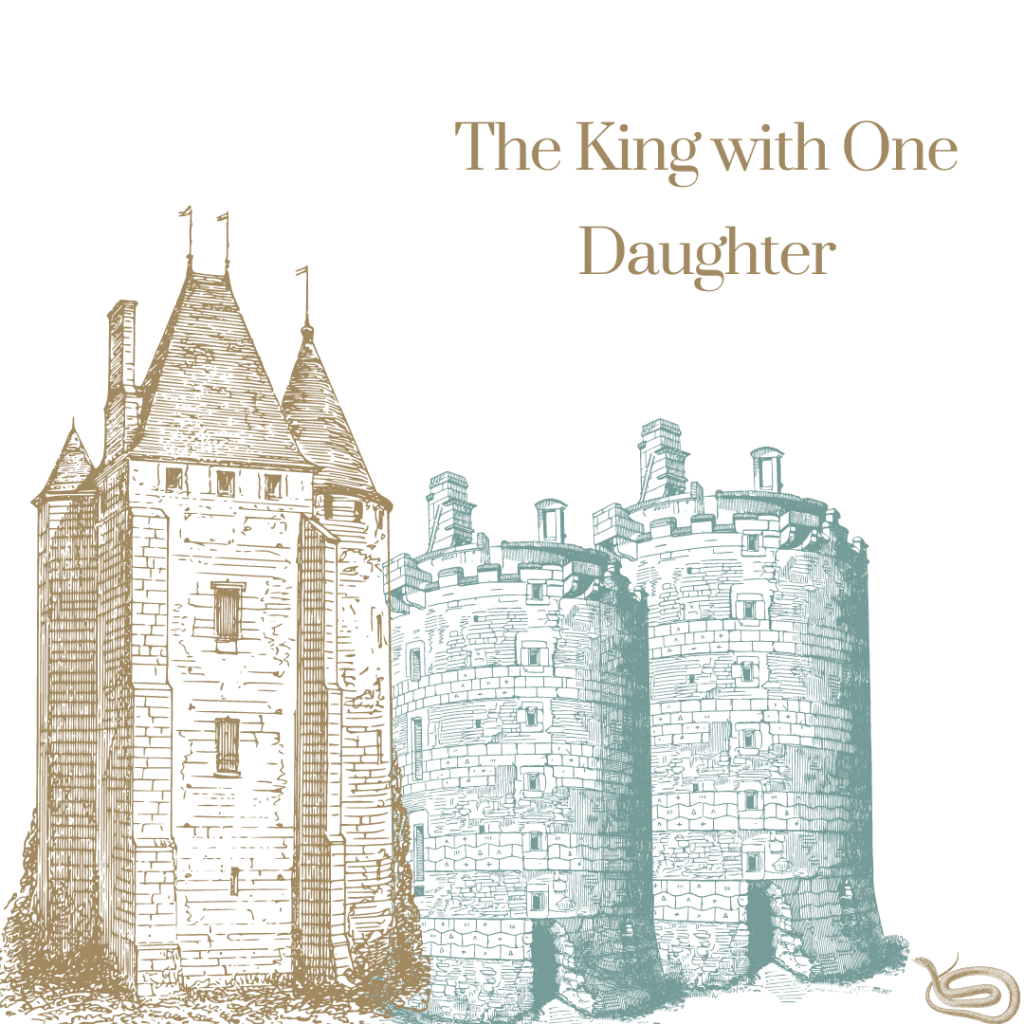
The King with one Daughter

I’ve been writing short, folkloric-feeling or fairy-tale-ish stories for a book I’m working on. The stories are Arab-inspired, people-centered, and hopefully, tell their own tale, even within the context of the larger story.

This one is called The King with One Daughter and features a king who loses his only child despite his best efforts.

A powerful king had one daughter. His wife’s birth of their daughter was hard on her slight body, and after giving birth she found she could never conceive again. But the king was wise enough to know that a daughter was the same as a son and could rule just as well as any man. So he trained his daughter to rule, for when he and the queen died, she would take their place. 

But the king loved his daughter with his every breath, with his soul, his heart, his blood. And he kept her locked in her room, wanting for nothing of the world’s riches. Guards posted at her door each hour of every day and every night, to keep the girl safe. 

No one was allowed in or out of the room without being searched. The room was the highest in the castle, with walls that could not be scales, for they were covered in magical thorned ivy that no man or being could get through. 

But there was a hole in the wall, in the corner of the girl’s room, a thin one only a snake could get through. And one day, a snake slithered in through the hole and up the girl’s bed as she slept. 

Its fang dripped with poison, and as the girl shifted in her sleep and hit the snake with her arm by accident, the snake grew angry. It bit her, and poison coursed through her veins all through the night as the rest of the castle, save her guards, slept. 

When the king and queen awoke, and summoned their day to the morning meal, her maidservants found her blue and cold in her bed. 

The king cursed himself for being so foolish. For in trying to keep his child safe from the world, he failed to keep her safe in his own home. 

Tell me in the comments what you think!

Copyright (C) 2020 by Rania Hanna

Hakawati Jinn – Chapter One

Leave your feedback in the comments!

The dead have been dropping all night. 

I awake before the sun is bright enough to cut across the horizon to gather the pomegranate seeds – each one a soul who has died in the last day – scattered across the front of my house into a basket, my hands red and sticky with juice.

There are many seeds this morning, and the weight of the basket tilts me as I hobble back inside the cottage. 

My daughter is still sleeping in her cot as I sit down, setting the basket on the table. My joints click, a side effect of the curse. I age faster than I should. Already I have white streaks in my hair, and some of my eyebrow hairs are white. Just thirty, but I look a decade older, at least. 

The seeds are bright red and plump, and I press them between two pieces of wood and let the juice seep into a bowl. Each seed contains the story of the person the soul belonged to. My job as mutahida, as storyteller, is to tell each soul’s story, to write each soul’s tale. It’s the only way for a soul to leave the waiting place in between life and death, and enter true death, or Mote. Once a soul’s story is told, they can take it to Mote’s gatekeeper and pay for their safe passage where they will have eternal bliss and peace. 

When the seeds have been pressed into juice, I take a sip and wrinkle my nose. “Bitter today,” I say to myself, pouring honey into the cup. I stir then take another drink. The stories come in flashes, too quick for my mind to understand, and I’m too tired to try, but my magic is fast enough to catch them. 

I see snatches of a river flowing fast and sweep, the brown of a head topped with seaweed floating on. I catch the green of a tree and a swing hanging from a thick branch. I think I hear the growl of a bear. Or the clash of blades. But everything comes too fast, and there are so many stories to tell – stories of days and lives lived. I rarely ever see the last moments of death, thankfully. 

I write, my fingers weaving stories in the air, words curling into smoke. I’m a hakawati jinn, and the stories I weave return to death and to the souls they belong to. 

I drink more of the juice, weaving smoky tales in the air with my other hand. The stories disappear almost as soon as they form, getting swallowed back into death. 

Layala stirs behind me, slipping out of her bed and padding behind me. She says nothing as she sets a pot of tea to boil and begins making our breakfast. 

I drink the last of the juice and, more out of habit, glance at the lone pomegranate seed I keep in a small glass jar on a shelf. 

Layala’s father. Those who have died by their own hand have no place in Mote. They are banished to jehinam, to suffer eternal cold and perpetual executions. 

It was the only love I could show him after his death – to keep him in the waiting place of death, rather than write his tale and send him to suffer. 

He visits us sometimes, as happy as any dead could be. 

As if thinking about him conjured him, he steps into the cottage, his body more smoke and ash than flesh and blood. 

“Illyas,” I say, rising to my feet. 

He kisses me, soft and, if not warm, then not the cold expected with the dead. And though his face fades through mine, I pretend I feel his solid flesh. 

“Sabah al kheer, baba,” our daughter says, throwing her arms around him. Good morning, father. Her arms collide with his body, the only few minutes of a day he is made of enough flesh to touch, though her skin is streaked with ash when she lets go. I reach out to touch him and he takes my hand. 

He can only keep his form a few minutes in a day, in the moments when the sun’s light turns from red and orange to its day colors. 

“And how are my girls today?” he says, as he does every visit. 

“Good,” Layala says. “I’m going to see jido again today.” Her grandfather. 

My dead lover’s face stiffens, but he forces a smile onto his face. “You should spend more time at home, with your mother,” he says, and I throw him a grateful look. 

But before Layala could respond, Illyas disappears as the sun’s light breaks through our windows and the morning is fully awake. 

We both sigh, always wishing for just one more minute with him. 

“I wish we could go into death,” Layala says. “You’re a jinn, you’re made of death itself. Are you sure there’s no way–”

“No, Layl. I’ve told you before. Jinns manage death, they don’t enter it or keep its company, not if they can help it.”

I hate lying to my daughter’s face, but her questions have plagued me for years. Ever since she was a child, she wanted to know: what was death like, was it something you could take trips to?

It’s better she knows as little as possible, even if she is half-jinn. She’ll likely never have my magic, and it’s best she doesn’t. 

“I’m going to jido’s,” she says with a sigh. “I’ll be gone all day.”

“Your father is right, you know. You should stay home more, learn a craft so you can support yourself when I die.”

“You’ll be around for many more years, maman. You just don’t like jido much,” she teases, kissing me on my head as she darts off to get dressed. 

I glance back at that lone pomegranate seed on the shelf. He’s nothing like his father, and thank the heavens for that. 

My daughter leaves the house in a flurry of color and voice. “Bye Maman!” she yells, barely throwing me a parting look. I give her a headstart, grabbing an empty bottle and one filled with honey, and a canteen of water. 

Then I take the stony pathway at the back of the house, and head straight for the cemetery. It’s filled with chipped tombstones sporting moss shoulders and spiderwebs. No flowers or notes mark any grave anymore – the cemetery has long been forgotten. 

Which is why it’s perfect for my escapes into death. I lean back against a tree and spy a fox watching me. 

“Come to see me walk into death, little one?” I say. 

The fox cocks its head at me, his snout curled up in a characteristic smile. Then it dashes off, its bushy tail following. 

I fill the empty jar with dirt from a grave, mix in the honey and water, and drink the mix. My mouth fills with granules of stone and sand and I try not to chew any, only swallow. The honey does little to mask the taste, but it’ll do. 

When the dirt water settles in my stomach, I press my hands to the ground and let the cold of the earth seep into my skin. It’s familiar, this feeling of being one foot in the warmth of life and the other in the cold of death. 

My dead lover greets me. He’s a shadow first, then the smoke curls in around him and I can just make out his features. He’s smiling, as usual, his hand outstretched me. I take it and like lightning striking me, my body jolts and my soul is in death. 

“Hakawati,” he says, calling me by my title rather than my name. “Hiyati.” My life. 

“Illyas,” I say, letting him guide me to a bench. Death surprisingly has small comforts for those who can’t or won’t pass on to Mote or jehinam. “How are you?”

He laughs, the sound gravelly but warm, like honey mixed with sand. I want to hold him like he used to hold me, when he was alive. But bodies move and fit differently in death, less flesh and more ash. “As good as can be. How are my girls?”

“Well enough. Your daughter threw animal shit at some boys who were bothering her yesterday. I don’t know if I should encourage her fiery personality or douse it,” I say, laughing. 

Illyas laughs, but there’s a tightness in his face. “She should be careful,” he says. “She’s still your daughter, and they don’t take kindly to that.” He brushes a hand across my face, and though I don’t feel skin, there’s still a trail of warmth. I lean my cheek into his touch, and he lets me rest my weight against him. 

“There’s so much I want to tell her,” I say, “But I don’t know if I should. And I’ve told her so many lies over the years. How do I undo that?”

Illyas says nothing, but when he tries to pull me in closer to his chest, we fade into each other, smoke curling into smoke. We pull back, our bodies regaining substance. 

“Hakawati, tell her a story. You’ve spun her tales since she was in a cradle, she will feel your meaning, even if she doesn’t understand it. Weave her a story, see what she says.”

“She’ll roll her eyes and ask to go to her grandfather’s house. She’s had little patience for me lately.”

Illyas laughs, shaking his head. “She reminds me of me when I was her age. I don’t know if that’s a good thing.”

“I loved you at that age,” I say, reaching out for his hand. I let mine hover over his, so we feel each other’s warmth. 

Loved?” he teases. “Not anymore?”

I crack a smile, “You know you’re my one and true love.”

He chuckles again, then sobers. “You shouldn’t be alone anymore. Layl is getting older, she will one day leave home to start her own. What will you do then?”

“Visit you more often,” I say. 

Illyas shakes his head. “You should find someone.”

“I remember you being rather jealous of a certain Ihab in the village,” I tease, “When he gave me flowers during the midsummer festival.”

Illyas barks out a laugh. “I was young and unsure of your affection. And I seem to recall you encouraging him, just to make me jealous.”

“I might have,” I say with a smile. “I don’t remember.”

“Lies. You remember everything as if your brain is a stone and someone’s carved words into them.” He smiles at me, the lines around his eyes crinkling, as if he were still made of true flesh. I want to hold him, to smell him..

Instead, I get to my feet. “I should return. The sun will be setting soon.” Time works differently in death than in life, at once faster and slower. 

“I’ll walk you home,” Illyas says, and we both smile, because there’s no leaving death for Illyas tonight.

I hover my lips at his cheek in the mimicry of a kiss. Anything more, and we’d fade into each other. 

“Goodbye, Hakawati,” Illyas says. “I’ll miss you until next time.”