
there is a lot of work and consideration that goes into writing a novel. here are some #behindthescenes of THE JINN DAUGHTER, coming april 2024.

sound like something you’d want to read? pre-order your copy today: https://linktr.ee/rania_the_writer

there is a lot of work and consideration that goes into writing a novel. here are some #behindthescenes of THE JINN DAUGHTER, coming april 2024.
sound like something you’d want to read? pre-order your copy today: https://linktr.ee/rania_the_writer
Early reviews for my debut, THE JINN DAUGHTER, have come in. I’m proud of them.
If you want your own copy, you can get one here. THE JINN DAUGHTER is releasing April 2, 2024. Add it to your Goodreads and Storygraph.


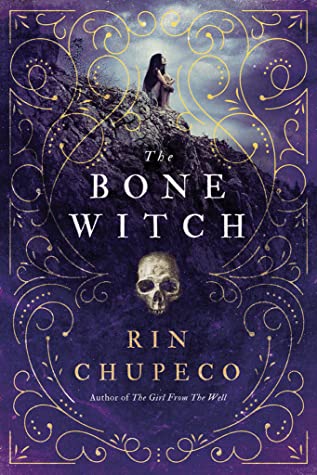
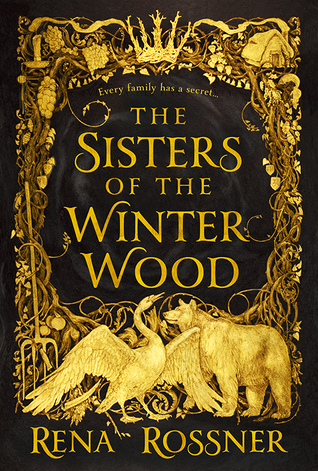
My favorite fantasy books tend to be lyrical ones, with atmosphere, and a world that is rich in lore.





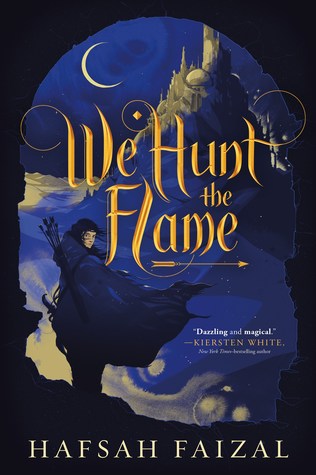
We Hunt the Flame
I love the Arabic words woven into the story and the main character being a huntress. The story feels like a fable, like oral tradition, passed down generations about a fabled woman who hunted in the dark woods, the Arz, and who went on a quest to save her village.

This Woven Kingdom
Beautifully wrought, a retelling of the Persia epic, Shanameh, it brings in jinns (my favorite) in a magical and fabled way. Another book that reads like oral tradition, it calls to mind the stories of lore that are both dreamy and instructive.
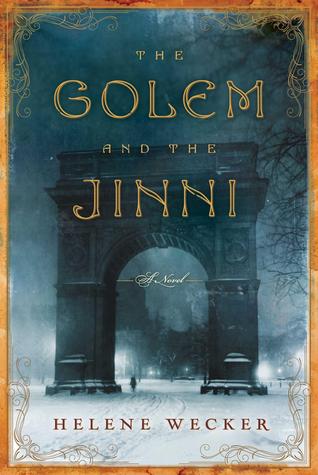
The Golem and the Jinni
One of my absolute favorites, the story takes place in the Arab Quarters of New York City in the 1800s. In weaves Arab and Jewish mythology, and brings to life a sector of history often overlooked. I felt as if I were there with Syrians, drinking kahwa in the coffeehouse and trading gossip. One of the best written books I’ve read.
An Ember in the Ashes series
Another beautifully written story, including jinns later in the series. The story is part mythology, part dystopian, all bite, and all emotion. I devoured this series, and couldn’t wait to get my hands on subsequent books when I first started reading it.
Well, I’m finally doing it. The idea for a jinn retelling of The Secret Garden has been brewing in my thoughts for a while now. There aren’t many The Secret Garden retellings out there, and there are fewer Middle Eastern retellings of most of classic Western literature.
After thinking about it, and really wanting to use the Hanging Gardens of Babylon as a starting point for the garden aspect of the retelling, I started reading the Epic of Gilgamesh. The story speaks of the city of Uruk, which was an ancient city of Sumer situated east of the Euphrates River.
This seemed like a great city to include in the retelling, so all in all, this new manuscript I’m working on will feature ancient Sumerian history and culture, some mythology, and of course, my favorites, jinns.
I plan to include Sumerian words in there, too, even though it may not be fully accurate the way I use the terms, but I will try my best to be. And, of course, the Hanging Gardens of Babylon will feature in the story.
Here is the first working chapter:
Sixteen and straight as a river reed, Maryam hid under the low metal-and-wood bed in the assassin’s private quarters. She held her breath, listening to the screaming coming from beyond the door.
She tried curling and uncurling her toes, just to keep the blood flowing. Her legs were cramping from tucking them in tight, and her arms were growing numb from keeping still for so long.
There was a heavy thud and the sound of metal scraping against stone. Maryam froze. She could smell wood burning, and taste the ash in the air. Maryam bit her fist to keep from crying out.
Footsteps sounded down the hall before the bedroom door swung open. The footsteps take on a softer edge now, and Maryam noticed its owner pausing, as if listening. Biting her lower lip so hard, Maryam tasted blood, as the assassin paced the room.
She wanted to run out from under the bed and stab the assassin with the copper blade Hasha, her guard, gave her, right before the attack. But Maryam knew she was the only left to take the throne. Duty over pride, her baba always told her. Throne above self.
She could tell it was a man by the size of his boots and the way his steps came down strong and even, as sure of himself as the blood running through his veins. She wondered if this was the assassin who sliced her mother’s throat with a single swipe of his sickle sword.
“Not here!” she heard the assassin’s gruff voice yell. “Continue searching the palace! A slip of a girl couldn’t have gotten far. We are hashashins!” Assassins.
Maryam lay still as a stone, even when the assassin left. Blood was pooling under her from her torn lip, but she didn’t dare budge from her hiding spot.
Not until her personal guard, and closest friend, Hasha, told her to. Unless Hasha’s dead, too.
No, they wouldn’t kill their own kind.
But Hasha left the Hashashins’ Order a long time go, would they consider her one of their own anymore?
She heard more screaming as the servants were cut down. Her umma’s pale, lifeless face flashed in her mind, wide dark eyes shot with blood, an angry gash across her throat. Her mother fought, wielding blade and shield, screaming at Maryam to run. But Maryam stood there, frozen in fear, watching as her mother fought two assassins before any of the crown’s guards could reach her.
But even two assassins to four guard meant nothing: the assassins cut down the guard and slit her umma’s throat. It was only then that Maryam ran, slipping and skidding on her mother’s blood, leaving blood footings for the assassins to follow.
She ran past the throne room, where she found her baba, riddled through with arrows and slumped on the very throne he sat on as malek.
His eyes were closed and a long black curl hung down the side of his head, matted in blood and curling at the end like a noose.
Maryam started choking, and she covered her mouth with her fist to keep from making a sound.
Maryam swallowed the memories down and wriggled just a bit so she could peer from under the bed. Two eyes peered down at her.
“Found her!” the assassin said.
Maryam screamed and kicked as the man dragged her from her neck and shoulders. She arced her arm wide and swung the blade she was still gripping. The blade’s tip just grazed the man’s thigh. He didn’t seem to notice.
“Found the rabatu!” he shouted.
“Let me go!” Maryam yelled.
“Hasha!” Maryam screamed. “Hasha!”
“She’s dead, rabatu,” the assassin said. “Dead for her betrayal of the hashashins.” Assassins.
“Why did you kill my family!” Maryam screamed, her throat going raw. “They were your malek and maleaka!” She held the blade before her, as if the thin blade was a wall between them.
The assassin eyed the blade and sighed. “I am truly sorry, rabatu.” He leaned his face in close to Maryam’s, so close she could count the lines across his nose. “But I have no king or queen other than the order of the hashashins,” the assassin said. “I follow no code of conduct but those set by the Order.”
“You attacked the crown!” Maryam said, crying now. She aimed the blade but the man slapped it out of her grip, sending it skidding across the floor.
“Stupid girl!” he said as he threw her to the ground.
Maryam scrambled back, slipping on blood. “Who sent you? Tell me who ordered you to kill!”
“Does it matter?” the assassin said. “You will die this night and be forgotten alongside that malek father of yours. No jinn should have taken the crown.”
“We’ve been the royal family for generations. Jinn were the first royals–” Maryam started saying, but the assassin swung his hand and slammed it into the side of her jaw. Maryam’s head swung to the side, and she felt a trickle of warm blood trail down her chin.
“Please,” she said breathlessly. “Please. Don’t kill me. Whatever you have been paid, I will pay you far more than you can imagine.” You are cowering like a dog, get up, Maryam, get up! Get to your feet and die a dignified death.
But she couldn’t get up, her legs refused to obey.
The assassin smiled. “I’m sorry, rabatu, this is such a waste. You truly are a beauty as everyone says. But I have my ord–”
The man’s eyes widened and he stumbled forward, clutching at his neck.
Maryam noticed the blade sticking out from the side of his neck just as he dropped to the ground, head smacking the tile.
“Maryam,” Hasha said, pulling her by her feet. “We have to go, now!”
The two ran, Hasha cutting down the assassins who stood in their way. Maryam paused just once to grab a blade from a dead assassin. It was a short blade, strong and sturdy and enough to slip in between ribs.
Her steps faltered, and Hasha grabbed at her, pulling her ahead. “No stopping. We have to hurry.”
“We need to go out through the tunnels,” Maryam said, just as Hasha said, “This way,” and turned a corner before pushing Maryam into a room. Hasha kicked away a heavy shield that hung decoratively on the wall, wide enough to carry three women. The shield clashed to the tiled floor with such a loud clang that Maryam winced in pain. But behind the shield was a narrow tunnel, just a step or two fup from the ground.
“Go, rabatu, go,” Hasha said, grabbing Maryam by the arm and shoving her into the tunnel. Hasha followed, and tugged on the side of the tunnel, slamming a metal grate into place.
The two crawled forward a few paces, then stood in a small cavern, their arms skimming its stone walls.
“Go, go, Maryam, go!” Hasha said, already running past Maryam.
Their footsteps pounded against the stone, the smell of dirt clinging heavy in the air.
“What is this place?” Maryam said. “I knew there were escape tunnels, but not this one.”
“I found it some months ago, on an old map,” Hasha said. She paused, her breathing raspy. “I-I-”
“Hasha?” Maryam said, only now realizing her old friend was hunching over.
“Hasha!”
Maryam clutched at her friend, her hands pulling away warm and slick. Hasha was bleeding from her abdomen, a deep wound that soaked the front of her tunic with blood.
“Please,” the guard said, “Please, go. Straight. I left a bag at the end of the tunnel, with some coin. Take it, and flee. Don’t return to this kingdom unless it is with an army.”
“Hasha, no,” Maryam said, her chin trembling. But Hasha was sliding to the ground, her skin pale even in the darkness. “Hasha, please, don’t leave me. I’ve–everyone’s gone.”
“I have protected you, rabatu,” Hasha said, her voice wavering. “I did not protect the malek and malaeka, but I did protect you.”
“Hasha. Hasha, no,” Maryam cried. “Please, not you, too.”
But Hasha was dead, and Maryam was alone in the world.
I’ll find out who did this, and make them suffer.

The current book I’m writing draws from Middle Eastern folklore and mysticism, namely Jinns. As more books are published that draw from MidEastern themes, I’m devouring them as soon as I can. Not only for ideas for my books, but because of my Middle Eastern heritage: I love seeing my culture represented in literature that includes the mysticism, folklore, and fables! What a beautiful way to honor a rich and cultured history!
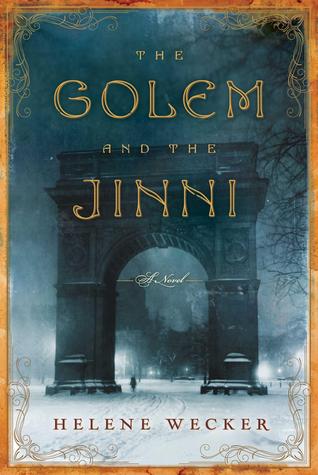
Chava is a golem, a creature made of clay, brought to life by a disgraced rabbi who dabbles in dark Kabbalistic magic and dies at sea on the voyage from Poland. Chava is unmoored and adrift as the ship arrives in New York harbor in 1899.
Ahmad is a jinni, a being of fire born in the ancient Syrian desert, trapped in an old copper flask, and released in New York City, though still not entirely free.
Ahmad and Chava become unlikely friends and soul mates with a mystical connection. Marvelous and compulsively readable, Helene Wecker’s debut novel The Golem and the Jinni weaves strands of Yiddish and Middle Eastern literature, historical fiction and magical fable, into a wondrously inventive and unforgettable tale.
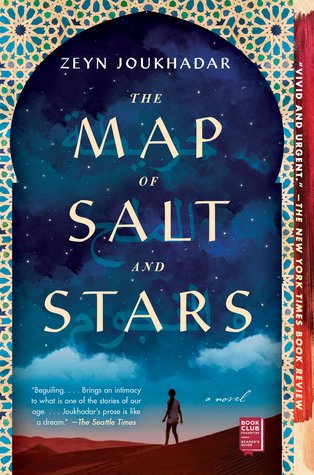
The story of two girls living eight hundred years apart—a modern-day Syrian refugee seeking safety and a medieval adventurer apprenticed to a legendary mapmaker.
It is the summer of 2011, and Nour has just lost her father to cancer. Her mother, a cartographer who creates unusual, hand-painted maps, decides to move Nour and her sisters from New York City back to Syria to be closer to their family. But the country Nour’s mother once knew is changing, and it isn’t long before protests and shelling threaten their quiet Homs neighborhood. When a shell destroys Nour’s house and almost takes her life, she and her family are forced to choose: stay and risk more violence or flee as refugees across seven countries of the Middle East and North Africa in search of safety. As their journey becomes more and more challenging, Nour’s idea of home becomes a dream she struggles to remember and a hope she cannot live without.
More than eight hundred years earlier, Rawiya, sixteen and a widow’s daughter, knows she must do something to help her impoverished mother. Restless and longing to see the world, she leaves home to seek her fortune. Disguising herself as a boy named Rami, she becomes an apprentice to al-Idrisi, who has been commissioned by King Roger II of Sicily to create a map of the world. In his employ, Rawiya embarks on an epic journey across the Middle East and the north of Africa where she encounters ferocious mythical beasts, epic battles, and real historical figures.
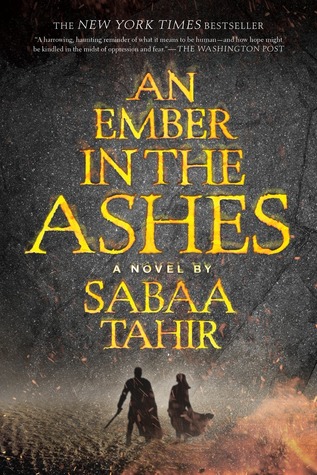
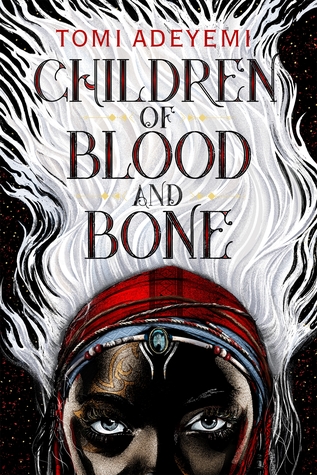
Laia is a slave. Elias is a soldier. Neither is free.
Under the Martial Empire, defiance is met with death. Those who do not vow their blood and bodies to the Emperor risk the execution of their loved ones and the destruction of all they hold dear.
It is in this brutal world, inspired by ancient Rome, that Laia lives with her grandparents and older brother. The family ekes out an existence in the Empire’s impoverished backstreets. They do not challenge the Empire. They’ve seen what happens to those who do.
But when Laia’s brother is arrested for treason, Laia is forced to make a decision. In exchange for help from rebels who promise to rescue her brother, she will risk her life to spy for them from within the Empire’s greatest military academy.
There, Laia meets Elias, the school’s finest soldier—and secretly, its most unwilling. Elias wants only to be free of the tyranny he’s being trained to enforce. He and Laia will soon realize that their destinies are intertwined—and that their choices will change the fate of the Empire itself.
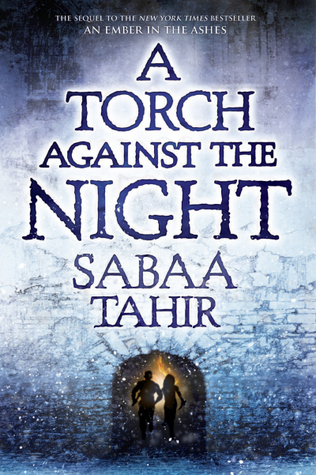
Elias and Laia are running for their lives. After the events of the Fourth Trial, Martial soldiers hunt the two fugitives as they flee the city of Serra and undertake a perilous journey through the heart of the Empire.
Laia is determined to break into Kauf—the Empire’s most secure and dangerous prison—to save her brother, who is the key to the Scholars’ survival. And Elias is determined to help Laia succeed, even if it means giving up his last chance at freedom.
But dark forces, human and otherworldly, work against Laia and Elias. The pair must fight every step of the way to outsmart their enemies: the bloodthirsty Emperor Marcus, the merciless Commandant, the sadistic Warden of Kauf, and, most heartbreaking of all, Helene—Elias’s former friend and the Empire’s newest Blood Shrike.
Bound to Marcus’s will, Helene faces a torturous mission of her own—one that might destroy her: find the traitor Elias Veturius and the Scholar slave who helped him escape…and kill them both.

Beyond the Empire and within it, the threat of war looms ever larger.
The Blood Shrike, Helene Aquilla, is assailed on all sides. Emperor Marcus, haunted by his past, grows increasingly unstable, while the Commandant capitalizes on his madness to bolster her own power. As Helene searches for a way to hold back the approaching darkness, her sister’s life and the lives of all those in the Empire hang in the balance.
Far to the east, Laia of Serra knows the fate of the world lies not in the machinations of the Martial court, but in stopping the Nightbringer. But while hunting for a way to bring him down, Laia faces unexpected threats from those she hoped would aid her, and is drawn into a battle she never thought she’d have to fight.
And in the land between the living and the dead, Elias Veturius has given up his freedom to serve as Soul Catcher. But in doing so, he has vowed himself to an ancient power that will stop at nothing to ensure Elias’s devotion–even at the cost of his humanity.
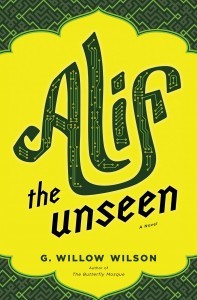
In an unnamed Middle Eastern security state, a young Arab-Indian hacker shields his clients—dissidents, outlaws, Islamists, and other watched groups—from surveillance and tries to stay out of trouble. He goes by Alif—the first letter of the Arabic alphabet, and a convenient handle to hide behind. The aristocratic woman Alif loves has jilted him for a prince chosen by her parents, and his computer has just been breached by the state’s electronic security force, putting his clients and his own neck on the line. Then it turns out his lover’s new fiancé is the “Hand of God,” as they call the head of state security, and his henchmen come after Alif, driving him underground.
When Alif discovers The Thousand and One Days, the secret book of the jinn, which both he and the Hand suspect may unleash a new level of information technology, the stakes are raised and Alif must struggle for life or death, aided by forces seen and unseen.

Lo-Melkhiin killed three hundred girls before he came to her village, looking for a wife. When she sees the dust cloud on the horizon, she knows he has arrived. She knows he will want the loveliest girl: her sister. She vows she will not let her be next.
And so she is taken in her sister’s place, and she believes death will soon follow. Lo-Melkhiin’s court is a dangerous palace filled with pretty things: intricate statues with wretched eyes, exquisite threads to weave the most beautiful garments. She sees everything as if for the last time. But the first sun rises and sets, and she is not dead. Night after night, Lo-Melkhiin comes to her and listens to the stories she tells, and day after day she is awoken by the sunrise. Exploring the palace, she begins to unlock years of fear that have tormented and silenced a kingdom. Lo-Melkhiin was not always a cruel ruler. Something went wrong.
Far away, in their village, her sister is mourning. Through her pain, she calls upon the desert winds, conjuring a subtle unseen magic, and something besides death stirs the air.
Back at the palace, the words she speaks to Lo-Melkhiin every night are given a strange life of their own. Little things, at first: a dress from home, a vision of her sister. With each tale she spins, her power grows. Soon she dreams of bigger, more terrible magic: power enough to save a king, if she can put an end to the rule of a monster.
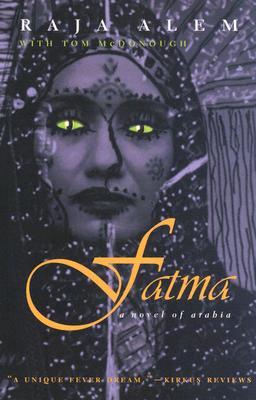
Fatma, an Arabian peasant girl, unwittingly embarks upon a strange journey of transformation the day her father marries her off to a snake handler with a sideline in potions brewed from venom. When Fatma is bitten by one of the snakes, she is changed from an innocent girl into an overpoweringly sensuous woman with a mysterious talent for controlling her husband’s snakes and an ability to travel with them into realms beyond ordinary human experience.” “Journeying into the Netherworld with her snakes, Fatma meets Prince Taray, a melancholoy warrior-hero. She and Taray bewitch each other and struggle toward union in rapturous rituals during which, among other things, Fatma alternately bursts into flames and melts into golden liquid.” Resonating with ritual and mystery, Fatma is a tale of one woman’s path to ecstasy – an enraptured vision of enchantment in this world and fulfillment in another.
*Cover image from Graphic Art News: http://www.graphicart-news.com/amazing-arabic-graffiti-collection-in-a-book/#.Xa3qsOdKjxg
In case you haven’t heard, in 2012, Ann Morgan read the world in a year. She compiled a list of all the countries of the world, and chose a book from each country to read, expanding her literary prowess.
I wrote a post regarding her excursions, and my own decision to follow in her steps.
Now, I’m here to forge a new path, by reading fantasy novels from around the world. I plan to do what Ms. Morgan did, but focus on fantasy stories, rather than any other literature. Since I am a fantasy writer, this makes sense.
I am skipping the US and UK, since I’ve already read fantasy books from those countries, and no fantasy books have come out from Vatican City, as far as I know.
Update: It’s been difficult finding fantasy books from some countries, so I am expanding my search to science fiction and horror.
 Reading Between the Dunes