7 Books that influenced my current writing voice

I’ve already mentioned how I am loving atmospheric books. And some posts mention specific books that influenced my current writing voice.

In thinking about what makes a book stick around in my mind and convince me to convince others to read it, it’s typically the author voice. The author voice and using the setting as a character.

Some books do that with such near-perfection, it’s hard to let go of the story and the characters. And those are the books that impact my own author voice, for the better.

Here’s a list of 7 books that have influenced my writing in terms of voice and tone, and have taught me how use the setting as a major character, the plot as a dreamy wonderland, and the characters as beautiful creatures that are so flawed, they’re perfect.

The Bear and the Nightingale by Katherine Arden

The wintry setting in Russia’s woodlands, and the glittering cities in the Kremlin bring this book to life in ways I wouldn’t have expected. And with the wild and eerily magical Vasya, who is such a perfectly flawed character it’s hard to feel anything but riveted by her, The Bear and the Nightingale not only brought a touch of atmosphere to my own writing, but also opened up a new love affair with Russian folklore.

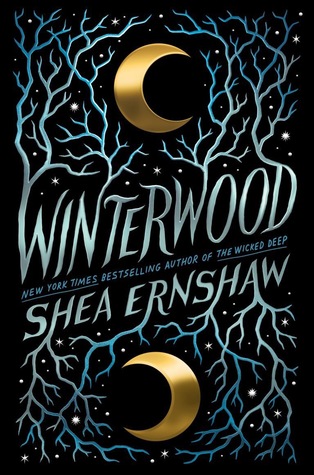
Winterwood by Shea Ernshaw

The woodsy setting and the moonlight magic had such an earthy and ancient, yet fresh feel to it that I couldn’t help but be drawn in. And though I thought the story was a typical people-fear-young-witch story, the setting and the magic itself brought a fresh air to the plot. Nora Walker’s magic wasn’t anything extraordinary, but her lineage, the recipes and pages of the Walker witch family magic book, and the feel made this story memorable. It also reminds me that setting is a character, and could be the most important one. Keep that in mind when you’re writing your own book! Read my full review here.

The Bone Houses by Emily Lloyd-Jones

Again, the earthy, woodsy setting was its own character, and it brought a mystical and tactile feel to the whole narrative. And that bone goat – a good reminder that even a sidekick can bring a new twist to your story. The magic was beautiful – dark and necromantic, but with a human and reverent feel to it.

Read my full review here.

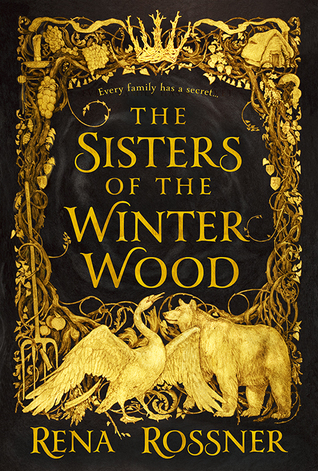
The Sisters of the Winter Wood by Rena Rossner

Again, those woods. earthy and ancient, the setting, once again, was its own character. And the sisterly bond made the story that much more human and heartfelt. The magic was old and raw, and though I don’t remember full details months after reading the book, I remember the feel.

A great book to learn how to bring in the folklore and mysticism of an existing culture, and making it your own.

Whichwood by Tahereh Mafi

Here’s how you take something dark, necromancy, and make it beautiful and magical. The setting here is not so much its own character as the townspeople are. The magic is the main focus, and, most importantly, character feelings are the plot-driver. The necromancy is such a beautiful take on the typical dark feel that magical system has, and it brought such color and light to the world that the unexpectedness of it all made me crave more. A good reminder that how characters feel is just as important, if not more, than what they do. This is a strong character-driven book and a great example of plush writing. Read my full review here.

Sabriel by Garth Nix

This is how you build a world so big and powerful, you can get lost in it for ages. Sabriel has such a strong magical system that it influenced all my books since reading it. Almost every fantasy book I have written for the past ten years has featured dark magic, necromancy, and a reserved yet caring female protagonist. I can’t imagine writing a story that doesn’t have those elements in it, simply because Sabriel influenced me that much as a reader and writer. The main trilogy is worth it, and are the subsequent books in the Old Kingdom series.

The Bone Witch by Rin Chupeco

The necromancy is strong in this book, with an added twist: raising the bones of ancient creatures and then commanding them with thought. I tried writing a book using this concept and failed to do it right -it’s harder than it seems. And Rin Chupeco does it with such skill. The book takes historical features like geishas, adds a dark magical system, and creates a whole new world and cast of characters. A great example of using what you know and then adding a twist to it. The feel of the magic is everywhere, and you just know how the magic can be used for good or ill, and how much havoc can be wreaked without the skill to manage it. Read my full review here.

*Originally published March 5, 2020.

Favorite Arab-inspired fantasy I’ve read

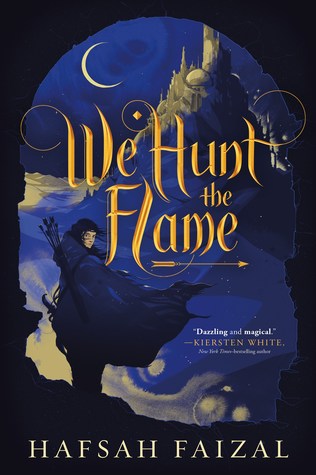
We Hunt the Flame

I love the Arabic words woven into the story and the main character being a huntress. The story feels like a fable, like oral tradition, passed down generations about a fabled woman who hunted in the dark woods, the Arz, and who went on a quest to save her village.

This Woven Kingdom

Beautifully wrought, a retelling of the Persia epic, Shanameh, it brings in jinns (my favorite) in a magical and fabled way. Another book that reads like oral tradition, it calls to mind the stories of lore that are both dreamy and instructive.

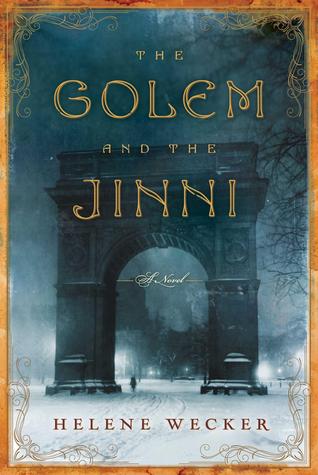
The Golem and the Jinni

One of my absolute favorites, the story takes place in the Arab Quarters of New York City in the 1800s. In weaves Arab and Jewish mythology, and brings to life a sector of history often overlooked. I felt as if I were there with Syrians, drinking kahwa in the coffeehouse and trading gossip. One of the best written books I’ve read.

An Ember in the Ashes series

Another beautifully written story, including jinns later in the series. The story is part mythology, part dystopian, all bite, and all emotion. I devoured this series, and couldn’t wait to get my hands on subsequent books when I first started reading it.

Your setting is a living character

Make your setting a character. 

I’ve recently learned this and think it’s advice that I can follow, and plan on following, as I go through revisions of my latest book. In my current MS, my setting feels dead, a stagnant detail that a reader can’t really envision. So as I edit my MS (again) I’m going to be focusing on bringing setting to life. Making my setting a character seems like sound advice.

Being of a science/skeptical background, I of course had to do research on how to bring setting to life and if viewing your setting as its own character is enough.

Turns out, it is and it isn’t.

One of the goals of writing the setting is to find the unique setting elements that matter to your characters, and possibly, to your readers. A setting is alive when its elements, its objects are interwoven with emotions. Think of people: it’s not just their actions, their personalities or behaviors that make them them, it’s also their emotions, their responses to events or circumstances within their environments. The same goes with settings: it’s not just the objects that make the setting, it’s the emotions attached to the objects, or the emotions characters feel towards the objects.

That is, the setting is alive when its details are experienced not only by descriptions, but also by the way the characters experience those details.

Setting should also challenge your characters. Not only physically by, say, having to climb a mountain. But also socially and emotionally, perhaps spiritually if it fits into your book. Your characters should have a dynamic relationship with their setting. Just as you interact with, and react to, your environment, the same goes for your characters.

One thing I’ve thought of when editing, and as I learn more about how to write, is that making your setting a character isn’t enough. At least, not in the way I was initially thinking about it. I think sometimes in my own writing, even if I approach the setting as a character, it’s easy for me to approach it as a dead character. I have to remind myself that setting needs to be alive, be passionate if it fits with the story. It’s not enough to describe the objects and details and emotions regarding a setting; you have to also make the setting have its own mind, be its own main character. 

…You have to also make the setting have its own mind, be its own main character 

Your setting should be both an agonist and an antagonist for your characters. That is, your setting should both simulate and frustrate your characters. Your environment both stimulates and frustrates you, so why shouldn’t the same happen for your characters. They’re people, too, you know.

Your setting should both stimulate and frustrate your characters.

*Note: This article was originally published on January 19, 2016 and March 26, 2020.

The First 50 Pages

I read Jeff Gerke’s “The First 50 Pages,” and of course, half the book is highlighted. Since I found the book to be useful, and I learned a lot reading it, I decided to outline some of the main points of the book.

“We have to engage your reader, first and foremost. You have to introduce your hero…establish the context of the story…reveal the genre and milieu and your story world…set up the tone of the book…presenting the stakes, introducing the antagonist, establishing the hero’s desires, starting the main character’s inner journey, and getting a ticking time bomb to start ticking down.”

That’s a lot to do in the first 50 pages…

“A weak first line is a killer. You get only one first line, so make sure it’s carefully thought-out.”

“…don’t start your novel with a dream.”

“Your opening line must hook your reader. You must start with action. But that doesn’t mean you have to have a battle scene or anything that needs to blow up. It simply means it must be interesting to the reader.”

“Good dialogue is…layered. In theater, it’s called subtext.”

“In good dialogue, dialogue with subtext, the characters aren’t responding to what the other person says, but to what they think the other person means.”

“Give your dialogue subtext, and it will be easier for agents and editors–and readers–to love your novel.”

“Fiction is conflict: someone who wants something but is prevented from getting it…The acquisitions editor is looking for signs of conflict in your first fifty pages.”

“…three main craft errors that most often cause agents and acquisitions editors to reject fiction proposals…The big three bombs are telling instead of showing, point-of-view errors, and weak characters.”

“…information dumping is called telling. Its main forms are backstory, pure exposition, summary/recap, and the explanation of character motives.”

“When you load your story with telling, you deprive your reader–and even your characters–of the joy of having it all happen experientially. Take the information out of the voice-overs (your telling) and put it into the scenes.”

“…there are only two things you must do with your first fifty pages, only two large-scale tasks…:

You must engage your reader. That is Job One. And you must set up your story so the rest of it will work correctly.”


*Note: This article was originally published on January 2, 2017. 

Angst, anger, and affection

Adding emotion to stories can be one of the more difficult aspects of writing. Sure, a writer knows what their characters are feeling, but can they make a reader *feel* the characters’ emotions?

That’s difficult.

I found a great article that was helpful in my own skill-building as I try to better learn how to slow down my writing and make my readers feel my characters.

One thing she says in the article is to “slow it down.”

Counselors tell us that thoughts lead to emotions, and emotions lead to actions. As a writer, you can easily show your character’s thoughts and actions. Readers are smart enough to deduce the emotions based on what the characters think and do. So often it seems writers are in a hurry.

And it’s true. Emotions are processed rapidly, yes, but humans also take time to “study” their emotions, and if not study, certainly to be swallowed by them. So as a writer, it’s important to let your characters feel, and sometimes, drown in their emotions (just not for too long – they do need to surface for air and move on).

Additionally, the article says, “There are two facets of emotion in fiction: conveying what your character is feeling and evoking emotion in your reader.

Here again, time is king. You need to give your characters the chance to feel and process, and in doing so, you let your reader have the time to imagine themselves as the character.

What do you think is the most effective way to convey emotion? Do you have a favorite book or scene from a book that showcases this skill?

How to be a $100k author

It’s no secret many people would love to make a living writing books. But what makes a $100k author?

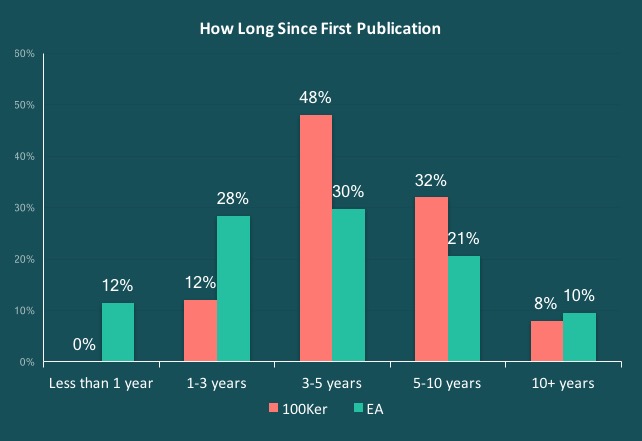
WrittenWord Media ran a study in 2016, and again in 2017, to find that out. The analysis wasn’t based on rigorous data, but rather on inferences drawn from self-reported surveys from their author base. Their two study groups were emerging authors (earn <$500/month in book sales) and financially successful authors (earn >$5000/month in book sales for the 2016 study, and >$100k per year for the 2017 study).

This is what they found.

Financially successful authors wrote more, with an average of 13.5 books published, and an average of 31 hours writing per week. Broken down by day, that’s an average of more than 4 hours writing per day. Compare that to the average of 7.4 books published for emerging authors, and an average of 16 hours per week writing, which puts them at less than half the hours spent writing per day than the successful authors. Of those who earn $100k in annual sales, 88% have been writing for more than 3 years, compared to 59% for emerging authors. This gives the successful authors time to gain experience and to build an audience.

Further, successful $100k authors 100kers have on average 30.3 books in their catalog, while emerging authors had around 7 on average. Even further, $100k authors had up to 63 books, and a minimum of 7 in their backlist. Again, writing more lends itself to finishing more books, which can be published.

Financially successful authors have professionally designed covers, with 68% of them having spent >$100 on book design. They typically have professionals design their book cover. Now, I think this relates more to indie authors, but still, even if you plan on going the traditional route, make sure your cover is professional and eye-catching. Think of how a book catches your eye and entices you to buy it. Chances are, it’s not just the cover blurb that draws you in. Here’s what readers want in a cover. Here’s how to use science to create your best cover.

Financially successful authors have their manuscript professionally edited. You may write, and you may write well, but having another set of professional eyes is key. More than half of the successful authors surveys spent $100-$500 on professional editing services, and 32% spent $500 or more. 

Financially successful authors write in popular genres. They also believe in free promotion, where they have at least one title that is permafree. That is, one of their books is always available for free. They also handle their own marketing, though some (45%) hire help. For both 100kers and Emerging Authors, over 90% of them report doing their marketing themselves. The only difference is that 100kers can hire some help. Here are some marketing tips.  

Do you have any other sources on how authors can maximize their earnings? Share it in the comments below!

Writing is Rewriting

I have written books before–none published as yet, but I’m working on that.

One thing I’ve learned–you can edit your book literally 20 times, and still not have it the way you want it to be. I have experience in this. I revised a manuscript some years back so many times, I ended up with 20 edits, and still wasn’t happy with the way the story flowed, especially since I have written the book as part of a series, and had finished the series in first-draft mode. Every time I sat down to the books to edit, I cringed. Every. Single. Time.

And each revision brought me to the thought, “Ok, I’m done now. It’s as good as it’s going to be at this point.”

But that’s the thing, it’s as good as it’s going to be “at this point.” Six months from now is not “as this point.” It’s six months from this point. And six months makes a huge difference in your perspective on your manuscript and on how to edit it.

Michael Crichton said:

“Books aren’t written—they’re rewritten. Including your own. It is one of the hardest things to accept, especially after the seventh rewrite hasn’t quite done it.”

He’s right. You can have a wonderful story, but that doesn’t mean it flows well and that the technicalities of writing are what they should be. Books are rarely written in first-draft mode and published as is, and become bestsellers. They have to be rewritten, and rewritten, and rewritten, and rewritten again.

So how do you edit your book? Each author has their own method of madness, but many would agree that these steps are critical:

  1. Keep your hands to yourself.

It’s typically a good idea to let your book sit for a while, at least a week, preferably a few months. This gives you a chance to forget about some details, get a fresher perspective, gain new experiences in the time being, and work on other projects. Resist the urge to set fingers to keyboard and begin the editing process.

Distancing yourself is one of the best things you can do when editing your manuscript.

  1. Eye candy.

Give yourself a chance to read through your manuscript, not with the intent of editing it immediately, but to refresh your mind on the story’s details. Sometimes, you’ll find that you wrote something in a scene, but then never used, so it was wasted or irrelevant to your story arc. You can keep a track of details and notes, but don’t worry about editing things right now. You’re a reader here, not a (re)writer.

  1. 12’s a charm.

Write a bunch of short synopses of your book—and write 12 of them. Getting a different perspective on your book each time can help you focus on the story itself, especially if you are writing fiction. The goal here is to acquaint yourself with different perspectives that all include the core components of your story. I usually try to create a few scenarios—trying to examine several facets of the story. It’s helpful to do this after you’ve distanced yourself from your manuscript for a while, and then have re-read it.

  1. Kill it with fire!

Start rewriting. Focus with fixing sentence structure, ripping out paragraphs, and even entire chapters. Do this mindfully, with the intention of tightening your writing, and fixing major structural issues within your plot. You have have left out key items, or added erroneous or irrelevant ones. The goal here is to excise and seal.

5. You spin me ‘round…

You’re probably going to go through no less than 3-4 revisions, and most likely are going to rewrite about 10 times—and that’s no exaggeration.

6. …like a record, baby…

You’re going to go through editing again. Focus now on tightening, because at this point, you should’ve fixed the major structural inadequacies of your plot. Worry about removing excess words, making scenes more descriptive, improving dialogue.

7. Mirror, mirror, on the wall!

Worry now about polishing your manuscript. Go through and make sure that sentences are reflecting what you want them to reflect. Make sure your writing is a mirror that reflects what your mind’s eyes see.

8. Beta me this.

Send it to workshop buddies, writing buddies, and friends/family members. Have others critique. Make sure you find people who can be both nice but harsh; they won’t sugarcoat their criticisms and tell you it’s all fine, but they won’t be cruel to you and bring you down. Find as many beta readers as you can—the more the better. Yes, too many chefs spoil the plot, but if a bunch of people are saying the same thing, you can be assured that they’re probably right.

9. Waterproof it.

Give your manuscript one more look-through. Make sure everything’s as tight as possible.

10. Find an agent or publisher!

Between the editing steps, you should let your manuscript sit, for at least a few weeks, if not a few months. Rushing through the steps will get you nothing except an manuscript that stays rough.


*Note: This article was originally published on January 13, 2016. 

Hakawati Jinn – Chapter One

Leave your feedback in the comments!

The dead have been dropping all night. 

I awake before the sun is bright enough to cut across the horizon to gather the pomegranate seeds – each one a soul who has died in the last day – scattered across the front of my house into a basket, my hands red and sticky with juice.

There are many seeds this morning, and the weight of the basket tilts me as I hobble back inside the cottage. 

My daughter is still sleeping in her cot as I sit down, setting the basket on the table. My joints click, a side effect of the curse. I age faster than I should. Already I have white streaks in my hair, and some of my eyebrow hairs are white. Just thirty, but I look a decade older, at least. 

The seeds are bright red and plump, and I press them between two pieces of wood and let the juice seep into a bowl. Each seed contains the story of the person the soul belonged to. My job as mutahida, as storyteller, is to tell each soul’s story, to write each soul’s tale. It’s the only way for a soul to leave the waiting place in between life and death, and enter true death, or Mote. Once a soul’s story is told, they can take it to Mote’s gatekeeper and pay for their safe passage where they will have eternal bliss and peace. 

When the seeds have been pressed into juice, I take a sip and wrinkle my nose. “Bitter today,” I say to myself, pouring honey into the cup. I stir then take another drink. The stories come in flashes, too quick for my mind to understand, and I’m too tired to try, but my magic is fast enough to catch them. 

I see snatches of a river flowing fast and sweep, the brown of a head topped with seaweed floating on. I catch the green of a tree and a swing hanging from a thick branch. I think I hear the growl of a bear. Or the clash of blades. But everything comes too fast, and there are so many stories to tell – stories of days and lives lived. I rarely ever see the last moments of death, thankfully. 

I write, my fingers weaving stories in the air, words curling into smoke. I’m a hakawati jinn, and the stories I weave return to death and to the souls they belong to. 

I drink more of the juice, weaving smoky tales in the air with my other hand. The stories disappear almost as soon as they form, getting swallowed back into death. 

Layala stirs behind me, slipping out of her bed and padding behind me. She says nothing as she sets a pot of tea to boil and begins making our breakfast. 

I drink the last of the juice and, more out of habit, glance at the lone pomegranate seed I keep in a small glass jar on a shelf. 

Layala’s father. Those who have died by their own hand have no place in Mote. They are banished to jehinam, to suffer eternal cold and perpetual executions. 

It was the only love I could show him after his death – to keep him in the waiting place of death, rather than write his tale and send him to suffer. 

He visits us sometimes, as happy as any dead could be. 

As if thinking about him conjured him, he steps into the cottage, his body more smoke and ash than flesh and blood. 

“Illyas,” I say, rising to my feet. 

He kisses me, soft and, if not warm, then not the cold expected with the dead. And though his face fades through mine, I pretend I feel his solid flesh. 

“Sabah al kheer, baba,” our daughter says, throwing her arms around him. Good morning, father. Her arms collide with his body, the only few minutes of a day he is made of enough flesh to touch, though her skin is streaked with ash when she lets go. I reach out to touch him and he takes my hand. 

He can only keep his form a few minutes in a day, in the moments when the sun’s light turns from red and orange to its day colors. 

“And how are my girls today?” he says, as he does every visit. 

“Good,” Layala says. “I’m going to see jido again today.” Her grandfather. 

My dead lover’s face stiffens, but he forces a smile onto his face. “You should spend more time at home, with your mother,” he says, and I throw him a grateful look. 

But before Layala could respond, Illyas disappears as the sun’s light breaks through our windows and the morning is fully awake. 

We both sigh, always wishing for just one more minute with him. 

“I wish we could go into death,” Layala says. “You’re a jinn, you’re made of death itself. Are you sure there’s no way–”

“No, Layl. I’ve told you before. Jinns manage death, they don’t enter it or keep its company, not if they can help it.”

I hate lying to my daughter’s face, but her questions have plagued me for years. Ever since she was a child, she wanted to know: what was death like, was it something you could take trips to?

It’s better she knows as little as possible, even if she is half-jinn. She’ll likely never have my magic, and it’s best she doesn’t. 

“I’m going to jido’s,” she says with a sigh. “I’ll be gone all day.”

“Your father is right, you know. You should stay home more, learn a craft so you can support yourself when I die.”

“You’ll be around for many more years, maman. You just don’t like jido much,” she teases, kissing me on my head as she darts off to get dressed. 

I glance back at that lone pomegranate seed on the shelf. He’s nothing like his father, and thank the heavens for that. 

My daughter leaves the house in a flurry of color and voice. “Bye Maman!” she yells, barely throwing me a parting look. I give her a headstart, grabbing an empty bottle and one filled with honey, and a canteen of water. 

Then I take the stony pathway at the back of the house, and head straight for the cemetery. It’s filled with chipped tombstones sporting moss shoulders and spiderwebs. No flowers or notes mark any grave anymore – the cemetery has long been forgotten. 

Which is why it’s perfect for my escapes into death. I lean back against a tree and spy a fox watching me. 

“Come to see me walk into death, little one?” I say. 

The fox cocks its head at me, his snout curled up in a characteristic smile. Then it dashes off, its bushy tail following. 

I fill the empty jar with dirt from a grave, mix in the honey and water, and drink the mix. My mouth fills with granules of stone and sand and I try not to chew any, only swallow. The honey does little to mask the taste, but it’ll do. 

When the dirt water settles in my stomach, I press my hands to the ground and let the cold of the earth seep into my skin. It’s familiar, this feeling of being one foot in the warmth of life and the other in the cold of death. 

My dead lover greets me. He’s a shadow first, then the smoke curls in around him and I can just make out his features. He’s smiling, as usual, his hand outstretched me. I take it and like lightning striking me, my body jolts and my soul is in death. 

“Hakawati,” he says, calling me by my title rather than my name. “Hiyati.” My life. 

“Illyas,” I say, letting him guide me to a bench. Death surprisingly has small comforts for those who can’t or won’t pass on to Mote or jehinam. “How are you?”

He laughs, the sound gravelly but warm, like honey mixed with sand. I want to hold him like he used to hold me, when he was alive. But bodies move and fit differently in death, less flesh and more ash. “As good as can be. How are my girls?”

“Well enough. Your daughter threw animal shit at some boys who were bothering her yesterday. I don’t know if I should encourage her fiery personality or douse it,” I say, laughing. 

Illyas laughs, but there’s a tightness in his face. “She should be careful,” he says. “She’s still your daughter, and they don’t take kindly to that.” He brushes a hand across my face, and though I don’t feel skin, there’s still a trail of warmth. I lean my cheek into his touch, and he lets me rest my weight against him. 

“There’s so much I want to tell her,” I say, “But I don’t know if I should. And I’ve told her so many lies over the years. How do I undo that?”

Illyas says nothing, but when he tries to pull me in closer to his chest, we fade into each other, smoke curling into smoke. We pull back, our bodies regaining substance. 

“Hakawati, tell her a story. You’ve spun her tales since she was in a cradle, she will feel your meaning, even if she doesn’t understand it. Weave her a story, see what she says.”

“She’ll roll her eyes and ask to go to her grandfather’s house. She’s had little patience for me lately.”

Illyas laughs, shaking his head. “She reminds me of me when I was her age. I don’t know if that’s a good thing.”

“I loved you at that age,” I say, reaching out for his hand. I let mine hover over his, so we feel each other’s warmth. 

Loved?” he teases. “Not anymore?”

I crack a smile, “You know you’re my one and true love.”

He chuckles again, then sobers. “You shouldn’t be alone anymore. Layl is getting older, she will one day leave home to start her own. What will you do then?”

“Visit you more often,” I say. 

Illyas shakes his head. “You should find someone.”

“I remember you being rather jealous of a certain Ihab in the village,” I tease, “When he gave me flowers during the midsummer festival.”

Illyas barks out a laugh. “I was young and unsure of your affection. And I seem to recall you encouraging him, just to make me jealous.”

“I might have,” I say with a smile. “I don’t remember.”

“Lies. You remember everything as if your brain is a stone and someone’s carved words into them.” He smiles at me, the lines around his eyes crinkling, as if he were still made of true flesh. I want to hold him, to smell him..

Instead, I get to my feet. “I should return. The sun will be setting soon.” Time works differently in death than in life, at once faster and slower. 

“I’ll walk you home,” Illyas says, and we both smile, because there’s no leaving death for Illyas tonight.

I hover my lips at his cheek in the mimicry of a kiss. Anything more, and we’d fade into each other. 

“Goodbye, Hakawati,” Illyas says. “I’ll miss you until next time.”

Revision is re-envisioning

There’s nothing akin to the agony of editing your book. This suffering goes beyond the whole “kill your darlings” because, at least for me, I’ll gladly kill my darlings if it means saving my book.

No, the agony for me is the one thousand and one revisions my book has to go through. I already did one revision, which was a sweep of the book, pulling out scenes and sentences, and adding new ones if I saw fit. It was more of a holistic approach, which I completed in a week.

However, the next two weeks are going to be me focusing on dun dun dun: setting. The setting that I apparently failed to convey when I wrote my first draft. The setting that I’m going to have to describe beautifully if I want my book to work. The setting that I’m not sure how to describe.

However, to keep sane I think the best approach I can take to my editing is to do a number of revisions, each time focusing on one aspect:

Revision 1: Holistic: Go through the book, reacquaint yourself with the details and the scenes, and try pulling out what doesn’t work. Gut your work. Kill your darlings, or if that’s too gory a thought for you, lay your darlings to rest in a beautiful silk-lined casket and set them out to sea. Focus on sentence structure, grammar, punctuation, so that when you move on to other revisions, you aren’t distracted by those sorts of things.

Gut your work

Revision 2: Setting: Weave the senses into your book. Don’t overdo it, but make your reader feel, with all their senses, your scenes. Focus more on adding in sound, sight, temperature, touch, color, tactile experiences, wetness, dryness, humidity, solidness, softness, dampness, harshness, anything that brings your world to life. Describe something as being chestnut-colored instead of brown. Describe the sound as tinkling instead of light and airy. Describe the feel of the cliff under her hands as she climbed it, instead of saying only that she grunted. Make the setting active, interacting with the characters, or having the characters interact with it. Don’t just have the setting be a backdrop that is barely noticeable. Bring out the life of your setting. View your setting as its own character, and I think you will do well.

View your setting as its own character

Revision 3: Focus on the emotions of your character. Now that you have the setting down, make sure your character responds to it. Your character’s setting should challenge them, interact with them, push them, reward them, punish them, twist them around and make them dizzy. Make your character a part of the setting, and make the setting a part of your character. Have your characters and their setting hold hands. Focus on events: how do your characters behave? Do they only react? They should do more than just react to events; they should create events, change events. Emotions fuel your character. Emotions and actions are your character. Your character is nothing without emotion, unless your character is all about not having emotions.

Have your characters and their setting hold hands.

Your character is nothing without emotion, unless your character is all about not having emotions.

Revision 4: Focus on plotholes. Are there any? Does everything make sense chronologically, assuming time works in your book as it does in our world. Is your plot fluid? Your plot should not only make sense, it should be interesting, have twists, and bewitch a reader.

Your plot should not only make sense, it should be interesting, have twists, and bewitch a reader.

Revision 5: World-recreation. Make sure your world fits in with your setting, and that everything is interactive. You could probably do this during the setting revision, but it should be its own focus at some point. Is your world a sprawling expanse, or s single room in a lonely house? Either way, make sure that your world is interesting for both your characters and your readers. Interesting doesn’t have to mean unique or out-of-this-world. It could be boring, really, in the sense that you character is bored by their world. Regardless, make your world alive for your readers and interactive with them. Your world should be a reflection of your characters’ behaviors. That is, your world should not be separate from your characters, but a part of their feelings and actions.

Your world should be a reflection of your characters’ behaviors.

Revision 6: Be a seamstress. Bring all the pieces together. Do another holistic revision. Do all the pieces fit together? Have you woven your strands with golden thread? If not, it’s back to step 2.

Revision 7: Let it sit. I think letting go of your story, even if only for a few weeks, is a revision in and of itself. By letting it sit, and moving on to something else to clear your mind, you’re letting your brain distance itself from the details so that when you come back to your story, you can look at it with fresh eyes and from a big-picture perspective.

Let it sit.

Revision 8: Read through your book, and holistically attend to all those previous steps mentioned. It’s holistic in a way you haven’t done before, even in step 6. This time, you’ve spent time away from your MS and can focus on the bigger picture and the general themes of your story, your characters, setting, and everything else you should have already attend to, but can now do with fresh eyes and mind. Give your book one more holistic revision, and focus on the big picture. Remember that revision is re-envisioning.

Remember that revision is re-envisioning.

*Note: This article was originally published on January 19, 2016.

**Header image courtesy of Google images.

Hakawati Jinn – Chapter Four

NEW BOOK ALERT!

I’m working on a new book and want YOUR feedback! Each week, I’ll post a new chapter, and want you to provide your thoughts, opinions, feeling, and feedback on the chapter.

Be brutally honest.

I pace my one-room house, waiting for my daughter to return. But she doesn’t.

“Saqr,” I say, awakening the hawk once more. It returned to clay as soon as it told me what it saw, and I brought it back with a touch. “Go find Layala.”

The hawk leaves, and I continue my pacing. Do I walk to the next village? Leave the hut and search for my child? Or do I let her be, and trust she will make good decisions. 

Didn’t you make horrible, stupid decisions when you were just a bit older than her? 

Saqr returns and I lay a hand on him. The images come in snatches, as if he darted around, looking for a better vantage point. 

So, Layala spent the night at the jinn’s house. She’s asleep, her cloak draped over her clothed body, the fire burning bright. The jinn sits in his chair, watching her, stoking the flames every so often to get it from burning too low. 

Saqr picks up a stick and flings it at the window, then hides from view. He perches on a tree branch, looking into the house. Layala stirs, then notices the morning light shining through thre window. 

I can’t hear what she says, but I see her lips move through the window. Her eyes are wide and she’s shaking off the jinn’s grasp on her arm. 

I think I see her mouth ‘I have to go.’

I’m sitting at my table, drinking pomegranate, when she comes in through the door. 

“I was worried all night,” I tell her, my voice calm, even though I noticed a little shakiness to it. I pull up a chair and pat it, inviting her to sit. 

She remains on her feet. “I fell asleep at jido’s,” she lies, not meeting my gaze. 

“I see. Did you eat yet?”

She shakes her head, now picking at the edge of our small wooden table. “I’m going to rest,” she says.

“I thought you slept at your grandfather’s?” I put a hand to her head, feeling for fever. “Are you unwell?” I say. 

“No, just tired,” she says, and her cheeks flush red. I let her go; best to not press her and have her shut herself off from me. No, let her come to me with her heart’s secrets. 

Layala undresses and slips into bed, her back towards me. I bend over her, tucking the covers under her chin and around her slender body, just as I did when she was much younger. 

“I love you, maman,” she says. “I’ll never do anything to hurt you.”

I’m surprised by this, but only kiss her soft cheek, still round with baby fat yet to shed. “I know, hiyati.” 

I stoke the fire to make sure she’s warm, then slip out into the night. The air is cold, and I wrap my simple cloak tight around me. I long for the feel of the earth under me, for Illyas’ smile, for his reassuring words. 

I make a snap decision and steal back into the house, grabbing jars and water, before padding towards the cemetery. 

Illyas finds me, as usual. 

“Hiyati,” he says, “What’s wrong?” HIs brows are furrowed as he tries to draw me close, but our bodies aren’t flesh enough for that. Instead, he has me sit down on the pale ground, made of tiles cracked and cool, flowers and weeds growing through the cracks. 

“She’s in love with a jinn boy,” I say. 

“Who? Layala?”

I nod. “I saw them, through Saqr. She spent the night with the boy.”

Illyas tenses. 

“She kept her clothes,” I say quickly, but it does little to ease the tension rippling through his body. “But still. She lied to me.”

“Who’s the boy?” Illyas said, his voice gruffer than I’ve heard it in a while. 

“I don’t know. But I’ll find out.”

Illyas gives a sharp nod, his brows furrowing deeper over his nose bridge. “I’ll wring his neck if he does anything to hurt her.”

I snort. “You and me both, hiyati. The last thing I’d want is for her to fall pregnant at barely fifteen.”

Both our faces flush; our second-greatest mistake, and greatest joy, has been Layala. Born to young parents who knew nothing of the world, never mind raising a child, Layala tore out of me, bright red screaming, on a night just shy of my sixteenth birthday. Illyas was just three years older, and fainted at all the blood. I remember cleaning my daughter’s face of my insides, while fanning my lover with a slip of paper to wake him. 

Illyas reaches over to hover his lips over mine, and for a moment, I feel nothing but his warmth. Then it is snatched away, and lightning strikes through my body. 

Something is pulling my soul back into my body. 

I gulp in air and flick my eyes open, to find my daughter standing before me. Her face is twisted in anger, and she’s standing with her hands on her hips. 

“Maman,” she says, and it sounds like she’s accusing me of something. “What are you doing?”

I sniff, get to my feet, dusting dirt off me. “I needed some fresh air,” I say. “I guess I fell asleep.”

She narrows her eyes at me, as if not quite believing what I say. “I woke up and you weren’t there,” she accuses. 

“Well,” I say, reaching my hand out so she can help me up. I grunt, heaving my weight forward as my knees crack. “Long day, I suppose. Help your maman to bed, then,” I add, leaning some of my weight on her strong, young body. 

Back in the house, I set a kettle to boil, not tired enough to sleep. Layala sits beside me, legs curled under her. She picks at her nails, a habit she has only when something is on her mind. 

“What is it, kushtbani?” I use her father’s nickname for her: thimble. She was so tiny when she was born, she could fit into the palm of his hand if curled up. 

“Nothing, maman,” she says with a sigh. “I just- I want to tell you something, but not now.”

She looks at me with her wide, dark eyes, eyelashes fringing them like tassels on a curtain. “Tell me when you’re ready, kushtbani. I can wait.”

She smiles, and my heart aches at her beauty. She doesn’t see it yet, but under those baby cheeks are a grown woman’s bones. 

She pushes back her chair and pads over to her cot, and though she is just feet away from me, I’ve never felt farther from my child. There are too many lies between us, and I must do something about it. 

Morning comes angry, with rain pelting the window, and the wind howling through the trees. 

I dash outside, grabbing at as many seeds as I can. Layala helps, grabbing handfuls of pomegranate and dirt and grass, while shoving them into the basket. We run back inside, laughing at the downpour as we peel off our sodden clothing. 

“I’ll get the fire going, maman,” she says. 

I sit down and sift through the seeds, setting aside the clumps of grass Layala grabbed. I juice the seeds, taking a sip to taste the mood. A sense of sadness washes over me, and I hold back the need to cry. 

“Is everything fine, maman?”

I nod, reaching for a lemon. 

“Ah,” Layl says, “It’s sad seeds.”

“Very,” I say, squeezing the lemon into the juice and stirring. The sourness of the lemon masks the sadness of the souls, enough that I can drink without crying. 

The stories shove around me in my mind, snatches of sound, morsels of flavor. I get the whiff of warm cinnamon, the taste of cardamom in rice. The feel of a baby’s skin, the weight of a warm fur around a neck on a cold winter day. 

The stories clamor for my attention, each one trying to be the next that gets written. Souls can be impatient, eager to move on. Eager to have their tale written to pay Mote with. 

I try my best, feeling the ache in my bones growing and the din in my head rising. A headache is coming on.

I sense Layala near me, then feel the press of a cloth to my nose. I must be bleeding again, the strain of storytelling too much. 

“Maman,” she says, her voice sounding far away. “Take a break. The dead can wait.”

“No rest for the dead,” I say, not aware of what I’m saying. “No rest for the weary.”

A story floats toward me. I feel its incessant nagging, a whining sound that grows in my ears like the church bell on a sunday morning. 

A young man spent his days drinking and casting his lot at the gambling tables. Every morning he would stumble home, and his poor father would help him to bed. The son would have vomit encrusted in his clothes, and his hair would be covered in sweat and dirt. 

Fed up with his son, the father tells him one day, ibnay, my son, how about you spend just this one night without getting sakran. Spend one night without drink. 

The son laughs, then says to his father, baba, for you, I will do as you say. Just this one night. 

The father says, come, take me to the place you like the most for drink. We will watch and I will show you what I see. 

The two go to the son’s favorite tavern and walk inside. Men sit in chairs, slumped over from drink, or arguing with each other in slurred words. 

The son glances around and spots his friends, but he keeps to the shadows, watching them instead. 

See? says the father. This is what I see when you are sakran: a foolish man who can’t even string two sensible words together and who stumbles around like a babe just learning to walk. 

The son and father stay another hour, when the drunken men begin fighting over quibbles, or vomiting over each other. The son is disgusted and turns his face away from the tavern. 

Baba, he says, you are right. I will mend my ways immediately.

But his father is not so easily placated. Ibnay, he says, do one more thing for me. Go, go find the King of Gamblers, and see how he lives. 

The son grins, and seeks out this King. He searches through villages and towns, asking for where the King of Gamblers resides. 

The first old man who knows tells him to seek a shaman in the village over. He will know where the king is. 

The son goes to the shaman who tells him to seek an old goat-herd who dwells in the valley. The son finds the goat-herd who tells him to find the medicine woman who lives in the forest.

The son finds the medicine woman who tells him, ah, ibnay, I know the one you seek. He is my brother, and he lives just up that mountain. She points at the mountain in the distance. “Climb the mountain, and there you will find the King of Gamblers.”

The son spends days reaching the mountain. And more days climbing it. He stops at the first person he sees. 

It is an old man, with skin like leather, and teeth stained with tobacco. 

I want to meet the King of Gamblers, the son says. 

The man looks at him and invites him into the simple tent he lives in. The son enters, finding a threadbare carpet laid on the ground, and a rolled up mat in the corner. There is no food but a bit of bread with green mold, and nothing to drink but a pot of tea. 

The old man offers his food and drink but the son refuses and offers his own food instead. 

The man tears greedily into the dried meats and figs the son has with him, then leans back to watch the son. 

Ibnay, he says, why do you seek the King of Gamblers?

My father, he told me to search for him. 

Ah, the old man says. Well, you have found him.

The son flicks his eyes around him. The palace is expected is but a tattered tent. The riches, the women, the feasts he sought were all like air. 

Now I know why my father told me to find you, the son, says. For the King of Gamblers is no king at all. 

I write the story and as the last word is set, the soul snatches its tale and I am left with just the sour taste of the lemons. 

I turn to my daughter and just as I do, there is an angry knock at the door. 

“Get behind me,” I tell her, as I slip out of my chair and grab a wooden spoon from the table. 

The knocks are angrier, and so are the voices behind the door. 

“Open, hakawati!”

“Layl, go through the back,” I say. 

“No, Maman.”

This is no time for defiance, but I don’t have a chance to say anything because the door is kicked in and three men enter. 

“Hakawati,” the first man says. “We’ve come for you and that illborne child of yours.”