Ancient Sumerian retelling of “The Secret Garden”

Well, I’m finally doing it. The idea for a jinn retelling of The Secret Garden has been brewing in my thoughts for a while now. There aren’t many The Secret Garden retellings out there, and there are fewer Middle Eastern retellings of most of classic Western literature.

After thinking about it, and really wanting to use the Hanging Gardens of Babylon as a starting point for the garden aspect of the retelling, I started reading the Epic of Gilgamesh. The story speaks of the city of Uruk, which was an ancient city of Sumer situated east of the Euphrates River.

This seemed like a great city to include in the retelling, so all in all, this new manuscript I’m working on will feature ancient Sumerian history and culture, some mythology, and of course, my favorites, jinns.

I plan to include Sumerian words in there, too, even though it may not be fully accurate the way I use the terms, but I will try my best to be. And, of course, the Hanging Gardens of Babylon will feature in the story.

Here is the first working chapter:

Chapter One

Sixteen and straight as a river reed, Maryam hid under the low metal-and-wood bed in the assassin’s private quarters. She held her breath, listening to the screaming coming from beyond the door. 

She tried curling and uncurling her toes, just to keep the blood flowing. Her legs were cramping from tucking them in tight, and her arms were growing numb from keeping still for so long. 

There was a heavy thud and the sound of metal scraping against stone. Maryam froze. She could smell wood burning, and taste the ash in the air. Maryam bit her fist to keep from crying out. 

Footsteps sounded down the hall before the bedroom door swung open. The footsteps take on a  softer edge now, and Maryam noticed its owner pausing, as if listening. Biting her lower lip so hard, Maryam tasted blood, as the assassin paced the room. 

She wanted to run out from under the bed and stab the assassin with the copper blade Hasha, her guard, gave her, right before the attack. But Maryam knew she was the only left to take the throne. Duty over pride, her baba always told her. Throne above self.  

She could tell it was a man by the size of his boots and the way his steps came down strong and even, as sure of himself as the blood running through his veins. She wondered if this was the assassin who sliced her mother’s throat with a single swipe of his sickle sword. 

“Not here!” she heard the assassin’s gruff voice yell. “Continue searching the palace! A slip of a girl couldn’t have gotten far. We are hashashins!” Assassins. 

Maryam lay still as a stone, even when the assassin left. Blood was pooling under her from her torn lip, but she didn’t dare budge from her hiding spot. 

Not until her personal guard, and closest friend, Hasha, told her to. Unless Hasha’s dead, too. 

No, they wouldn’t kill their own kind. 

But Hasha left the Hashashins’ Order a long time go, would they consider her one of their own anymore?

She heard more screaming as the servants were cut down. Her umma’s pale, lifeless face flashed in her mind, wide dark eyes shot with blood, an angry gash across her throat. Her mother fought, wielding blade and shield, screaming at Maryam to run. But Maryam stood there, frozen in fear, watching as her mother fought two assassins before any of the crown’s guards could reach her. 

But even two assassins to four guard meant nothing: the assassins cut down the guard and slit her umma’s throat. It was only then that Maryam ran, slipping and skidding on her mother’s blood, leaving blood footings for the assassins to follow. 

She ran past the throne room, where she found her baba, riddled through with arrows and slumped on the very throne he sat on as malek. 

His eyes were closed and a long black curl hung down the side of his head, matted in blood and curling at the end like a noose. 

Maryam started choking, and she covered her mouth with her fist to keep from making a sound. 

Maryam swallowed the memories down and wriggled just a bit so she could peer from under the bed. Two eyes peered down at her. 

“Found her!” the assassin said. 

Maryam screamed and kicked as the man dragged her from her neck and shoulders. She arced her arm wide and swung the blade she was still gripping. The blade’s tip just grazed the man’s thigh. He didn’t seem to notice. 

“Found the rabatu!” he shouted. 

“Let me go!” Maryam yelled.

“Hasha!” Maryam screamed. “Hasha!”

“She’s dead, rabatu,” the assassin said. “Dead for her betrayal of the hashashins.” Assassins. 

“Why did you kill my family!” Maryam screamed, her throat going raw. “They were your malek and maleaka!” She held the blade before her, as if the thin blade was a wall between them. 

The assassin eyed the blade and sighed. “I am truly sorry, rabatu.” He leaned his face in close to Maryam’s, so close she could count the lines across his nose. “But I have no king or queen other than the order of the hashashins,” the assassin said. “I follow no code of conduct but those set by the Order.”

“You attacked the crown!” Maryam said, crying now. She aimed the blade but the man slapped it out of her grip, sending it skidding across the floor. 

“Stupid girl!” he said as he threw her to the ground. 

Maryam scrambled back, slipping on blood. “Who sent you? Tell me who ordered you to kill!” 

“Does it matter?” the assassin said. “You will die this night and be forgotten alongside that malek father of yours. No jinn should have taken the crown.”

“We’ve been the royal family for generations. Jinn were the first royals–” Maryam started saying, but the assassin swung his hand and slammed it into the side of her jaw. Maryam’s head swung to the side, and she felt a trickle of warm blood trail down her chin. 

“Please,” she said breathlessly. “Please. Don’t kill me. Whatever you have been paid, I will pay you far more than you can imagine.” You are cowering like a dog, get up, Maryam, get up! Get to your feet and die a dignified death. 

But she couldn’t get up, her legs refused to obey. 

The assassin smiled. “I’m sorry, rabatu, this is such a waste. You truly are a beauty as everyone says. But I have my ord–”

The man’s eyes widened and he stumbled forward, clutching at his neck. 

Maryam noticed the blade sticking out from the side of his neck just as he dropped to the ground, head smacking the tile. 

“Maryam,” Hasha said, pulling her by her feet. “We have to go, now!”

The two ran, Hasha cutting down the assassins who stood in their way. Maryam paused just once to grab a blade from a dead assassin. It was a short blade, strong and sturdy and enough to slip in between ribs. 

Her steps faltered, and Hasha grabbed at her, pulling her ahead. “No stopping. We have to hurry.”

“We need to go out through the tunnels,” Maryam said, just as Hasha said, “This way,” and turned a corner before pushing Maryam into a room. Hasha kicked away a heavy shield that hung decoratively on the wall, wide enough to carry three women. The shield clashed  to the tiled floor with such a loud clang that Maryam winced in pain. But behind the shield was a narrow tunnel, just a step or two fup from the ground. 

“Go, rabatu, go,” Hasha said, grabbing Maryam by the arm and shoving her into the tunnel. Hasha followed, and tugged on the side of the tunnel, slamming a metal grate into place. 

The two crawled forward a few paces, then stood in a small cavern, their arms skimming its stone walls. 

“Go, go, Maryam, go!” Hasha said, already running past Maryam. 

Their footsteps pounded against the stone, the smell of dirt clinging heavy in the air. 

“What is this place?” Maryam said. “I knew there were escape tunnels, but not this one.”

“I found it some months ago, on an old map,” Hasha said. She paused, her breathing raspy. “I-I-”

“Hasha?” Maryam said, only now realizing her old friend was hunching over. 

“Hasha!”

Maryam clutched at her friend, her hands pulling away warm and slick. Hasha was bleeding from her abdomen, a deep wound that soaked the front of her tunic with blood. 

“Please,” the guard said, “Please, go. Straight. I left a bag at the end of the tunnel, with some coin. Take it, and flee. Don’t return to this kingdom unless it is with an army.”

“Hasha, no,” Maryam said, her chin trembling. But Hasha was sliding to the ground, her skin pale even in the darkness. “Hasha, please, don’t leave me. I’ve–everyone’s gone.”

“I have protected you, rabatu,” Hasha said, her voice wavering. “I did not protect the malek and malaeka, but I did protect you.”

“Hasha. Hasha, no,” Maryam cried. “Please, not you, too.”

But Hasha was dead, and Maryam was alone in the world. 

I’ll find out who did this, and make them suffer. 

Dystopian, but make it Arab

Arab authors have long found a place in dystopian literature, though not with mainstream success with Western audiences, for the most part.

However, some Arab authors have had success in writing dystopian novels set in Middle Eastern cultures and countries, and have been delivering on that front. As Kuwait-born novelist Saleem Haddad said, “There’s a shift away from realism, which has dominated Arabic literature.”

Here’s a list of dystopian novels written by Arab authors.

Set against the backdrop of a failed political uprising, The Queue is a chilling debut that evokes Orwellian dystopia, Kafkaesque surrealism, and a very real vision of life after the Arab Spring.

In a surreal, but familiar, vision of modern day Egypt, a centralized authority known as ‘the Gate’ has risen to power in the aftermath of the ‘Disgraceful Events,’ a failed popular uprising. Citizens are required to obtain permission from the Gate in order to take care of even the most basic of their daily affairs, yet the Gate never opens, and the queue in front of it grows longer…

Palestine + 100 poses a question to twelve Palestinian writers: what might your country look like in the year 2048 – a century after the tragedies and trauma of what has come to be called the Nakba? How might this event – which, in 1948, saw the expulsion of over 700,000 Palestinian Arabs from their homes – reach across a century of occupation, oppression, and political isolation, to shape the country and its people? Will a lasting peace finally have been reached, or will future technology only amplify the suffering and mistreatment of Palestinians?

Iraq + 100 poses a question to contemporary Iraqi writers: what might your home city look like in the year 2103 – exactly 100 years after the disastrous American and British-led invasion of Iraq? How might that war reach across a century of repair and rebirth, and affect the state of the country – its politics, its religion, its language, its culture – and how might Iraq have finally escaped its chaos, and found its own peace, a hundred years down the line? As well as being an exercise in escaping the politics of the present, this anthology is also an opportunity for a hotbed of contemporary Arabic writers to offer its own spin on science fiction and fantasy.

In this pithy, powerful parable, the masterly Naguib Mahfouz explores life’s secrets and the mysterious maze of the human heart–a mystical and lyrical Pilgrim’s Progress set in a mythical, timeless Middle East.

2025: fourteen years after the failed revolution, Egypt is invaded once more. As traumatized Egyptians eke out a feral existence in Cairo’s dusty downtown, former cop Ahmed Otared joins a group of fellow officers seeking Egypt’s liberation through the barrel of a gun.

As Cairo becomes a foul cauldron of drugs, sex, and senseless violence, Otared finally understands his country’s fate.

In this unflinching and grisly novel, Mohammad Rabie envisages a grim future for Egypt, where death is the only certainty.

Aber scrapes a living in a Beirut hospital morgue by night, stealing from both the bodies he tends and his bosses. But he has a dark history that continues to haunt him. During the civil war, he fled his village for Beirut and, lost in the big city, joined a political party to survive. When he is kidnapped from the hospital, he knows he has not escaped his past and the many crimes he witnessed. But what or who is still chasing him?

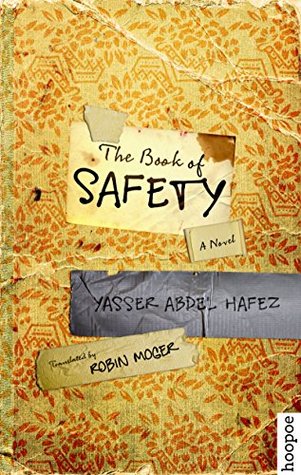
Khaled Mamoun works at the Palace of Confessions, a mysterious state-run security agency located in middle-class Cairo, transcribing the testimonies of criminals. At one interrogation, he encounters Mustafa Ismail: a university professor turned master thief, who breaks into the homes of the great and the good and then blackmails them into silence.
Mustafa has dedicated his existence to the perfection of his trade and authored a book titled The Book of Safety, the ultimate guide to successful thievery, containing everything from philosophical principles to the best way to open a door.
Yasser Abdel Hafiz’s beautiful and deceptively effortless novel tracks Khaled’s descent into obsession with this mysterious book and its author, in a narrative that holds us spellbound.

BOOKISH NEWS: I GOT OFFERED REPRESENTATION – again!

A couple weeks ago, I shared the good news about being offered lit agent representation for my jinn necromancer novel.

A second agent reached out to me to offer representation!

This may seem like a dream, and for about one second, it was. But it’s rather stressful choosing between two amazing agents, who are both so driven and intelligent. It comes down to small (big) things and what I end up wanting in an agent. And even then, I have no guarantee I’ve made the right decision. It feels like, in gaining one kilo of gold, I’m losing another kilo of gold.

Ultimately, it comes down to who will push your career farther, in less time. Or so I’ve determined.

Hakawati Jinn – Chapter Three

NEW BOOK ALERT!

I’m working on a new book and want YOUR feedback! Each week, I’ll post a new chapter, and want you to provide your thoughts, opinions, feeling, and feedback on the chapter.

Be brutally honest.

Layala slips into the house that night far later than she’s allowed to be out. 

“Maman?” she whispers. I pretend to be asleep but watch her from my cot. She has a smile on her face, one that stops my heart for a breath. It’s the smile of a young girl in love. 

I want to reach out to her, to tell her that love will come, more mature love, and to wait. But I know it’ll be no use; I had that love at her age, who am I to begrudge her it. 

Instead, I let her be, and stay up the rest of the night, counting my prayer beads and asking a wish-prayer on each one. 

Keep her safe.

Keep her happy. 

Let her find good love.

Let her know peace. 

Let her know her heart and mind. 

Let her be. 

It’s a prayer I’ve said for Layala since before she was born. 

Before the sun has even had a chance to yawn, Layala is up and about, setting tea, kneading dough, and laying out the zaatar and oil we will eat for breakfast. 

“Layl, you’re up early,” I say. 

“Sabah al kheer, maman.” Good morning. 

“Your father won’t be here for another two hours, at least,” I add.

Layala ignores me, humming and smiling to herself. I want to know who the boy is. But though the words hover on my lips, I don’t ask her. Let her tell me in her own time. 

“Off to jido’s?” I say, when we’re done eating and she slips on her velvety blue robe. It’s one reserved for special occasions, though we rarely have those. 

She nods, but her cheeks flush red with the lie. I wonder if I should send a hawk out to follow her. I decide I will. 

As soon as Layala dashes out the door, barely a goodbye on her lips, I take a clay ochre-hued hawk from the shelf and run my hands over it. 

Its eyes flash open and I set it down on the table, watching it grow to full size. 

“Watch over my girl, Saqr,” I tell it, weaving the words in the air with my fingers and letting them sink into the hawk’s fresh feathers. 

Its eyes glint and in the next breath, it’s out the door and streaking into the sky. 

I grab my basket and go outside the gather the pomegranate seeds from the night before. The basket feels heavy this morning, though there are fewer seeds than normal. Just a few handfuls of dead souls, but as I carry the basket on my hip, my bones feel weighed down.

Sighing, I slip into the house and shut the door behind me. Again I press the seeds into a juice and again I drink that juice. Every morning of every day, for fourteen years.

The stories are sharp, cutting through me like daggers. I pour in extra honey, stirring it in until I can no longer taste pomegranate, only bee’s nectar. 

I catch the tail of one story, and it surprises me. I know this woman, an old one from the village next door. She used to cook for my family, when we were wealthy and jinns were respected. 

But like every other soul, her story is told through images, through symbols that make little sense, even put together. The images of her life fade into the story of a pearl tree. 

The pearl tree stood alone in the center of a poor man’s garden. 

It dropped iridescent pearls every morning, but if the man got too close, branches whipped out to slap him. Pearls at his feet, and not one to sell in the markets. 

Still, the man tried every so often to snatch just one pearl. But each effort left him with a welt across the face and a gash on his arm. 

One day, the man grew so angry he decided to cut down the tree. He took an axe to its roots, dashed them into pieces, and gathered the pearls. One basket, two, then three were filled with the pearls. 

The tree lay in ruin, however, its once proud trunk a stump in the garden. Its branches lay scattered about, hacked into pieces. 

The man smiled to himself, thinking of all the riches he would buy. New teeth to replace the ones he sold for a bit of coin to buy his food. New shoes to protect his rough bare feet from being cut on stones along the road. A new house, with a roof that didn’t leak. And, most of all, a wife. A beautiful one, to be dressed in jewels and dresses fit for a rani.

But when the man checked on his baskets later in the day, he found nothing but ash. He pulled at his thin hair, ripping it out in clumps. 

And in the midst of his bawling, a knock sounded at his door. 

He snatched the door open, finding the kingdom’s prince standing at his door. 

“I have heard tales of a magic tree that drops pearls instead of leaves. Do you know of this tree?”

“Why do you ask?” said the man.

“I wish to plant it in my own gardens. I will pay handsomely for it.”

The old man glanced behind the prince, at the severed pieces of the pearl tree. 

“You did this?” the prince said, following the man’s gaze. 

The man nodded, tears welling up in his eyes.

“Stupid, stupid man,” the prince said. “Do you know what you’ve done? That tree, those pearls, they are the dead. The souls of our dead. Without that tree, the dead cannot pass to the next life. They will become ghouls, wandering the earth, wreaking havoc on it.”

And just as the man hacked at the tree, the prince’s soldiers cut down the man. They gathered the pieces of the tree, hoping upon hope that there was some magic in the world that could heal it. 

The story ends there, and I am none the wiser to its meaning. Still, I sense the woman clutching her story to her breast, worth more to her than gold to the living. Her dead spirit understands the tale more than my living one could. I sense her gratitude, like sun on a cold winter day, and then I feel the thread between us cut. 

“Allah ma’eek”, I whisper. God with you. She’s paid her way into Mote with our tale; she will have everlasting peace now. 

I turn back to my juice and drink the rest, weaving each story as lovingly as I can. The morning spread apart into the afternoon before I am through. Night falls, and still Layala hasn’t returned home. 

Saqr? I think, Where is she? I pad over to the door, sticking my head outside. I glance expectantly at the stony pathway to our house, hoping to find Layala on it. But it’s empty save for a rabbit who hops away into the woods beyond. 

The hawk shoots in through the door, landing deftly on the table. 

“Tell me,” I say, laying my hand lightly on its back. 

I see flashes of Layl as Saqr followed her. She walks through town, her velvet hook up to hide her face. Smart girl. 

She walks into a ribbon shop, leaving empty-handed. Then she wanders more around town, looking at the wares, her face always hidden from others’ views. 

Until she stops at the edge of the market, and instead of turning back home, she continues on. She walks to the village over, her steps growing lighter, more skips than steps now. She’s happy. 

And then she stops at a door, glancing around as if not wanting anyone to see her. She knocks, once, twice, before the door swings open. I see a hand, pale with long fingers grip my daughter’s arm and pull her in. 

Saqr’s view shifts, now glancing through the window of the house. Layala is inside, sitting by a fire, her cloak off. Her face is in full view of a boy. Just as I expected. 

But this is no ordinary boy. He is one made of smoke, hair tipped with flames. His face is pale, his eyes dark, and his teeth shine with silver. He is no ordinary boy for he a jinn. 

And jinns are trouble. 

Hakawati Jinn – Chapter Two

NEW BOOK ALERT!

I’m working on a new book and want YOUR feedback! Each week, I’ll post a new chapter, and want you to provide your thoughts, opinions, feeling, and feedback on the chapter.

Be brutally honest.

I awake before the sun is bright enough to cut across the horizon. 

The dead have been dropping all night. I gather the pomegranate seeds – each one a soul who has died in the last day – scattered across the front of my house into a basket, my hands red and sticky with juice. 

Layala is still sleeping as I sit down, setting the basket on the table. My joints click, a side effect of the curse. I age faster than I should. Already I have white streaks in my hair, and some of my eyebrow hairs are white. Just thirty, but I look a decade older, at least. 

I press the seeds and let the juice seep into a bowl. Each seed contains the story of the person the soul belonged to. My job as mutahida is to tell each soul’s story, to write each soul’s tale. It’s the only way for a soul to leave the waiting place in between life and death, and enter true death, or Mote. 

I take a sip of the pomegranate juice and wrinkle my nose. “Bitter today,” I say to myself, pouring honey into the bowl. I stir then take another drink. The stories come in flashes, too quick for my mind to understand, and I’m too tired to try, but my magic is fast enough to catch them. 

I write, my fingers weaving stories in the air, words curling into smoke. I’m a hakawati jinn, and the stories I weave return to death and to the souls they belong to. Once a soul’s story is told, they can take it to Mote’s gatekeeper and pay for their safe passage into Mote. From there, they will have eternal bliss and peace. 

I drink more of the juice, weaving smoky tales in the air with my other hand. The stories disappear almost as soon as they form, getting swallowed back into death. 

Layala stirs behind me, slipping out of her bed and padding behind me. She says nothing as she sets a pot of tea to boil and begins making our breakfast. 

I thank the heavens for her every day, the one good thing in my life. 

I drink the last of the juice and, more out of habit, I glance at the lone pomegranate seed I keep in a small glass jar on a shelf. 

Layala’s father. Those who have died by their own hand have no place in Mote. They are banished to jehinam, to suffer eternal cold and perpetual executions. 

It was the only love I could show him after his death – to keep him in the waiting place, rather than write his tale and send him to suffer. 

He visits us sometimes, as happy as any dead could be. 

As if thinking about him conjured him, he steps into the cottage, his body more smoke and ash than flesh and blood. 

“Illyas,” I say, rising to my feet. 

He kisses me, soft and, if not warm, then not the cold expected with the dead. And though his face fades through mine, I pretend I feel his solid flesh. 

“Sabah al kheer, baba,” our daughter says, throwing her arms around him. Good morning, father. Her arms collide with his body, the only few minutes of a day he is made of enough flesh to touch, though her skin is streaked with ash when she lets go. I reach out to touch him and he takes my hand. 

He can only keep his form a few minutes in a day, in the moments when the sun’s light turns from red and orange to its day colors. 

“And how are my girls today?” he says, as he does every visit. 

“Good,” Layala says. “I’m going to see jido again today.”

My dead lover’s face stiffens, but he forces a smile onto his face. “You should spend more time at home, with your mother,” he says, and I throw him a grateful look. 

But before Layala could respond, Illyas disappears as the sun’s light breaks through our windows and the morning is fully awake. 

We both sigh, always wishing for just one more minute with him. 

“I wish we could go into death,” Layala says. “You’re a jinn, you’re made of death itself. Are you sure there’s no way–”

“No, Layl. I’ve told you before. Jinns manage death, they don’t enter it or keep its company, not if they can help it.”

I hate lying to my daughter’s face, but her questions have plagued me for years. Ever since she was a child, she wanted to know: what was death like, was it something you could take trips to?

It’s better she knows as little as possible, even if she is half-jinn. She’ll likely never have my magic, and it’s best she doesn’t. 

“I’m going to jido’s,” she says with a sigh. “I’ll be gone all day.”

“Your father is right, you know. You should stay home more, learn a craft so you can support yourself when I die.”

“You’ll be around for many more years, maman. You just don’t like jido much,” she teases, kissing me on my head as she darts off to get dressed. 

I glance back at that lone pomegranate seed on the shelf. He’s nothing like his father, and thank the heavens for that. 

My daughter leaves the house in a flurry of color and voice. “Bye Maman!” she yells, barely throwing me a parting look. I give her a headstart, grabbing an empty bottle and one filled with honey, and a canteen of water. 

Then I take the stony pathway at the back of the house, and head straight for the cemetery. It’s filled with chipped tombstones sporting moss shoulders and spiderwebs. No flowers or notes mark any grave anymore – the cemetery has long been forgotten. 

Which is why it’s perfect for my escapes into death. I lean back against a tree and spy a fox watching me. 

“Come to see me walk into death, little one?” I say. 

The fox cocks its head at me, his snout curled up in a characteristic smile. Then it dashes off, its bushy tail following. 

I fill the empty jar with dirt from a grave, mix in the honey and water, and drink the mix. My mouth fills with granules of stone and sand and I try not to chew any, only swallow. The honey does little to mask the taste, but it’ll do. 

When the dirt water settles in my stomach, I press my hands to the ground and let the cold of the earth seep into my skin. It’s familiar, this feeling of being one foot in the warmth of life and the other in the cold of death. 

My dead lover greets me. He’s a shadow first, then the smoke curls in around him and I can just make out his features. He’s smiling, as usual, his hand outstretched me. I take it and like lightning striking me, my body jolts and my soul is in death. 

“Hakawati,” he says, calling me by my title rather than my name. “Hiyati.” My life. 

“Illyas,” I say, letting him guide me to a bench. Death surprisingly has small comforts for those who can’t or won’t pass on to Mote or jehinam. “How are you?”

He laughs, the sound gravelly but warm, like honey mixed with sand. I want to hold him like he used to hold me, when he was alive. But bodies move and fit differently in death, less flesh and more ash. “As good as can be. How are my girls?”

“Well enough. Your daughter threw animal shit at some boys who were bothering her yesterday. I don’t know if I should encourage her fiery personality or douse it,” I say, laughing. 

Illyas laughs, but there’s a tightness in his face. “She should be careful,” he says. “She’s still your daughter, and they don’t take kindly to that.” He brushes a hand across my face, and though I don’t feel skin, there’s still a trail of warmth. I lean my cheek into his touch, and he lets me rest my weight against him. 

“There’s so much I want to tell her,” I say, “But I don’t know if I should. And I’ve told her so many lies over the years. How do I undo that?”

Illyas says nothing, but when he tries to pull me in closer to his chest, we fade into each other, smoke curling into smoke. We pull back, our bodies regaining substance. 

“Hakawati, tell her a story. You’ve spun her tales since she was in a cradle, she will feel your meaning, even if she doesn’t understand it. Weave her a story, see what she says.”

“She’ll roll her eyes and ask to go to her grandfather’s house. She’s had little patience for me lately.”

Illyas laughs, shaking his head. “She reminds me of me when I was her age. I don’t know if that’s a good thing.”

“I loved you at that age,” I say, reaching out for his hand. I let mine hover over his, so we feel each other’s warmth. 

Loved?” he teases. “Not anymore?”

I crack a smile, “You know you’re my one and true love.”

He chuckles again, then sobers. “You shouldn’t be alone anymore. Layl is getting older, she will one day leave home to start her own. What will you do then?”

“Visit you more often,” I say. 

Illyas shakes his head. “You should find someone.”

“I remember you being rather jealous of a certain Ihab in the village,” I tease, “When he gave me flowers during the midsummer festival.”

Illyas barks out a laugh. “I was young and unsure of your affection. And I seem to recall you encouraging him, just to make me jealous.”

“I might have,” I say with a smile. “I don’t remember.”

“Lies. You remember everything as if your brain is a stone and someone’s carved words into them.”

“Speaking of stone,” I say. “Layala found a tombstone, with someone’s name on it. Hasim Hasan. Do you know it?”

Illyas’ shoulders tense. “Tell her keep away from that grave. Even in death, I wouldn’t trust him.”

“Why? Who is he?”

“He was an assassin, a jinn hunter, in my great-grandfather’s time. My father is his godson, you know. When baba imprisoned the jinns, he did so with Hasan’s grandson’s help.”

I nod, getting to my feet. “I should return. The sun will be setting soon.”

“I’ll walk you home,” Illyas says, and we both smile, because we know the dead fear the dark, and there’s no leaving death for Illyas tonight.

I hover my lips at his cheek in the mimicry of a kiss. Anything more, and we’d fade into each other. 

“Goodbye, Hakawati,” Illyas says. “I’ll miss you until next time.”

The Hakawati Project: The Syrian Crisis — HyeTert

YEREVAN—The Los-Angeles/Berlin based non-profit Hakawati (storyteller, Arabic) has announced that it will be cooperating with the Sundance Institute and Film Independent to organize and launch a two-month comprehensive filmmaking lab for those impacted by the war in Syria called The Hakawati Project (THP). To be hosted in Armenia, THP will provide a platform to nurture […]

The Hakawati Project: The Syrian Crisis — HyeTert

Hakawati Jinn – Chapter One

NEW BOOK ALERT!

I’m working on a new book and want YOUR feedback! Each week, I’ll post a new chapter, and want you to provide your thoughts, opinions, feeling, and feedback on the chapter.

Be brutally honest.


“Maman!” my daughter yells. She comes running up the stony pathway to our hut on those long colt legs. “Maman, look what jido gave me!”

I force the tension out of my jaw and smile at her instead, wiping my hands, still sticky with pomegranate juice, on the front of my dress. 

She waves a bundle of papers and a shiny pen – a gift from her grandfather. “He said he is going to send me books,” she says, twirling in front of our home. 

I smile at her excitement, and reach out for the pen.

“It’s lovely,” I say, holding its golden body in my fingers. “What will you write with it?”

“Oh, I don’t know,” she says, pursing her lips in thought. “Stories. Like you do, except I’ll put them on paper.”

 “Your stories and mine are different, bintay,” I tell her. My daughter. 

She rolls her eyes in all the exasperation of a girl on the cusp of womanhood. Still, she’s just fourteen, and I pull her in for a hug. She smells the same as she did when she was a baby – of powder and sweet skin. I breathe in her scent, keeping her in my arms for as long as she’ll let me. But soon enough, she’s unwrapping herself out of my arms and running into the house. 

I follow and watch my child sit down at our table, scribbling on those blank sheets. She glances up when she senses my staring and rolls her eyes again. 

“What else did you do today?” I say. “Were you in the cemetery again?” I add, staring pointedly at her dirt-covered knees. 

“I don’t get why you hate me being around dead bodies so much when you’re always spending time with souls.”

“It’s my job,” I say, though I want to say punishment instead.

“Well, I did find an old tombstone,” she starts. “A really old one. Older than jido, even.”

“Oh? Whose name was on it?” I say as I pull out a few potatoes and bread and some dried thyme and sesame seeds from our stores. 

“The letters were too faded. But,” she said, holding up a sheet of her grandfather’s paper. “I rubbed this name. It looks like one of the original elders.”

I take the paper from her, glancing at the name. “Hasim Hasan,” I read. “I don’t know it. Your grandfather might.”

“He’ll just say ‘a young lady shouldn’t be rolling around in dirt like a hog in heat,’” she says, furrowing her eyebrows and making her young voice as gruff as she can. She even wags her fingers, just as I imagine her grandfather would. 

I giggle with her, and she pushes aside her papers to draw herbs towards her. Small knife in hand, she begins chopping at them. I take the second knife and dice potatoes. 

“What else did you do today?” I say.

The smile fades from her face and she shrugs.

“Layala,” I say, “What is it?”

She looks up at me with those eyes so dark and wide like her father’s, my breath stutters. “I went into town.”

“Oh, Layl,” I say, pulling her into my side for a quick hug. “You know what the townspeople are like. Just stay away.”

“I wanted to see the books. Jido said Kitabi Kitab got a new shipment of books from the far west,” she said, delight brightening her face. “And they were so beautiful, maman. You should have seen the covers. Velvet and silk and so many pretty colors. I’ve never seen anything like them before.”

“But?” I say.

“But a few of the boys chased me off. They called me witch and deathbringer.”

I sigh, the knife in my hand in midair. “I hope you didn’t throw stones at them.”

“Of course not,” she grins. “I threw horse shit.”

“Layl!”

She laughs, and I can’t help but laugh with her. “You know you shouldn’t have.”

“I know, but they deserved it.”

“Yes, but their parents might now come to our house, and what good would that do for us?”

She sobers, her face screwing up in anger. “They have no right–!”

“Many people have no right to say or do the things they do, but the difference is, some get away with it, and some don’t. We’re in the second group, Layl.”

She picks at the herbs, ripping off leaves and tossing the stems aside. “It’s not fair. And it’s not fair you’re stuck all the way out here, just because the townspeople needed a mutahida to deal with their dead.”

I don’t say anything, only cut the potatoes into blocks and dump them into a bowl of oil. Layala takes the bowl and rubs in the herbs, releasing fragrance into our small cottage. Soon, we have a fire growing against the cold of the oncoming night, and food cooking over it. 

“I wish–” she starts to say when we’ve eaten and she’s getting ready for bed. But my daughter doesn’t finish her sentence, only shakes her head and slips into her cot, her back towards me. 

“I have wishes, too,” I whisper. “But they never come true.”