Arab authors have long found a place in dystopian literature, though not with mainstream success with Western audiences, for the most part.
However, some Arab authors have had success in writing dystopian novels set in Middle Eastern cultures and countries, and have been delivering on that front. As Kuwait-born novelist Saleem Haddad said, “There’s a shift away from realism, which has dominated Arabic literature.”
Here’s a list of dystopian novels written by Arab authors.
Set against the backdrop of a failed political uprising, The Queue is a chilling debut that evokes Orwellian dystopia, Kafkaesque surrealism, and a very real vision of life after the Arab Spring.
In a surreal, but familiar, vision of modern day Egypt, a centralized authority known as ‘the Gate’ has risen to power in the aftermath of the ‘Disgraceful Events,’ a failed popular uprising. Citizens are required to obtain permission from the Gate in order to take care of even the most basic of their daily affairs, yet the Gate never opens, and the queue in front of it grows longer…
Palestine + 100 poses a question to twelve Palestinian writers: what might your country look like in the year 2048 – a century after the tragedies and trauma of what has come to be called the Nakba? How might this event – which, in 1948, saw the expulsion of over 700,000 Palestinian Arabs from their homes – reach across a century of occupation, oppression, and political isolation, to shape the country and its people? Will a lasting peace finally have been reached, or will future technology only amplify the suffering and mistreatment of Palestinians?
Iraq + 100 poses a question to contemporary Iraqi writers: what might your home city look like in the year 2103 – exactly 100 years after the disastrous American and British-led invasion of Iraq? How might that war reach across a century of repair and rebirth, and affect the state of the country – its politics, its religion, its language, its culture – and how might Iraq have finally escaped its chaos, and found its own peace, a hundred years down the line? As well as being an exercise in escaping the politics of the present, this anthology is also an opportunity for a hotbed of contemporary Arabic writers to offer its own spin on science fiction and fantasy.
In this pithy, powerful parable, the masterly Naguib Mahfouz explores life’s secrets and the mysterious maze of the human heart–a mystical and lyrical Pilgrim’s Progress set in a mythical, timeless Middle East.
2025: fourteen years after the failed revolution, Egypt is invaded once more. As traumatized Egyptians eke out a feral existence in Cairo’s dusty downtown, former cop Ahmed Otared joins a group of fellow officers seeking Egypt’s liberation through the barrel of a gun.
As Cairo becomes a foul cauldron of drugs, sex, and senseless violence, Otared finally understands his country’s fate.
In this unflinching and grisly novel, Mohammad Rabie envisages a grim future for Egypt, where death is the only certainty.
Aber scrapes a living in a Beirut hospital morgue by night, stealing from both the bodies he tends and his bosses. But he has a dark history that continues to haunt him. During the civil war, he fled his village for Beirut and, lost in the big city, joined a political party to survive. When he is kidnapped from the hospital, he knows he has not escaped his past and the many crimes he witnessed. But what or who is still chasing him?
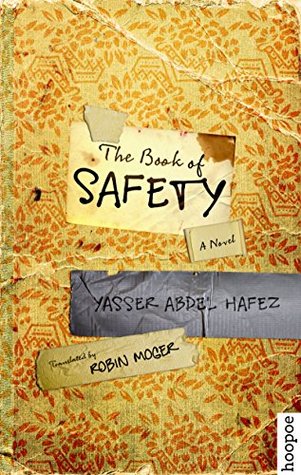
Khaled Mamoun works at the Palace of Confessions, a mysterious state-run security agency located in middle-class Cairo, transcribing the testimonies of criminals. At one interrogation, he encounters Mustafa Ismail: a university professor turned master thief, who breaks into the homes of the great and the good and then blackmails them into silence. Mustafa has dedicated his existence to the perfection of his trade and authored a book titled The Book of Safety, the ultimate guide to successful thievery, containing everything from philosophical principles to the best way to open a door. Yasser Abdel Hafiz’s beautiful and deceptively effortless novel tracks Khaled’s descent into obsession with this mysterious book and its author, in a narrative that holds us spellbound.
I read Jeff Gerke’s “The First 50 Pages,” and of course, half the book is highlighted. Since I found the book to be useful, and I learned a lot reading it, I decided to outline some of the main points of the book.
“We have to engage your reader, first and foremost. You have to introduce your hero…establish the context of the story…reveal the genre and milieu and your story world…set up the tone of the book…presenting the stakes, introducing the antagonist, establishing the hero’s desires, starting the main character’s inner journey, and getting a ticking time bomb to start ticking down.”
That’s a lot to do in the first 50 pages…
“A weak first line is a killer. You get only one first line, so make sure it’s carefully thought-out.”
“…don’t start your novel with a dream.”
“Your opening line must hook your reader. You must start with action. But that doesn’t mean you have to have a battle scene or anything that needs to blow up. It simply means it must be interesting to the reader.”
“Good dialogue is…layered. In theater, it’s called subtext.”
“In good dialogue, dialogue with subtext, the characters aren’t responding to what the other person says, but to what they think the other person means.”
“Give your dialogue subtext, and it will be easier for agents and editors–and readers–to love your novel.”
“Fiction is conflict: someone who wants something but is prevented from getting it…The acquisitions editor is looking for signs of conflict in your first fifty pages.”
“…three main craft errors that most often cause agents and acquisitions editors to reject fiction proposals…The big three bombs are telling instead of showing, point-of-view errors, and weak characters.”
“…information dumping is called telling. Its main forms are backstory, pure exposition, summary/recap, and the explanation of character motives.”
“When you load your story with telling, you deprive your reader–and even your characters–of the joy of having it all happen experientially. Take the information out of the voice-overs (your telling) and put it into the scenes.”
“…there are only two things you must do with your first fifty pages, only two large-scale tasks…:
You must engage your reader. That is Job One. And you must set up your story so the rest of it will work correctly.”
*Note: This article was originally published on January 2, 2017.
I’ve been writing short, folkloric-feeling or fairy-tale-ish stories for a book I’m working on. The stories are Arab-inspired, people-centered, and hopefully, tell their own tale, even within the context of the larger story.
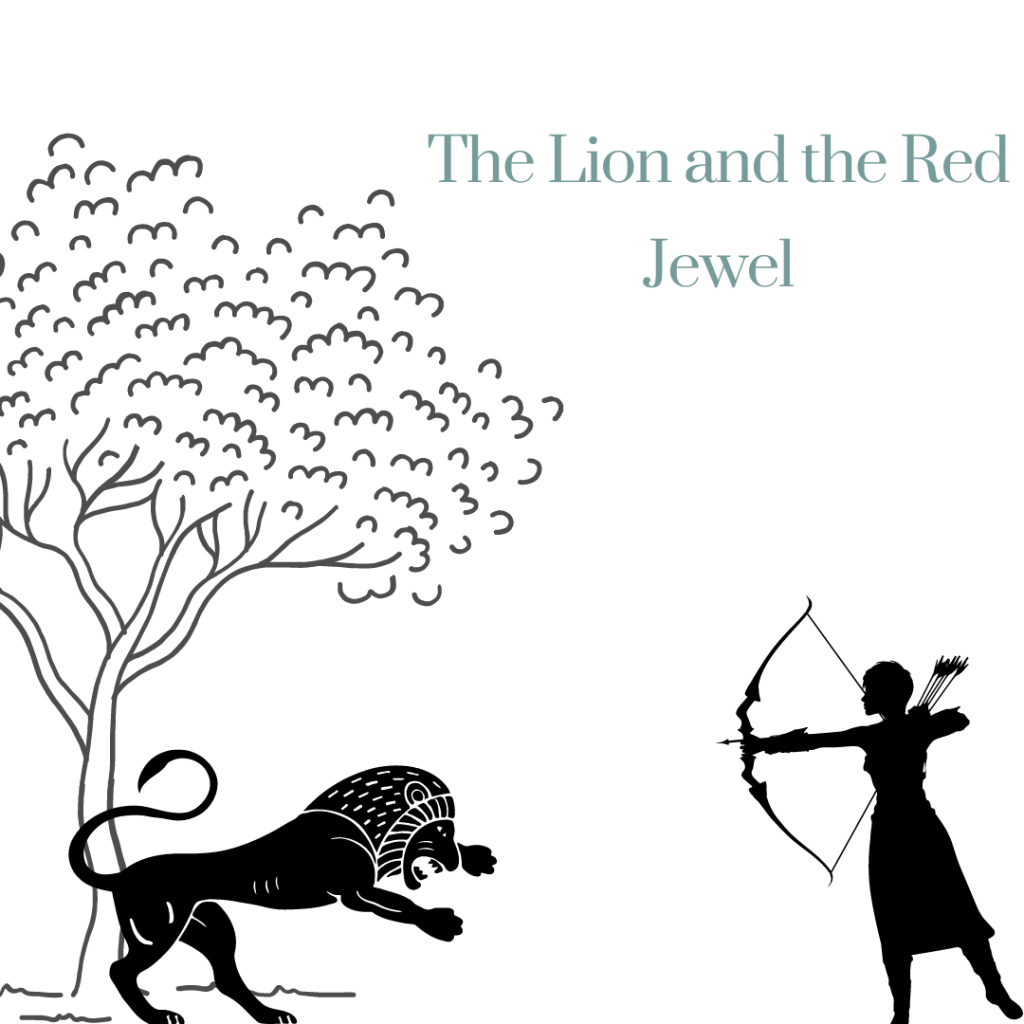
This one is called The Lion and the Red Jewel and features a lion who isn’t what he seems to be.
There was a lion who lived in the desert who ate a jewel. It was as large as its head, as red as a burning sun, and hard as the mountain stone.
This lion ate the jewel, breaking it into pieces with its strong jaws, cracking through with its powerful teeth. And when the jewel lay in pieces in the sand, the lion swallowed each piece whole, feeling its weight settle in his stomach.
A hunter watched the lion, and knew the wealth it carried in its belly. This hunter was a greedy hunter, and he was fearless.
He stalked the lion for days, waiting for the right moment to bring it down and gut it open. The day came when the lion settled in for a nap in the shade of a palm tree, near a desert oasis. The oasis wasn’t much, just a shallow dip in the sand that filled with the odd rain that showered the desert.
The lion wasn’t stupid, though, and knew the hunter was following him. He kept one eye open just enough that he could see the hunter stalking towards him. The hunter came from behind, but the lion was so positioned that he could watch the hunter’s reflection in the pond.
Just when the hunter raised his arrow to shoot the lion in the back, the lion roared and bellowed and swiped the hunter with its sharp claws.
The hunter’s belly was shredded into ribbons, and blood poured out of him. The hunter curled up tight in the sand like a child in its mother’s womb. As the blood dried on his body in the sharp desert heart, it hardened over his skin, and the man became a jewel as large as the lion’s head and as bright as a burning sun. The lion swiped at the jewel and gnawed on it, breaking it into pieces. The lion then swallowed each piece, and when he was done, he went to the pond and lapped at the water. With his belly full, he settled in for a proper nap under the palm tree he so loved.
As of September 7, 2021, I have officially signed with a literary agent! Kaitlyn Johnson of Belcastro agency will represent me in getting my latest novel published!
Kaitlyn has a lot of experience in submitting to the Big 4 publishers, and I have no doubt she and I will be a successful partnership!
A couple weeks ago, I shared the good news about being offered lit agent representation for my jinn necromancer novel.
A second agent reached out to me to offer representation!
This may seem like a dream, and for about one second, it was. But it’s rather stressful choosing between two amazing agents, who are both so driven and intelligent. It comes down to small (big) things and what I end up wanting in an agent. And even then, I have no guarantee I’ve made the right decision. It feels like, in gaining one kilo of gold, I’m losing another kilo of gold.
Ultimately, it comes down to who will push your career farther, in less time. Or so I’ve determined.
I’ve been writing short, folkloric-feeling or fairy-tale-ish stories for a book I’m working on. The stories are Arab-inspired, people-centered, and hopefully, tell their own tale, even within the context of the larger story.
Here’s one story I wrote. Only problem is, I know I wrote it, but it reminds me of a story I heard or read growing up. But I CAN’T FIND THE STORY. I’m hoping it’s deja vu only, and I’m not stealing someone else’s work. It may be an old Persian fairy tale.
TELL ME IN THE COMMENTS IF YOU RECOGNIZE THIS STORY. If you don’t recognize it, tell me what you think of it.
THE OLD MAN AND THE PEARL TREE
The pearl tree stood alone in the center of a poor man’s garden.
It dropped iridescent pearls every morning, but if the man got too close, branches whipped out to slap him. Pearls at his feet, and not one to sell in the markets.
Still, the man tried every so often to snatch just one pearl. But each effort left him with a welt across the face and a gash on his arm.
One day, the man grew so angry he decided to cut down the tree. He took an axe to its roots, dashed them into pieces, and gathered the pearls. One basket, two, then three were filled with the pearls.
The tree lay in ruin, however, its once proud trunk a stump in the garden. Its branches lay scattered about, hacked into pieces.
The man smiled to himself, thinking of all the riches he would buy. New teeth to replace the ones he sold for a bit of coin to buy his food. New shoes to protect his rough bare feet from being cut on stones along the road. A new house, with a roof that didn’t leak. And, most of all, a wife. A beautiful one, to be dressed in jewels and dresses fit for a rani.
But when the man checked on his baskets later in the day, he found nothing but ash. He pulled at his thin hair, ripping it out in clumps.
And in the midst of his bawling, a knock sounded at his door.
He snatched the door open, finding the kingdom’s prince standing at his door.
“I have heard tales of a magic tree that drops pearls instead of leaves. Do you know of this tree?”
“Why do you ask”, said the man.
“I wish to plant it in my own gardens. I will pay handsomely for it.”
The old man glanced behind the prince, at the severed pieces of the pearl tree.
“You did this?” the prince said, following the man’s gaze.
The man nodded, tears welling up in his eyes.
“Stupid, stupid man,” the prince said. “Do you know what you’ve done? That tree, those pearls, they are the dead. The souls of our dead. Without that tree, the dead cannot pass to the next life. They will become ghouls, wandering the earth, wreaking havoc on it.”
And just as the man hacked at the tree, the prince’s soldiers cut down the man. They gathered the pieces of the tree, hoping upon hope that there was some magic in the world that could heal it.
I’ve been writing short, folkloric-feeling or fairy-tale-ish stories for a book I’m working on. The stories are Arab-inspired, people-centered, and hopefully, tell their own tale, even within the context of the larger story.
This one is called Breekh and features a wife stolen by a jinn from right under her husband’s nose.
Tell me in the comments what you think!
BREEKH
There was a man and a woman, married for years who were wise to believe in the evil eye. They knew spirits that were made of smoke, not flesh, roamed the earth, looking for ways to cause mischief.
The man’s name was Pot, and the woman’s name was Kettle. They both wore small blue beads on their clothes to protect them from the evil eye, which was the magic of the spirits, but could be cast by unwitting humans with ill, or at least, unkind, intention.
One day, the man grew tired of his wife’s talking, and wished her to stay silent. The woman was hurt her husband did not want to listen to her, and felt lonely as she drew water from their deep well.
A jinn by the name of Breekh was passing by the well, invisible to the human eye.
After a while of silence, the woman continued her story, trying to get her husband’s attention. But the husband, who wanted nothing but silence, cursed out at his wife, “Ya nan al Breekh!” he said, “Damn you, Breekh!” And in that moment, the man cast the evil eye on his wife without knowing it. Breekh, the jinn, heard this, and thus he was summoned.
The man did not know why he called out Breekh instead of his wife’s name, but he ignored the thought and sat brooding on why he married this woman in the first place.
“It was her beauty,” he thought, “Her beautiful mouth blinded me to the tongue inside it. If I had known I would know no silence, I’d have never married her. What I wouldn’t do for silence.”
What the man and woman didn’t know, though, was that in the jinn language, Breekh meant Kettle.
The jinn stole the wife away from the man, forcing her into a world made of fire and smoke and ash. A world where the earth erupted in plumes of flames, and spewed molten rock on the cities below the fiery mountain.
The jinn locked the woman in the belly of the mountain, leaving her to sweat and her body to shrivel in the heat.
The man cursed himself for his foolishness, and he called upon the old sheikhs, who drew on their powers against the evil eye. And though the woman noticed the blue bead she wore glowing, the spell would not break. Breekh held her captive for years, until Kettle became the molten earth itself. She became the fiery mountain, and that is why the great mountain in the distance is called the Kettle of Fire.
The man lived his days in solitude, but it was not a peaceful one. He was lonely, and missed the sound of his wife’s voice. He cursed himself until his dying breath for giving up the one person who loved him enough to want to talk to him.
The novel I’ve been working on the last 3 years, about a necromantic jinn and her daughter, has been offered representation!
I started querying in June/July, and sent my queries to 80+ agents, with 5-6 requests for partials and fulls. But yesterday, glorious yesterday, an agent Zoomed me to offer representation!
Nothing’s official yet, but this is the best news I’ve had all year!
She did offer revisions, but she said my manuscript is clean enough that it won’t need that much work before she can sub it to publishers.
The beast bit me and I sat down to start a gothic novel. I started about a week ago, and I’m about 19 chapters, and 92 pages in. Needless to say, I’ve been swallowed by the premise and I feel as if, if I were the reader, not the writer, I’d read this book. And that’s always a good sign.
The inspiration is a mix of Jane Eyre and The Fall of the House of Usher. It’s about a college student, Jade, who drops out of college after she finds another student murdered near campus. At first, the police suspect her, but they quickly decide she’s innocent. The rest of the students, and the town, however, have their reservations, though. So Jade decides to take a job at a creepy old house 4 hours away from home.
Here’s an excerpt from first chapter. Let me know what you think in the comments!
Chapter One
“Storyteller for hire. Must be good with adults. Pays well. Call 439-7920.” The newspaper ad is short and simple, and it strikes me as off, but I ignore everything except the “Pays well.”
I’m at $39.79 in my bank account, and I’m desperate for a job. Any job. This college thing isn’t working out. Who needs physics, and calculus, anyway, no matter what my mother says about what she calls “femininst power jobs.” Show the man the woman can.
I cross the street to the payphone and pull out a quarter before dumping it into the phone’s slot with a clank. The sky is a pale blue, light gray really, and there’s a smoky black cloud in the distance strangling half the sky.
4-3-9-7-9-2-0.
I hear the line ring, once, twice, then a gruff, “Sever House.”
“Uh, yes, hi, hello,” I stammer. “I saw an–your ad, in the paper?”
I pause, but all I hear is breathing on the other end.
“Um, well, the storyteller–”
“Yes,” the voice interrupts. I can’t tell if it’s a woman or a man, but I think it’s a woman who smoked ten too many cigarettes.
“I, uh, yeah, I’m interested.”
“Can you tell stories? Good ones? To adults? Nothing too bloody, though.”
“I–I’ve babysat–”
“I’m asking about adults. Not children. Children’s stories are easy. Adults, well, that’s a different beast.”
“Uh, well, I can interview? Maybe?”
I hate how I sound, unsure, uncomfortable. I need to run with the wolves more.
I clear my throat and stand up a bit straighter, even though the voice on the other line can’t see me. I spot my reflection in the payphone’s metal paneling, though, and I force myself to smile.
There, that’s better. A smile goes the extra mile. Another one of mom’s “self-improvement” quotes.
“I can come in and interview and–”
“Do you have samples?”
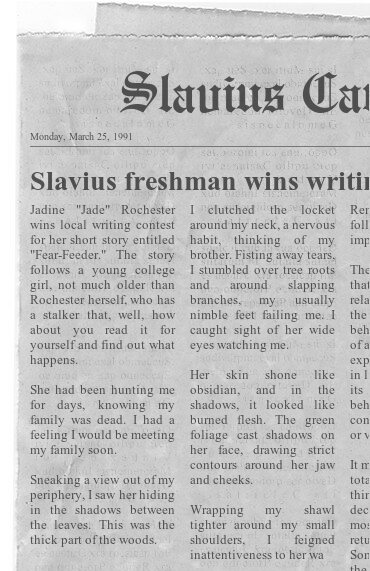
“I-actually, yes. I do. I won a local writing contest, and I can send you the newspaper clipping.”
“Do you have an email account?”
“Uh, yes, I–”
“Fax the clipping, I’ll take a look. I will send you an email with the contract if the writing is up to our standards.”
“Oh ok, yes, thank you. Uh, and where’s the House, exactly?”
“I can send you the address via email and a contract to look over. I’ll want a signed copy of the contract before you come. The position is for an in-house storyteller. You will live at the house for the duration of fall and winter, and then you may leave. The Master of the house prefers his stories with tea and digestives, sometimes with a little brandy in the tea.”
“Check tonight for an email. If there is none, you did not get the job,” the woman says. I hear static and a groan, and then she adds, “You may send a fax to 763-3663.”
The line goes dead and I’m left holding a phone. I place it back on the receiver and, with a smile, I cross the street back to the daycare I’ve been working at.
If I can win a short story contest, I can get this job.
I visualize myself giving the daycare my notice, then shake my head of the thought. You don’t even know what the pay is for a storyteller. It’s probably less than the daycare.
Even so, I can’t help but feel a tinge of excitement. I’m getting out of here, I’m getting away from this place.
“I’ve gotten a new opportunity,” I whisper to myself, before I step back inside. “I am giving my notice.”
I take a deep breath.
“I’ve gotten a new opportunity, and this is my notice.”
I shake my head to clear the thought.
“I got an offer for a new job, and I’ll be taking it. Thank you so mu–”
“Jadey?”
I wheel around to find Kirsten staring at me.
“I–wasn’t talking to myself,” I say.
She stares a moment too long then says, “Right. Want to come back inside?”
“Uh, yeah, actually, I wanted to talk to you.”
“Can it wait? Jeremy’s mom is coming in today to talk about his “milestones and development,” Kirsten says, rolling her eyes. “She thinks we should be doing more to ‘develop his young brain,’ she adds, air quoting with her fingers.
“What does she expect?” I say, stepping back into the clangs and noises and gurgles of babies. “I mean, we’re a daycare, not even a preschool.”
“I know,” Kirsten says. “But, the parents pay the monies, and therefore the bills.”
The door opens behind us. A tall woman with mom jeans and t-shirt steps inside. “Candice,” Kirsten says with forced cheerfulness in her voice. “Jermey’s right there with Candice,” she adds, pointing in the center of the room where a short brunette is pressing buttons on a musical book with 9-month-old Jeremy. “Come into my office just around the corner,” I hear Kirsten say as she’s already leading Candice away.
I sigh, and turn back to the stack of paperwork I need to file.
I hear Kirsten’s too-cheery voice again when she opens her office door. Two sets of footsteps walk down the short hall back to the main office and playroom of Kirstie’s Care.
“I’ll be taking Jeremy home today,” I hear Candice say, “But I’m thrilled we’re on the same page.”
Cooing and ahing ensue as Candice moves to pick up Jeremy off the ground. He blows bubbles and Candice snuggles her nose against his. Candice flicks her eyes at me, and recognition registers. I notice she clutches Jermey hard enough that he squirms in her arms, and she shields his body a bit with hers.
“You’re that girl–” she starts. “The one in the papers.”
“I’m sorry, I must look like someone else–”
“No, no, I remember your picture. You’re the one that found that poor girl. How awful.”
“It was,” I say.
She leans in closer to me and drops her voice to a whisper. “You really don’t know anything about who did it?”
I swallow a scream and shake my head. “The authorities are still on the case, last I heard.”
She nods once and pulls back from me, still shielding her son’s body with hers. “I’m surprised they let you work here,” she adds.
“I have no criminal record,” I say.
But her eyes narrow at me. “Strange thing, you being the one to find her so late at night.”
“I’m a night owl.”
“I’m sure you are.”
Candice turns to go, the bell over the door jingling behind her.
Kirsten shambles over to me, apparently not having heard what Candice just said. “Can this day get any worse?”
“It’s just a parent,” I say, “You’re always so good with them.”
“Not just her,” Kirsten says, chucking her thumb in the door’s direction after Candice. “The supervisor’s coming and we’re due for a safety inspection.”
“Oh, well, I mean, we’re safe, right?”
“Of course,” Kirsten says, shooting me a dark look. “We just got checked like six months ago. Anyway, it’s been a stressful day, that’s all.”
“Sine you’re here, I’ve been meaning to talk to you.” She chews on her lower lip, and doesn’t quite meet my eyes.
“Oh yeah, what about?”
“You know enrollment has been low recently, and we haven’t been hitting our target numbers.”
I stop shuffling papers and stare at her. “You’re firing me.”
“I’m sorry Jadey. It’s been–well, I can only afford the caretakers right now. You’re a luxury, and a great one, don’t get me wrong, but I just can’t justify the cost anymore. I’m really sorry. As soon as we get our enrollment back up, I’ll hire you right away.”
“And when will that be?” I try to swallow my worry. The other job isn’t a guarantee, and not even Mark’s Market is hiring right now. And I know, because I’ve asked him if he needed an extra cashier, and he said “No.”
“I really don’t know,” she says, frowning. “I wish I knew–”
“It’s fine, I know you’ve been having a tough time.”
“I have been and I hate to drag you into my money woes, but this is where I’m at.”
I smile and hug her. “Thanks for giving me a chance when no one else would.”
“How about you go home,” she adds. “The parents will be here soon, anyway. Sonia, Misha, and I can handle them.”
“You sure?” I say.
Kirsten nods. “You’ve been staying late all week and doing extra. And here,” she adss, going around the desk and unlocking the top drawer. She glances behind her at the other caretakers and hands me an envelope. “Your cash.”
Kirsten’s been paying me cash to help out part-time at the daycare. “Thanks,” I say, and force myself to smile. “Really. I mean it.”
“I know. And,” she says, just as I’m turning to take my coat from the rack, “If you ever need anything–”
“–I’ll ask you.”
She moves to hug me, and I hug her tight back.
“‘Night,” I tell everyone and head home.
Home is just a ten minute walk away, and it’s silent when I open the door.
“Hello?” I call out. “Mom? June?”
Nobody replies as I remember my twin sister Juniper – June – is at the college we go– I went to–, and I lock the door behind me. She was here just last weekend, but left Sunday evening to get back for her classes the next morning. The house is dark and smells like stale incense. I flick on a light switch but even the lamp seems to cast a deep shadow in the hallway.
Outside, it thunders and rain slams against the window.
“Great, a storm,” I say, just as the lights flicker once, twice.
The PC is in dad’s office, the one he used for his architecture work before he died three years ago.
I turn on the computer, listening to it wheeze and whir on until the screen flickers to a blue background, with a picture of the four of us smiling brightly, squinting against the sun, comes up. I try not to make eye contact with any of the faces, even my own. That picture was taken just a month before dad’s car drove off the side of the road in some freak rainstorm when he was coming home from work.
Instead, I move the mouse and double click on the America On Line icon. I wait for the internet to dial up, the whirs and shrieks a bit too loud for the headache that’s come on suddenly.
And so is the fax machine. I quickly pull out the newspaper clipping I keep in his desk drawer.
“Okay, so, it’s this button, right?” I think aloud as I fumble with the fax machine. After some minutes, I figure it out and the fax is on its way.
I wait a few more minutes, puttering away on an internet forum for people who fancies themselves poets. I scroll past the neon colored marquees people have under their names, the ones that trail across the page, with my mouse leaving behind an afterimage of gold stars. The page is bright, using nearly every primary and secondary color, in every hue, especially neon. Everything’s blinking at me, and words keep changing color.
I keep checking my email, waiting for something from the storyteller job, but nothing comes through.
She did say later, didn’t she? Maybe she didn’t get the fax?
I try again, taking the newspaper clipping and sending another fax of it.
The clipping is only a few months ago, but it feels like it comes from another lifetime, maybe even someone else’s life.
There’s a picture of me, with a little blurb of my bio, that I helped write, of course, and there’s a snippet of my story that cuts off before running onto page 4….
The story continues, and at the end, the girl’s stalker kills her and leaves her for dead in a field behind the college the girl attends.
Two days after this article came out, there was a “Special Edition” OpEd on my story. For the rest of the semester, the other students gave me dirty looks, and no one came near me, not even my roommate.
“You think she did it?” I overheard a red-haired girl with a thin braid snaking down her back say. “She knew a lot of the details.”
“They were in the news, though, but maybe she knew the killer? I did hear she found the body.”
“I heard she was covered in her blood…”
I fold the newspaper and slip it back into the desk drawer, ignoring the second clipping with the OpEd tucked inside.
Instead, I go back to the forum I was surfing, reading through the comments about the latest Kurt Cobain song.
But finally, I hear the, “Welcome, you’ve got mail,” and I hold my breath. I double click on the little mailbox icon with the yellow envelope and the email I’m waiting for is right under a *~*ChAiN LeTtEr*~~* email from miss_cleo_sandra_8392. I roll my eyes but make a mental note to open my best friend’s email. She loves sending me those chain emails that say THIS EMAIL HAS BEEN CURSED. IF YOU DON’T SEND IT TO 10 PEOPLE, YOU WILL DIE.
But right under miss_cleo_sandra_8392 is a more severe looking email.
I double click the Job position contract: Please sign and… email and, still holding my breath, wait for it to load. The “contract” reads more like a vintage governess ad from the 1900s than a job contract, but I skim, then read, and then re-read it anyway.
A young woman, with no attachments, university experience in the arts. Quiet, not shy, can talk to people but can be left alone for hours.
This contract hereby commits you to six (6) months of labor as “Storyteller” of Severly House, hereto known as “Sever House” or “the House.”
As “Storyteller,” you will be expected to work Monday through Saturday, with Saturday evenings and Sundays off:
Join at 8-9 o’clock breakfast, prepared with a short story, tale, or fable.
Join at 1-2 o’clock lunch, prepared with a short story, tale, or fable.
Join at 7-8:30 o’clock dinner, prepared with a short story, tale, or fable.
Send to bed with a short story, tale, or fable. Chapter books preferred.
At any time the Master of the House requires a story, one must be proffered immediately.
Passages from books may be read.
Stories told or read must be age-appropriate.
If the Master should request an original tale, one must be proffered immediately.
If the Master should request the presence of The Storyteller at House events, galas, parties, or any such event, the Storyteller must attend and must perform.
If the Master should require any other duties, the Storyteller must perform, within reason, to the best of their ability.
Salary: $13564.66 for duration of six(6) months, to be paid weekly in cash. Lodging and meals provided for. Expected maximum working hours per week at 25 hours, excepting House events, galas, parties, or any such event.
Address: 224 Coven Rd, Sovereign Hill
Ring on the day you are to arrive, preferably by train, and we will have the Driver meet you at the station. Position is available immediately.
Any questions, please address to Amerly Seymour, Head Caretaker of Severly House.
Printed Name: _____________________________
Signature: _____________________________
Date: _____________________________
I quickly calculate the math on the PC’s calculator.
6 months is 24 weeks, and 12,300 divided by 24 is…$565.19 a week, in cash.
With my $9 an hour, and 20 hours per week at the daycare, making $565.19 compared to $180 is more than tempting; it’s three times more tempting. I’d have more than twelve thousand in my bank account after six months, and I’d have food and no rent, and nothing else to pay. Not that I pay for things like that now, but mom’s been freezing me out after I decided to take the semester off, and Juniper’s been sending me way too many emails, trying to guilt me into coming back after all.
Though mom did threaten to make me start paying half the bills because I “dropped out of school,” as she says.
I keep trying to tell her, I didn’t drop out, I am taking a break. But she’s convinced, “Drop the ball and you lose all.”
But why are they paying so much?
And who is this Master?
I decide I don’t care. I’m bored with this town and my life, and I don’t even like kids.
I turn on dad’s old printer, and a couple minutes later, I have the contract laying stark white against the printer tray.
“Here goes nothing,” I say to myself, and sign my name.
Adding emotion to stories can be one of the more difficult aspects of writing. Sure, a writer knows what their characters are feeling, but can they make a reader *feel* the characters’ emotions?
That’s difficult.
I found a great article that was helpful in my own skill-building as I try to better learn how to slow down my writing and make my readers feel my characters.
One thing she says in the article is to “slow it down.”
Counselors tell us that thoughts lead to emotions, and emotions lead to actions. As a writer, you can easily show your character’s thoughts and actions. Readers are smart enough to deduce the emotions based on what the characters think and do. So often it seems writers are in a hurry.
And it’s true. Emotions are processed rapidly, yes, but humans also take time to “study” their emotions, and if not study, certainly to be swallowed by them. So as a writer, it’s important to let your characters feel, and sometimes, drown in their emotions (just not for too long – they do need to surface for air and move on).
Additionally, the article says, “There are two facets of emotion in fiction: conveying what your character is feeling and evoking emotion in your reader.“
Here again, time is king. You need to give your characters the chance to feel and process, and in doing so, you let your reader have the time to imagine themselves as the character.
What do you think is the most effective way to convey emotion? Do you have a favorite book or scene from a book that showcases this skill?






 Reading Between the Dunes